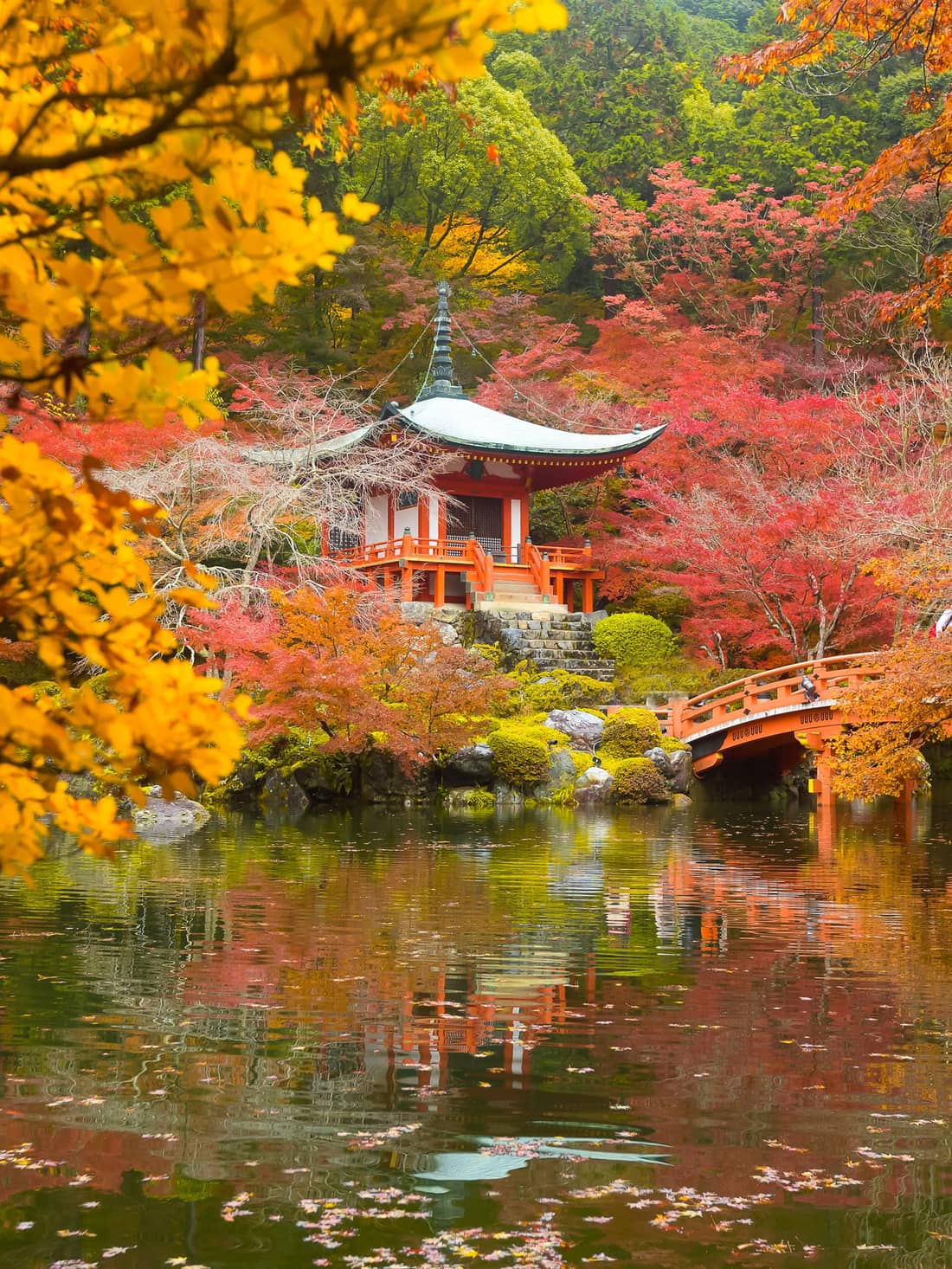

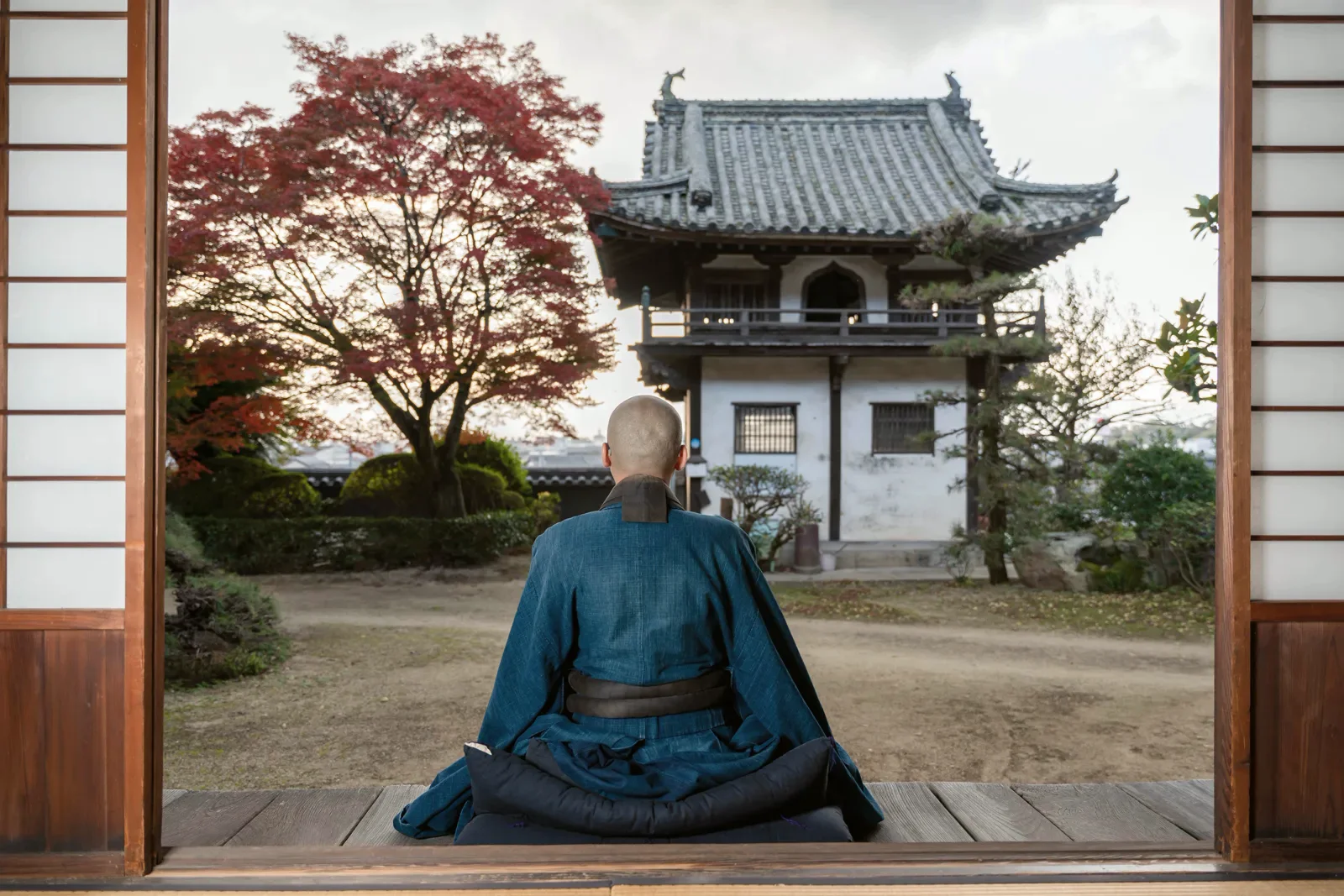
Steam comes off the surface of an open-air onsen in the last of the night, the water spilling over a lip of stone towards a valley still full of shadow, and then the sun clears the far ridge and the whole pool turns gold. A spring of its own, and the quiet to sit in it, is what the great ryokan of Japan are built around. The best of them are few, and they are spread from Hokkaido to Kyushu. Asked which is the most luxurious ryokan in Japan, those who know the country give a short list: Tawaraya in Kyoto, eighteen rooms each looking onto a garden of its own; Asaba at Shuzenji, ten rooms around a pond with a Noh stage standing on the water; Gora Kadan, on the grounds of a former imperial villa high in Hakone; Beniya Mukayu in Kaga, where every one of sixteen rooms has an open-air onsen over a forest garden; and Zaborin in Niseko, fifteen villas each with two onsen on the ryokan's own spring.
Water decides it first: a spring of the ryokan's own, flowing without pause, and an onsen in the room itself as well as down the corridor. Size comes next, because a ryokan of ten or twenty rooms is a different place from one of a hundred, and then the kitchen: a ryokan stay includes dinner and breakfast, and dinner is the centre of the evening. Where two ryokan match on all of that, the setting settles it.
hokkaido
The best ryokan in Hokkaido
Hokkaido's great ryokan are young by Japanese measure and generous with space. Nearly every room here carries an onsen of its own.
1. Zaborin, Niseko
Fifteen villas stand in the white birch forest of Hanazono, each named for a different crystal of snow, each with an indoor and an outdoor onsen fed without pause from the ryokan's own spring. Mount Yotei fills the windows across the pastures. Dinner is a northern kaiseki served on hand-made ceramics, and a guest who stays four nights or more may dine at an irori hearth in a room of their own. In winter it is the place in Niseko to end a day on the snow.
2. Ao no Za, Lake Shikotsu
Lake Shikotsu fills a caldera south of Sapporo and is among the clearest lakes in Japan. On its eastern shore, Ao no Za is a ryokan of suites alone, every one over a hundred square metres and every one with an open-air onsen of stone on its terrace, facing the water and the volcano of Eniwa across it. New Chitose Airport is an hour away by car. The Summer Tour of Hokkaido and the Wild North Tour of Hokkaido both stay here.
3. Takinoya, Noboribetsu
Takinoya is reached by its own footbridge over the Kusurisanbetsu River, whose water runs warm from the springs of Jigokudani, the steaming crater above the town. Four kinds of spring water reach its onsen. Twelve of its thirty rooms carry an open-air onsen fed straight from the source. Every meal, breakfast included, is taken in a private dining room over the Japanese garden, where an onko yew, a tree sacred to the Ainu, stands at the gate.
It is the ryokan of Noboribetsu on four journeys: the Cherry Blossom Tour of Hokkaido, the Summer Tour of Hokkaido, the Wild North Tour of Hokkaido and Pure Hokkaido, a journey of The Private Collection.
4. Kuramure, Otaru
In the wooded valley of Asari, a few minutes by car above the old herring port of Otaru, Kuramure keeps nineteen quiet rooms of plaster, dark timber and antique furniture, each with an onsen of its own behind glass that opens to the garden. After dinner the bar pours Yoichi whisky from the distillery down the coast. The Summer Tour of Hokkaido and Pure Hokkaido spend their Otaru nights here.
5. Hinanoza, Lake Akan
On the shore of Lake Akan in eastern Hokkaido, the home of the round green marimo, all twenty-five rooms at Hinanoza carry an open-air onsen of their own, and the suites look down the lake through walls of glass. The carvers' workshops of Akanko Ainu Kotan are five minutes away on foot. The Wild North Tour of Hokkaido spends its Akan nights here.
tohoku
The best onsen ryokan in Tohoku
The north of Honshu keeps the onsen village closest to its old form: wooden inns in deep beech forest and narrow valleys, each on a spring of its own. Three of them belong on any list of the great ryokan of Japan, and all three are on the Autumn Leaves Tour of Northern Japan.
6. Fujiya, Ginzan Onsen
Ginzan Onsen grew up beside a silver mine in the mountains of Yamagata, and its three- and four-storey wooden inns of the Taisho era still face each other across the river under gas lamps. Fujiya, with eight rooms, kept its Taisho front on the river and rebuilt everything behind it in screens of fine bamboo lattice and glass, so that daylight falls through the pattern onto pale wood and, at night, the lamps of the street glow through it.
7. Taenoyu, Nyuto Onsen
At the end of the road into the beech forest of the Towada-Hachimantai National Park, Taenoyu has two springs of its own, the clear Silver and the cloudy Gold, flowing into eight onsen beside a mountain stream. Dinner is the cooking of Akita, and its signature is kiritanpo: rice pressed onto a skewer, grilled at the irori and simmered in a broth of Hinai chicken.
8. Tsuta Onsen, Towada
Tsuta Onsen stands alone in the beech forest fifteen minutes from the Oirase Gorge, its wooden main building of 1918 still the entrance. Its two onsen are built directly over the spring, and the water wells up through the wooden floor of the tub straight from the source.
near tokyo
Luxury ryokan near Tokyo: Hakone, Izu and the city itself
9. Hoshinoya Tokyo, Otemachi
Hoshinoya Tokyo is a ryokan in a seventeen-storey tower in the financial district of Otemachi, ten minutes on foot from Tokyo Station, floored in tatami from the front door to the rooms. The 84 rooms are arranged six to a floor around an ochanoma, a lounge kept for that floor's guests. On the top floor, Otemachi Onsen is drawn from 1,500 metres beneath the city and opens to the sky.
10. Gora Kadan, Hakone
Gora Kadan occupies the grounds of a former villa of the imperial family, high on the slopes of Hakone above Gora Station, and dinner is a kaiseki that changes with the month, served in the Western-style villa building of the early Showa years. Many of its rooms carry an open-air onsen.
11. Asaba, Shuzenji
In the onsen village of Shuzenji, at the centre of the Izu Peninsula, Asaba has been kept by the same family since 1484. Its ten rooms are turned to a pond on which a Noh stage stands, and every one carries an onsen of the Shuzenji spring, some half open to the air and some fully in the open. The kitchen works with suppliers it has known for generations: kinmedai over charcoal, abalone and spiny lobster from Suruga Bay, and at breakfast the ryokan's own wind-dried fish.
Of all the ryokan within reach of Tokyo, Asaba is the one to choose when a single stay has to carry the whole idea of the ryokan.
The ryokan at Mount Fuji, where the mountain stands across the lake from the onsen itself, have an article of their own.
kaga
The ryokan of Kaga: Yamashiro and Yamanaka Onsen

South of Kanazawa, a short drive from Kaga Onsen Station on the Hokuriku Shinkansen, the onsen towns of Kaga gather three of the great ryokan of Japan within a few kilometres of one another.
12. Beniya Mukayu, Yamashiro Onsen
Beniya Mukayu stands on the site of the old Yakuo-in temple, and its name means a state without purpose: rooms kept open and spare so that they fill with light, floors of diatomaceous earth from Kaga, and three libraries. All sixteen rooms have a private open-air onsen over the Forest Garden of red pine, mountain cherry and maple. Dinner is a kaiseki of Kaga, cooked to each guest from what the mountains and the Sea of Japan give, in a dining hall of twenty-five pillars.
Beniya Mukayu, Yamashiro Onsen →
13. Kayotei, Yamanaka Onsen
Ten suites in the sukiya manner of the tea house stand among old trees above the Kakusenkei Gorge, where the Daishoji River runs through the forest. Most have a private open-air onsen on the balcony. Dinner comes in a private tatami room on lacquer turned by hand by a family of Yamanaka wood turners now in its third generation.
14. Araya Totoan, Yamashiro Onsen
Kept by the same family since 1639, beside the bathhouse square at the centre of Yamashiro, Araya Totoan has seventeen rooms and three onsen on its own spring: one built around a hinoki tub inside walls of hiba, so the room smells of wood; one where a garden pond once lay; and one darker and quieter, the steam softening the light. Its garden rooms add an open-air onsen of cypress among the trees.
kyoto and kinosaki
The best ryokan in Kyoto and Kinosaki
Kyoto's two great ryokan stand on the same street, Fuyacho, in the old merchant centre of Nakagyo. Neither is an onsen ryokan. Their luxury lies in the craft of the rooms, the gardens and the table.
15. Tawaraya, Kyoto
Tawaraya has eighteen rooms, every one looking onto a garden of its own, and has been kept by one family for eleven generations, a few minutes' walk from Karasuma Oike Station. Its reputation is built on the attention of its staff and on rooms in which every object has been chosen.
16. Hiiragiya, Kyoto
Down the street at Anekoji, Hiiragiya has been kept by the same family for generations, its main building in the sukiya style of the tea room: polished Kitayama cedar, ceilings of Yakusugi wood, earth walls polished in the Otsu manner, and in each room a bath of koyamaki wood filled from the ryokan's own underground water. The new wing of 2006 carries a lacquered alcove inlaid with the wings of jewel beetles.
Where a room with its own hot spring matters more than the address, Kyoto's answer lies in the hills around the city.
A luxury onsen ryokan room in Kyoto →
Where to stay in Kyoto: the hotels and ryokan →
17. Nishimuraya Honkan, Kinosaki Onsen
Two and a half hours north of Kyoto by limited express, Kinosaki is a town of willows, stone bridges and wooden inns along a canal, where the street is the corridor between seven public onsen and guests walk between them in yukata and wooden geta. Nishimuraya Honkan, kept by one family for generations, turns its tatami rooms to a garden of pines, moss and stone lanterns over wide wooden verandas. Its kaiseki follows the Sea of Japan: Tajima beef through the year and Matsuba snow crab in winter.
The Classic Cherry Blossom Tour of Japan spends a night here. Classic Japan and Definitive Japan, two journeys of The Private Collection, also give Kinosaki two nights at Nishimuraya.
Nishimuraya Honkan, Kinosaki Onsen →
the west
Luxury ryokan in western Japan and the Inland Sea
18. Bettei Otozure, Nagato Yumoto Onsen
Nagato Yumoto in the mountains of Yamaguchi has been an onsen town for some six hundred years. Bettei Otozure stands on the bank of the Otozure River, eighteen rooms in walnut, black cherry, stone and tatami, and every room has an open-air onsen of free-flowing spring water, shaped differently in each. Dinner is a kaiseki of the Sea of Japan coast at Nagato and Senzaki, served on Hagi ware.
Bettei Otozure, Nagato Yumoto Onsen →
19. Azumi Setoda, Ikuchijima
Setoda lies at the midpoint of the Shimanami Kaido, the chain of bridges across the islands of the Seto Inland Sea, on an island of lemon groves. Azumi Setoda occupies the estate a family of salt producers and shipping merchants built here in 1876, its rooms in the sukiya manner, each with a deep bath of hinoki cypress.
kyushu
The best ryokan in Kyushu
20. Wasurenosato Gajoen, Kirishima
At Myoken Onsen, a valley of springs along the Amori River in Kirishima, Wasurenosato Gajoen is laid out like an old farming village of thatched farmhouses, a hearth hut and a dining hall joined by paths beside a stream. Every room has an onsen of pure spring water. The cooking is Satsuma, from the ryokan's own farm: free-range chicken, vegetables from its fields, wild sweetfish, and after dinner warm kappo-zake by the fire in the hearth hut.
the questions
What is a ryokan? The questions, answered
What a ryokan is
A ryokan is a Japanese inn: tatami rooms, futon laid out after dinner, a yukata for every guest, and in most cases an onsen. The stay includes a kaiseki dinner and a Japanese breakfast, and the staff who look after the room look after the guest for the whole of it.
How many nights to stay
Two nights. The first is spent arriving, the second is the night a guest actually lives in the ryokan, with a full day between them for the onsen, the garden and the town.
What dinner is
Dinner is kaiseki, a sequence of small courses that follows the month and the region, served in the room or a private dining room at the great ryokan. Its order and its seasons have an article of their own.
Kaiseki: the art of the seasonal meal →
What to wear
The yukata the ryokan lays out is worn to dinner, to the onsen and along the corridors, with a haori jacket over it in the cooler months. Shoes stay at the entrance.
How to choose a luxury ryokan
Choose by the water first, then by the number of rooms, then by the kitchen: a spring of the ryokan's own and an onsen in the room, fewer than twenty rooms, and a dinner built on the region's own fish and farms. The setting settles everything else, whether a lake in Hokkaido, a gorge in Kaga or a garden in Kyoto.
the journey
A private journey through the great ryokan of Japan
The Custom Tour of Japan is designed for one party, on its own dates and from five nights, and it is built around whichever ryokan on this list the party chooses: Zaborin with Mount Yotei filling the windows, the Noh stage on Asaba's pond, an evening in Kinosaki walking between the seven public onsen in yukata and geta before dinner at Nishimuraya. A private car and driver wait in each city, so a lake in Hokkaido and a gorge in Kaga sit in the same journey without a thought for the road between.
A Tour Director is with the party every day, and everything at the ryokan, from the hour of dinner to the questions of the kitchen, is settled in Japanese on the guests' behalf, and the only decision left to them is when to step into the onsen.
questions
Questions
What is the most luxurious ryokan in Japan?
Those who know Japan give a short list: Tawaraya in Kyoto, Asaba at Shuzenji in Izu, Gora Kadan in Hakone, Beniya Mukayu in Kaga and Zaborin in Niseko. Each combines fewer than twenty rooms, a kitchen built on its region and, outside Kyoto, an onsen in the room on its own spring.
What is the best ryokan in Japan with a private onsen?
Zaborin in Niseko, Beniya Mukayu in Kaga, Asaba at Shuzenji, Bettei Otozure in Yamaguchi, Hinanoza on Lake Akan and Ao no Za on Lake Shikotsu give every room or suite an onsen of its own.
Which ryokan in Kyoto is the best?
Tawaraya and Hiiragiya, on the same street in Nakagyo, are the two great ryokan of Kyoto. Neither is an onsen ryokan; their luxury is the rooms, the gardens and the kaiseki.
How many nights should you stay at a ryokan?
Two nights. The first is spent arriving; the second gives a full day between for the onsen, the garden and the town, and a second kaiseki dinner.
Is dinner included at a ryokan?
Yes. A ryokan stay includes a kaiseki dinner of many small seasonal courses and a Japanese breakfast the next morning, served in the room or a private dining room at the great ryokan.
What should you wear at a ryokan?
The yukata the ryokan provides, worn to dinner, to the onsen and along the corridors, with a haori jacket over it in cooler months. Shoes are left at the entrance.