
Seven days is enough for Hokkaido when the itinerary keeps to one region, and the region to choose first is the south-west, from Hakodate by Lake Toya and Noboribetsu to Otaru and Sapporo. Ten days adds a second: Biei and the lakes in summer, or the frozen east in winter. The whole island, Shiretoko included, asks for a fortnight.
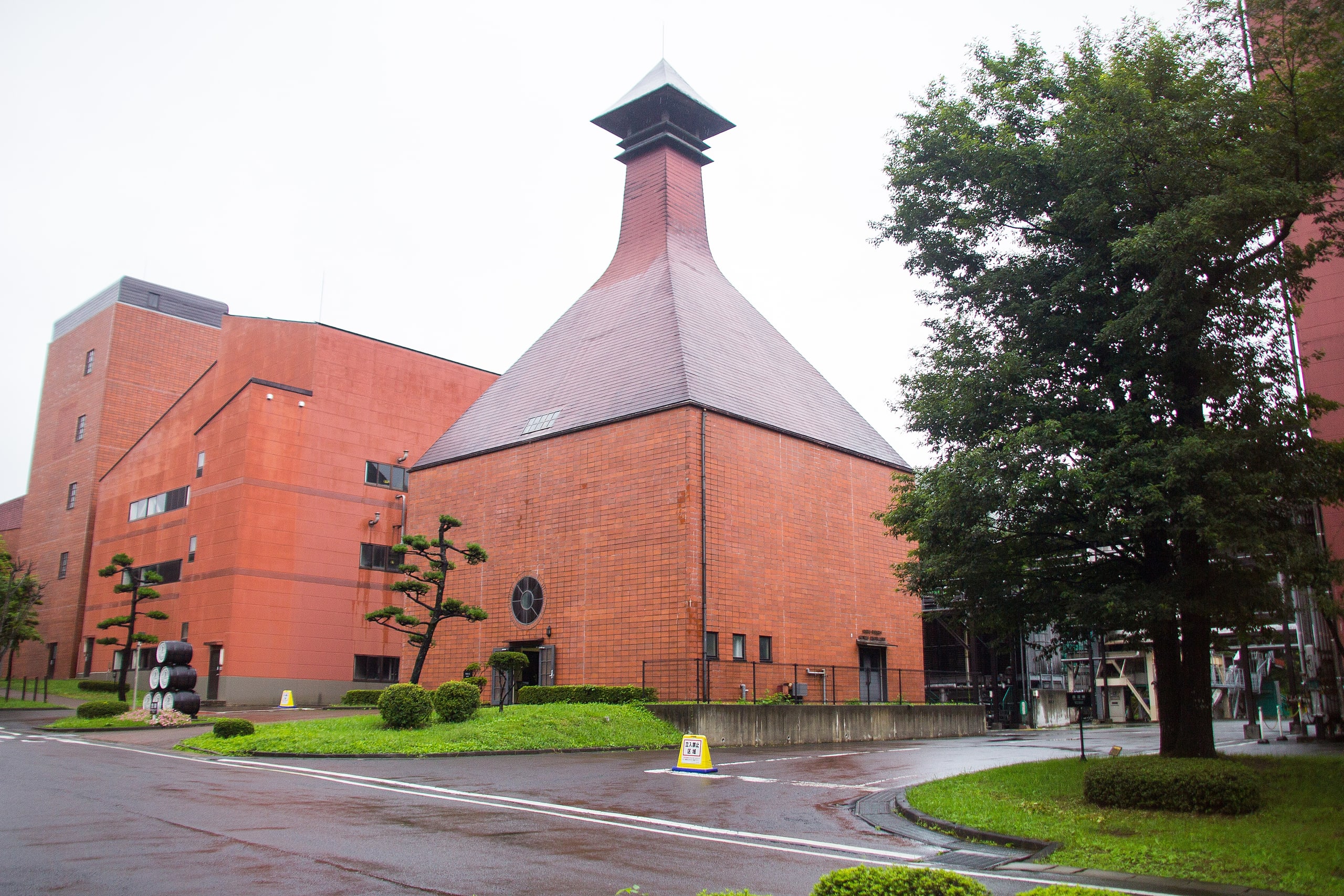
The case for the south-west is made at the end of Cape Kamui, on the Shakotan Peninsula west of Otaru. A fenced path runs out along a spine of rock no wider than a garden wall, grass on either side, and the sea below is two colours at once: a clear, almost Mediterranean turquoise over the stones of the cove, and a deep, cold blue beyond. The wind smells of salt and kelp. An hour back along the coast, the pot stills of the Nikka distillery at Yoichi are still fired with coal, the old way, and by evening the onsen of a ryotei in the hills above Otaru is steaming among the trees. That is one day of the seven-day route.
the measure
How many days is enough for Hokkaido?
Hokkaido covers 83,424 square kilometres, 22 per cent of the land area of Japan and about the size of Austria. Distances that look modest on a map of Japan are long here. The Hokuto limited express takes about three hours and forty minutes from Sapporo to Hakodate, and the train from Sapporo to Kushiro, in the east, takes more than four.
The answer that follows from those numbers is plain. Seven days suits one region well, with two nights in most places and an onsen at the end of every afternoon. Ten days takes in two, joined by a long drive or a short domestic flight. Fourteen days takes in the island: the south-west, the farmland of the centre and the far east of Akan and Shiretoko. A week that tries to reach Hakodate and Shiretoko both is a week spent on the road, and the most common mistake in a Hokkaido itinerary is exactly that.
Two nights in each place is the rhythm the island rewards. The ryokan here are the reason to come as much as the landscapes, and a single night at a ryokan with its own spring is gone before its onsen has been enjoyed twice.
the route
The best route through Hokkaido
Hokkaido falls into three regions, and every good route is built from them. The south-west is the compact one: Hakodate on the Tsugaru Strait, the volcanic lakes of Onuma, Toya and Shikotsu, the onsen town of Noboribetsu, the port of Otaru and the city of Sapporo, all within a few hours of one another. The centre, Biei, Furano and the mountains of Daisetsuzan, lies north of Sapporo, an hour and twenty-five minutes by limited express to Asahikawa. The east, Kushiro, Lake Akan, Lake Mashu and the Shiretoko Peninsula, is reached by air: Kushiro is about an hour and forty-five minutes from Haneda.
The airports decide the shape of the journey more than any sight does. The best route arrives at one and leaves from another. Hakodate Airport is ten minutes from the onsen quarter of Yunokawa; New Chitose, at the other end of the south-west, is 37 minutes from Sapporo by the Rapid Airport train and 33 by the Special Rapid. Flying into Hakodate and out of New Chitose, or the reverse, removes a whole day of retracing. The Hokkaido Shinkansen reaches Shin-Hakodate-Hokuto from Tokyo in just under four hours, and the Hakodate Liner covers the last fifteen to twenty-five minutes into the city.
Hokkaido is the one region of Japan made for the road. Rail joins the cities, but the lakes, the onsen towns and the coast are reached by car. For a Hokkaido road trip itinerary, the better seat is the back one: a private car and driver turns three hours along Uchiura Bay into three hours at the window.
seven days
Hokkaido itinerary 7 days: Hakodate to Sapporo
This is the route for a first journey to Hokkaido, written here for summer, and it works from late April to October with the changes set out further on. It runs south to north; it runs as well in reverse.
Days 1 and 2: Hakodate
The flight lands at Hakodate Airport, and ten minutes along the shore is Yunokawa, the city's onsen quarter. A modern ryokan rises above the older inns there, with an onsen on its top floor looking across the Tsugaru Strait towards Honshu, and many of its rooms keep an onsen of their own at the window, the lights of the city below at night.
The second day is Hakodate itself. Lunch is at the morning market, where the squid caught overnight is served at the counter still translucent. Goryokaku, the five-pointed fortress finished in 1864, is best seen whole from the tower beside it. Motomachi, the old port quarter, climbs its slope past the churches and consulates of the treaty years, and at dusk the ropeway rises up Mount Hakodate for the night view, the lights of the city laid along the narrow neck of land between two bays.
A modern ryokan above the strait, Yunokawa, Hakodate →
Day 3: Lake Toya
From Hakodate to Lake Toya is about 175 kilometres, two and a half hours by car, past Lake Onuma and its wooded islands beneath the broken summit of Komagatake, then along the long curve of Uchiura Bay. Lake Toya fills a round caldera with the islands of Nakajima at its centre and Mount Usu on its southern shore. The night is at a ryokan on the water's edge at Toyako Onsen, every room turned to the lake with an open-air onsen on its terrace. From late April to the end of October, fireworks are launched over the lake every night at a quarter to nine, about 450 of them in twenty minutes, and the onsen on the terrace is the seat for them.
A ryokan at the water's edge, Lake Toya →
Day 4: Noboribetsu
Noboribetsu is about an hour east. Its springs rise in Jigokudani, Hell Valley, a crater of steaming vents and pale mineral rock above the town, walked on boardwalks. A ryokan of thirty rooms, reached by its own footbridge over a river that runs warm from the source, draws four kinds of spring water, sulphur, iron, salt and radium, and serves every meal in a private room over its Japanese garden. Twelve of its rooms carry an open-air onsen of their own.
A ryokan of four springs, Noboribetsu Onsen →
Day 5: Upopoy, then north to Otaru
Half an hour from Noboribetsu, at Shiraoi on the shore of Lake Poroto, Upopoy, the National Ainu Museum and Park, keeps the embroidery, carving and song of the island's first people; it opened in 2020 as the national home of Ainu culture. From there the drive north to Otaru takes about two hours. The ryokan for these two nights stands apart from the town in the forested hills at Asarigawa Onsen, nineteen rooms of dark timber, stone and antiques, each with its own onsen half open to the trees, and a bar where the whisky of Yoichi is poured.
A ryokan of nineteen rooms in the hills above Otaru →
Day 6: Shakotan and Yoichi
The day goes west along the coast. The Shakotan Peninsula is where Hokkaido eats its sea urchin, landed from June to August and served at the fishermen's counters within sight of the boats, and Cape Kamui is the walk out along the ridge. On the way back, the Nikka distillery at Yoichi, founded in 1934, pours its whisky after the visit. The canal of Otaru, its stone warehouses built for the herring trade, is at its loveliest when the gas lamps are lit at dusk.
Day 7: Sapporo and the flight home
Sapporo is forty minutes from Otaru by car. Odori Park, the green avenue that divides the city's grid into north and south, and the clock tower of 1878 two blocks away, fill the morning, and New Chitose is 37 minutes on by train. With an eighth day, the last night belongs at a hotel opened in 1934 as the first European-style hotel in Hokkaido, a few minutes on foot from the park.
ten days
Hokkaido itinerary 10 days in summer: Biei, the lakes and the coast
Ten days in summer adds the centre of the island, and the route turns on its head: in at Asahikawa, out at New Chitose.
Days 1 and 2: Biei
Asahikawa Airport is a direct flight from Haneda, and thirty minutes beyond it, up an avenue of white birch on the slopes of the Tokachi range, is Shirogane Onsen. A ryokan stands there among Ezo spruce and Todo fir, seventeen rooms joined by covered corridors, each with a long window onto the forest and an open-air onsen of its own. The Shirogane Blue Pond, its milky water the colour of a glacier, is a few minutes down the road. The second day goes to the patchwork hills of Biei and to Furano, whose lavender is in flower in July.
A forest ryokan of seventeen rooms, Shirogane Onsen →
Biei and Furano: the flower fields of summer →
Days 3 and 4: Lake Shikotsu
The third day is the long drive of the journey, south through the farmland and past Sapporo to Lake Shikotsu, a deep caldera ringed by forest and three volcanoes, its water among the clearest in Japan. On the eastern shore stands a ryokan of suites, every one over a hundred square metres with its own open-air onsen on the terrace, facing Mount Eniwa across the water. The fourth day carries no programme at all, and it is the day guests remember.
A ryokan of suites on Lake Shikotsu →
Days 5 and 6: Noboribetsu
An hour south-west, the ryokan of four springs and the valley of Jigokudani, with a day for Upopoy at Shiraoi and an afternoon given to the four springs.
Day 7: Lake Toya
A single night at the ryokan on the shore, and the fireworks over the water from the terrace onsen.
Days 8 and 9: Otaru
North by the foot of Mount Yotei to the ryokan in the forest above Otaru, with a day for Shakotan, Cape Kamui and the distillery at Yoichi, and an evening on the canal.
Day 10: Sapporo and New Chitose
A morning in Sapporo, then the airport: from Otaru, New Chitose is 73 minutes by the fastest train, and from Sapporo 33.
The Summer Tour of Hokkaido follows almost exactly this line over twelve days, with two nights in Sapporo to close, in 2027 departing 25 June to 6 July and 11 to 22 July. The other summer journey of the island goes east. The Wild North Tour of Hokkaido, 27 July to 6 August 2027, opens at Sounkyo in Daisetsuzan, spends three nights on the Shiretoko Peninsula at Utoro, where a boat runs quietly along the roadless coast beyond Rausu, two at Lake Akan, and closes with three on Lake Shikotsu.
winter
A Hokkaido winter itinerary: Sapporo, Otaru and the frozen east
Snow changes the arithmetic. The south-west lies deep in it from December to March, the days are short, and a winter itinerary shortens the drives and lengthens the nights. The route below is ten days for early February, when the festivals, the cranes and the drift ice coincide.
Days 1 and 2: Sapporo
A hotel a block from Odori Park is the base for the Sapporo Snow Festival, which runs for about a week in early February across Odori, Susukino and Tsudome, the sculptures of snow and ice in the park lit through the evening.
Day 3: Jozankei
Forty minutes south-west, in a forested gorge near the head of the Toyohira River, a ryokan keeps cottages in the trees, each with an open-air onsen on a wooden deck, which in February is a deck cleared in deep snow.
Cottages in the forest, Jozankei →
Days 4 and 5: Otaru
The ryokan above Otaru again, and in early February the Otaru Snow Light Path: candles in handmade glass floating on the canal, lanterns along the old Temiya railway line, and, in the valley of Asarigawa Onsen where the ryokan stands, candles set on the snow-covered stones of the river.
Days 6 and 7: Lake Akan and the cranes
A short flight from New Chitose crosses the island to Kushiro. The Tsurui-Ito Tancho Sanctuary is about fifty minutes from the airport, and from November to March some three hundred red-crowned cranes come to its feeding ground, watched from the warmth of the nature centre; from mid-February their courtship dances begin. The night is at a ryokan on the shore of Lake Akan, then under ice, each of its twenty-five rooms with an open-air onsen of its own.
A ryokan of twenty-five rooms on Lake Akan →
Days 8 to 10: Shiretoko and the drift ice
The road north passes Lake Mashu on its way to Utoro, on the Okhotsk coast of the Shiretoko Peninsula. The drift ice begins to reach Shiretoko in January and lies thickest from early February to early March; when it fills the harbour at Utoro, it is seen from the rooms and the onsen of the hotel at Utoro, whose terrace rooms carry an open-air onsen facing the sea. Memanbetsu Airport is about two hours by car, and its flights reach Haneda.
Terrace rooms over the Okhotsk Sea, Utoro →
Eastern Hokkaido in winter: the drift ice and the marsh →
Seven days in winter keep to Sapporo, Jozankei and Otaru, or give the whole week to the east. A skiing party goes to Niseko, which runs in English from the mountain to the front desk.
Luxury ski journeys in Japan: Niseko, Hakuba and Myoko →
A Japan ski itinerary, written for your party to travel independently →
The Custom Tour of Japan: a private winter journey through Hokkaido →
spring and autumn
Hokkaido in spring and autumn: how the routes change

Spring reaches Hokkaido last. The cherry blossom lands in the far south in late April and works north; on average Sapporo's first flowers open about 1 May, and Hakodate's trees are in full bloom about 7 May. In spring the seven-day route starts in the south and keeps the blossom ahead of it: Matsumae, with some two hundred and fifty varieties of cherry in its castle park, Goryokaku, then the eight-kilometre cherry avenue into Noboribetsu. The Cherry Blossom Tour of Hokkaido, 28 April to 10 May 2027, opens with three nights on Lake Onuma and continues to a ryokan above Lake Toya, to Noboribetsu, to the shore of Lake Shikotsu and to Sapporo.
The Cherry Blossom Tour of Hokkaido →
Autumn comes first. The high slopes of Daisetsuzan turn from mid-September, the earliest colour anywhere in Japan, and the leaves move down through October to the gorges of Jozankei and the crater rim of Jigokudani. The ten-day route suits autumn as it is, with Sounkyo in place of Biei. The Autumn Leaves Tour of Northern Japan, 2 to 13 November 2027, opens with three nights in the forest cottages of Jozankei and spends a night above the strait at Yunokawa in Hakodate on its way south into Tohoku.
the nights
Where to stay in Hokkaido, night by night
The ryokan carry a Hokkaido itinerary, and the routes above are drawn around them as much as around the sights. Nearly every night named here has an onsen in the room or on the terrace: the four springs below Jigokudani, the suites on Lake Shikotsu, the twenty-five rooms over Lake Akan. The exception is Sapporo, where the hotel of 1934 stands at the centre of the city's grid.
Luxury hotels and ryokan in Hokkaido →
Hokkaido tours: every tour and journey on one page →
Late on a summer evening in Otaru the gas lamps come on along the canal, one by one, and their light lies long and gold on the water between the warehouses. Up in the valley at Asarigawa, the onsen of the ryokan is filling, and the forest has gone quiet.
The Expert Japan Itinerary: a Hokkaido itinerary planned in full, day by day →
the journey
A private Hokkaido itinerary on the guest's own dates
Pure Hokkaido, one of the four journeys of The Private Collection, takes the heart of the seven-day route privately over nine days, on the guest's own dates and in either direction: two nights each in Hakodate, Noboribetsu, Otaru and Sapporo, six of them at ryokan with their own hot springs, among them the ryokan of four springs below Jigokudani and the ryokan of nineteen rooms in the hills above Otaru. In Hakodate the squid of the morning market is served at the counter still translucent; in Otaru, lunch is at a sushi counter awarded a Michelin star in both of the guide's Hokkaido editions, and the Nikka distillery at Yoichi pours its whisky after the visit.
A Tour Director is beside the party every day, a private car and driver carry it between the four towns along Uchiura Bay and the coast, and the luggage goes ahead from one ryokan to the next.
questions
Questions
How many days is enough for Hokkaido?
Seven days is enough for one region, and the south-west, from Hakodate by Lake Toya and Noboribetsu to Otaru and Sapporo, is the one to choose first. Ten days adds Biei and the lakes in summer or the east in winter, and the whole island, Shiretoko included, needs about two weeks.
What is the best route through Hokkaido?
Fly into Hakodate and out of New Chitose, or the reverse, so that no day is spent retracing. Between them, the route runs by Lake Toya, Noboribetsu and Otaru to Sapporo, with two nights in most places.
What is a good Hokkaido itinerary for 7 days?
Two nights in Hakodate, one at Lake Toya, one at Noboribetsu, two in Otaru with a day on the Shakotan Peninsula and at the Nikka distillery in Yoichi, then a last day in Sapporo before the flight from New Chitose.
What is a good Hokkaido itinerary for 10 days?
In summer, two nights in Biei, two on Lake Shikotsu, two at Noboribetsu, one at Lake Toya and two in Otaru, flying into Asahikawa and out of New Chitose. In winter, Sapporo, Jozankei and Otaru, then a flight to Kushiro for the cranes, Lake Akan and the drift ice of Shiretoko.
How long is the train from Sapporo to Hakodate?
About three hours and forty minutes by the Hokuto limited express. New Chitose Airport is 37 minutes from Sapporo by the Rapid Airport train, and Asahikawa about an hour and twenty-five minutes by limited express.
Is a road trip the best way to see Hokkaido?
Hokkaido is the region of Japan best seen by road, because its lakes, onsen towns and coast lie away from the railway. A private car and driver gives the freedom of a road trip with the hours spent at the window.