The Custom Tour of Japan
Japan, created for you.
The Custom Tour of Japan is the finest journey of its kind. It is the pinnacle of the Japanese experience, and highly sought after. We therefore welcome only a small, select number of valued guests each season.
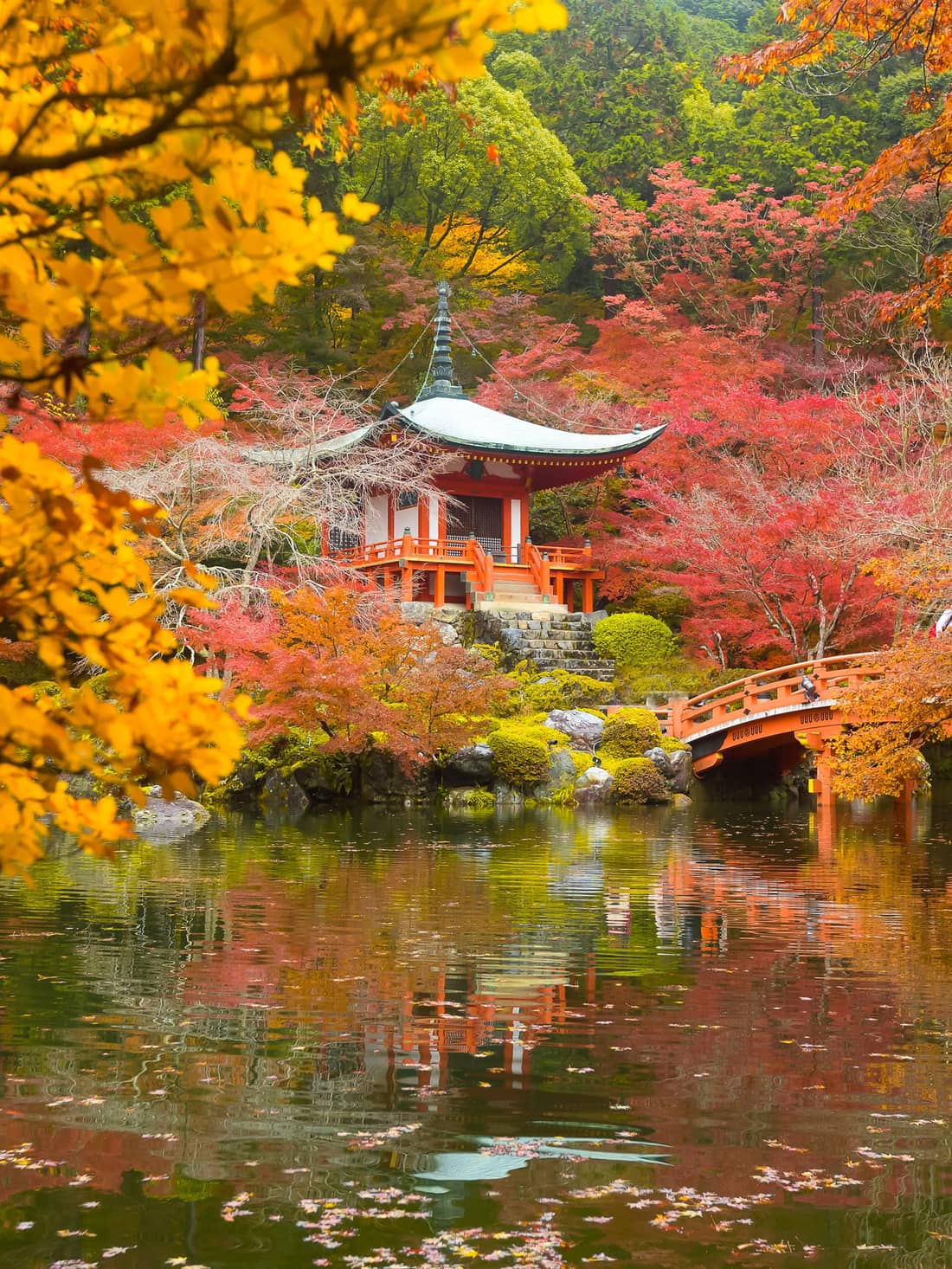
It might be a pavilion in a forest garden in Kyoto and an evening in Gion with geiko, a helicopter over the mountains to Hakone, or sushi placed before you by a master at a counter of ten seats. If you can dream it, we can create it.
All of it, arranged
What is the Custom Tour of Japan?
A tour of Japan made once, for your party alone: your dates, your pace, and the places, tables and people you have come for, from five nights to as long as you like.
The people who design your days are the people who run them, from the first conversation to the last evening.
- Your own Tour Director, with you every day
- A private car and driver in each city
- Japan's leading hotels and ryokan, chosen room by room
- Tables with Michelin stars, and counters no guidebook has found
- Doors that open by introduction, from teahouses to studios
- Nothing for you to arrange, carry or ask for
Anything, for the right price
What is possible?
Some evenings in Kyoto are never advertised. In Kamishichiken, the oldest of Kyoto's geiko districts, a teahouse receives guests only by introduction, and inside, a room is laid for your party alone. Geiko and maiko dance, pour, and then sit beside you and talk, your Tour Director interpreting until the conversation no longer needs it. We make the introduction, and the evening is yours.
In Kyoto, your Tour Director takes you into a Zen garden in its quietest hour and reads it for you, stone by stone. In Uji you spend an hour with a tea master where the leaf is grown. At Koyasan you sleep in a temple and sit a service with the monks, the chant older than any building around it. People have crossed the sea for this for a thousand years, and it is arranged before you leave home.
The wrestlers of a sumo stable eat together after training, from one great pot of chanko, and you take your place at that table. You sit with them in the stable's own dining room, your Tour Director interpreting, and leave knowing more about the sport than any seat at a tournament could teach you.
In a lacquer studio in Kanazawa, a master lays down a layer thinner than paper on a bowl that will cure for a season before the next, and talks as he works, because you are the only visitor he has today. In Sakai, at the forge where the knife makers work the swordsmiths' steel, the knife you watched being born goes home in your luggage. In Kyoto, a broken bowl is repaired with gold in your own hand, under a teacher's eye.
On the coast below Kobe, the brewers of Nada have made sake for centuries from a spring water called miyamizu, and a brewer takes you through the cellars and pours the year's sake beside the tanks it came from. In Hokkaido, at Yoichi, you taste whisky in the distillery Masataka Taketsuru built in 1934, after learning the craft in Scotland, with the sea a few streets away.
On Naoshima, Tadao Ando's museums are set into the hillside, the James Turrell room at the Chichu lit only by the sky, and you can sleep inside the museum itself and walk its halls at night, after the day's visitors have gone. On Teshima, Ryue Nishizawa's shell of white concrete stands open to the weather. You cross between the islands by private yacht if you wish, and see the work as a collector would, at your own pace.
Winter is the season most visitors never see, and it is when the north of Japan is at its most beautiful: a villa in the Niseko forest with two private onsen and a guide who knows where the powder fell overnight, the drift ice off Abashiri, the red-crowned cranes dancing on the Kushiro marsh, and an outdoor onsen in falling snow with a cup of hot sake at its edge.
Japan is one of the few countries where a grandmother, her son and his children can each have the day of their lives in the same place. There is a villa with its own hot spring, so the grandparents bathe while the children sleep, and a potter's studio where the youngest and the eldest share the same clay. We know which properties welcome a family, which rooms connect and where bathing is private.
Kinosaki at dusk is willows along a canal and lanterns coming on along the stone bridges, you in yukata as the light goes, then the onsen of your own suite and dinner brought to your room one course at a time. On Ise-Shima there is a resort where every suite has its own onsen, and the bay does nothing all day but change colour. We create the days with nothing on them as carefully as the fullest, and they are the days you will find yourself describing first when you are home.
Shaped by our guests
Journeys we have created
Each was created once, for one party. Yours begins with what you want most.
For a couple who wanted art, quiet and the great ryokan
It begins on the Inland Sea, at Takamatsu, with the art islands a short crossing away. Then a night in Kyoto at one of the city's great ryokan; a night in Kinosaki, in a Japanese suite with its own open-air onsen; a second night in Kyoto; and three nights in a suite high above Otemachi to end, the city laid out below the windows.
Eight nights in autumn: Takamatsu 2, Kyoto 1, Kinosaki 1, Kyoto 1, Tokyo 3.
For three friends who wanted Japan's great views and its hot springs
It opens in Tokyo and spends two nights beneath Mount Fuji, at a ryokan on the lake shore whose rooftop onsen footbath faces the mountain, with an afternoon at a sake brewery. In Kyoto there is kaiseki at a two-Michelin-star restaurant, and in Kinosaki two nights at a Relais & Châteaux ryokan, in the onsen town of willows and canals. Osaka closes it.
Ten nights in spring: Tokyo 2, Mount Fuji 2, Kyoto 2, Kinosaki 2, Osaka 2.
For a couple for whom food was the reason to go
It gives four nights to Tokyo for its sushi counters, four to Kyoto for its kaiseki kitchens, and one to a ryokan in Kinosaki for a kaiseki of crab. Osaka closes it with four nights in the city whose own word for itself, kuidaore, means eating until you drop, among its markets and the dining streets of its neighbourhoods.
Thirteen nights in March: Tokyo 4, Kyoto 4, Kinosaki 1, Osaka 4.
For a mother and her daughter, discovering Japan together
It spends four nights in Tokyo and four in Kyoto, paced for two very different appetites. At its centre are a kaiseki dinner in the company of geiko, who dance and then sit at the table and talk, and a counter of shojin ryori, the cooking of Kyoto's Zen temples, made without meat or fish.
Eight nights in May: Tokyo 4, Kyoto 4.
Suites and villas
Where will we stay?
We look first for the best room the property has, and where the top suite is worth it, we tell you so plainly.
You stay in the finest luxury hotels and ryokan in Japan, each one chosen personally by us for its luxury, its comfort and its setting. There is a machiya in Kyoto, a townhouse of your own with a maple in the courtyard, and a ryokan in Kinosaki with a cedar onsen and dinner in your room. There is a ryokan of eighteen rooms in old Kyoto that no booking site will take you to, and another kept by one family for six generations. There is a pavilion in a forest garden at the foot of Kyoto's northern hills; in Tokyo, a suite high above the gardens of the Imperial Palace; in Hakone, a suite with its own garden and open-air onsen; in Niseko, a villa in the forest with two private onsen. Tell us the one you have had in mind, and we will say which night to give it.
Every table arranged
What will we eat?
Every meal on your tour is thought through: the tables set for you, and those left for you to find. Tokyo has more Michelin-starred restaurants than any city in the world and Kyoto's kaiseki kitchens carry stars of their own, and those tables are yours when you want them, a private room upstairs where the courses arrive one at a time, or the whole counter taken for your party. So are the places no star has found, the tempura counter behind a curtain and the soba shop down a lane, and a chef can come to your ryokan and cook while you bathe.
The evenings you want to yourselves we leave free, with a suggestion from your Tour Director for each.
Your Tour Director
Who looks after us?
A guide shows you places; your Tour Director shows you how to discover them. Your Tour Director shapes the tour with you and our Japan specialists, then travels it with you from the first evening to the last: the car is where you are, the table is ready, the room is warm, and when something needs to change it has changed before you hear of it.
They read you as the days go on, and know the day you want company from the day you want none. It is the closest thing to travelling Japan with a friend who happens to know everyone, and it begins on the call, once you have told us who is travelling.
Reviews
What do guests say?
Their expertise in the Japanese culture and language, and care to ensure we were looked after was second to none.
Melissa K., 2026
…experiencing traditional Japanese hospitality in old onsen hotels at the seaside town of Kinosaki, waking to the magnificent views of Mt Fuji and witnessing the solemnity of Peace Park in Hiroshima.
Graham E., 2025
It was a first class and outstanding tour in all respects.
William H., 2026
…to have a special experience with just the right activities at just the right pace.
Elana K., 2026
They customized an itinerary based on our desires and provided an excellent tour director who took care of our every need
Stephanie S., 2026
Private car, shinkansen, helicopter
How do we travel, and what is a day like?
A private car and driver every day, waiting wherever you are, the door opened before you reach it. Between cities, first-class seats on the shinkansen with your luggage sent ahead, so you arrive with your hands free. When the view is the point, a helicopter over the mountains; when the hours matter more than the fare, a private aircraft between regions.
You wake in a townhouse in Gion, and the day begins when you say it does. Your Tour Director is in the lane with the car. The first hours pass in a weaver's workshop in Nishijin, where an obi of silk brocade grows a few centimetres a day on the loom and the weaver talks as the shuttle passes. In the evening the car crosses the city to a noh stage lit for your party, a form six centuries old, your Tour Director beside you until the meaning arrives on its own. The other days are yours to imagine, and we create each one around what you tell us.
Per person, per day
What does it cost?
All prices are in US dollars.
Per person, per day. International flights not included. From here you set the level: a helicopter, a private yacht on the Inland Sea, the whole counter for your party, a chef at your ryokan, each quoted in your proposal.
Your tour begins with a journey curation fee of $1,500, credited in full against it, which puts our designers to work on your journey until you would not change a thing. A deposit, stated in your proposal, confirms your dates; the balance is due 95 days before you travel, and our Booking Conditions set out the rest. Safe, secure, encrypted payment, by card or bank transfer.
Travelling alone? Tell us, and we will quote for your tour.
Questions
Questions, answered.
A private custom tour begins on a blank page and is created for one party: yours. The dates, the regions, the pace, the experiences are yours alone, and you travel with your own Tour Director, present when you want them and out of sight when you do not.
Solo guests, couples, families across generations, and groups of friends: any party who wants Japan built for them rather than around a published schedule.
The earlier we begin, the wider the choice of rooms and the more of Japan we can open to you. Tell us your dates, and we will say what is possible.
Many of the guests we design for are visiting Japan for the first time, and the tour is built for exactly that: your Tour Director explains each place as you reach it, and everything else is taken care of for you.
Anywhere in Japan: Kyoto, Kanazawa, the Kii Peninsula, Naoshima and the Inland Sea, Kyushu, Tohoku, Hokkaido, one region in depth, or several in a sequence that makes sense on the ground.
Yes, and most do: a city neighbourhood and a hot-spring town, a traditional ryokan and a city property that suits a long sleep after a full day. The sequence is part of the design.
Yes, and it is some of our favourite work. The day is designed around the family as it is, with different stamina and different interests, planned from the first conversation, not added afterwards.
The Custom Tour of Japan accommodates every level of fitness and mobility, and every requirement is part of the design from the start, so the properties, routing, meals, and pace are right before you leave home.
A private tour is priced per person, per day, from $3,500. The rooms you choose and the season decide the rest, and your proposal states the figure. The design begins with a journey curation fee of $1,500, credited in full against your tour, and a deposit, stated in your proposal, confirms your dates.
It covers your properties, private vehicles and drivers, every train and transfer, and the meals planned for you: some evenings composed and reserved in your name, others left deliberately free. Above all it covers what no listing carries, and a Tour Director whose knowledge of the country shows you a Japan you would not find alone. International flights are not included: we advise on routings and timings, and you book the flights yourself.
It begins the design: the routing, the research, the itinerary made only for you. The fee is $1,500, credited in full against your tour, so it is the first part of the tour price.
Only the curation fee, which begins the design. You pay for the tour itself once you have seen the full itinerary, refined it with us, and decided it is right.
Yes. The itinerary you first receive is a proposal, not a contract. We refine it with you, more days in one region, fewer in another, an element removed, until you would not change it. The deposit follows at that point.
The curation fee, the deposit and the balance are each paid by card or bank transfer, as you prefer: a deposit, stated in your proposal, confirms your dates, and the balance is due 95 days before you travel. Every payment is safe, secure and encrypted.
Your Tour Director is with you throughout, and our team stands behind every day, so a change is made before you need to know about it. They know the route and the alternatives in every direction, and they read the day well enough to know when you want them close and when you would rather have it to yourselves.
No. The tour is made of what is hard to reach from outside Japan: the room with no booking site, the table with no sign, the afternoon at a workshop that does not advertise. When you arrive, they are simply yours.
It begins with the Journey form
How does it begin?
You complete the Journey form
It begins with what you love, then where and when, and who is travelling. It takes about ten minutes.
A call with our team
We talk through what you told us, answer every question and begin shaping the tour. It is complimentary, and everyone travelling is welcome on it.
Your itinerary takes shape
The journey curation fee, credited in full against your tour, begins the design. Every property and every day is in your hands before the tour price falls due, and we refine it with you until you would not change a thing.
You travel
A deposit, stated in your proposal, confirms your dates. From then on everything is arranged, and the people who created your tour run it.
One question at a time, and you can pause and come back.