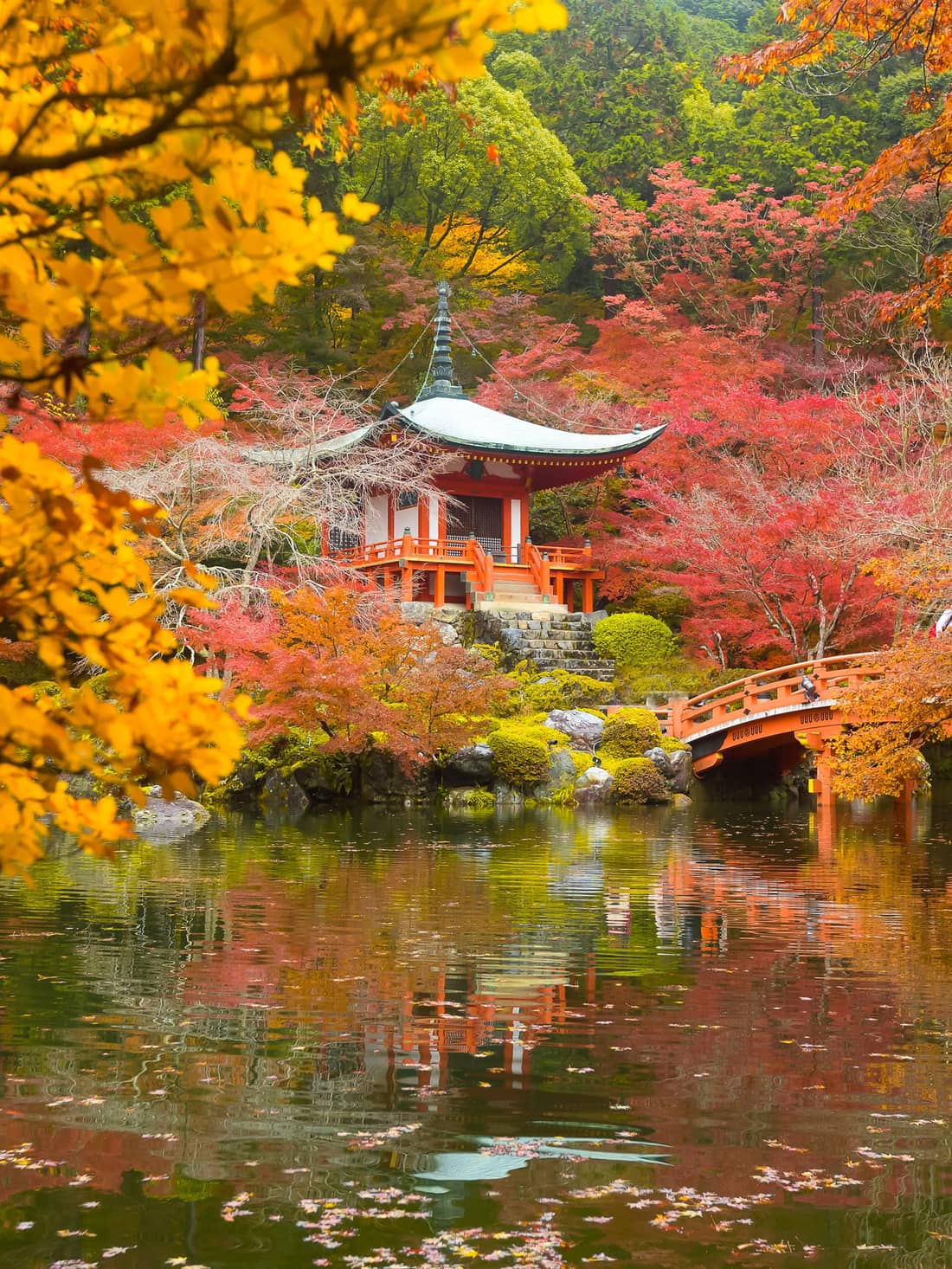

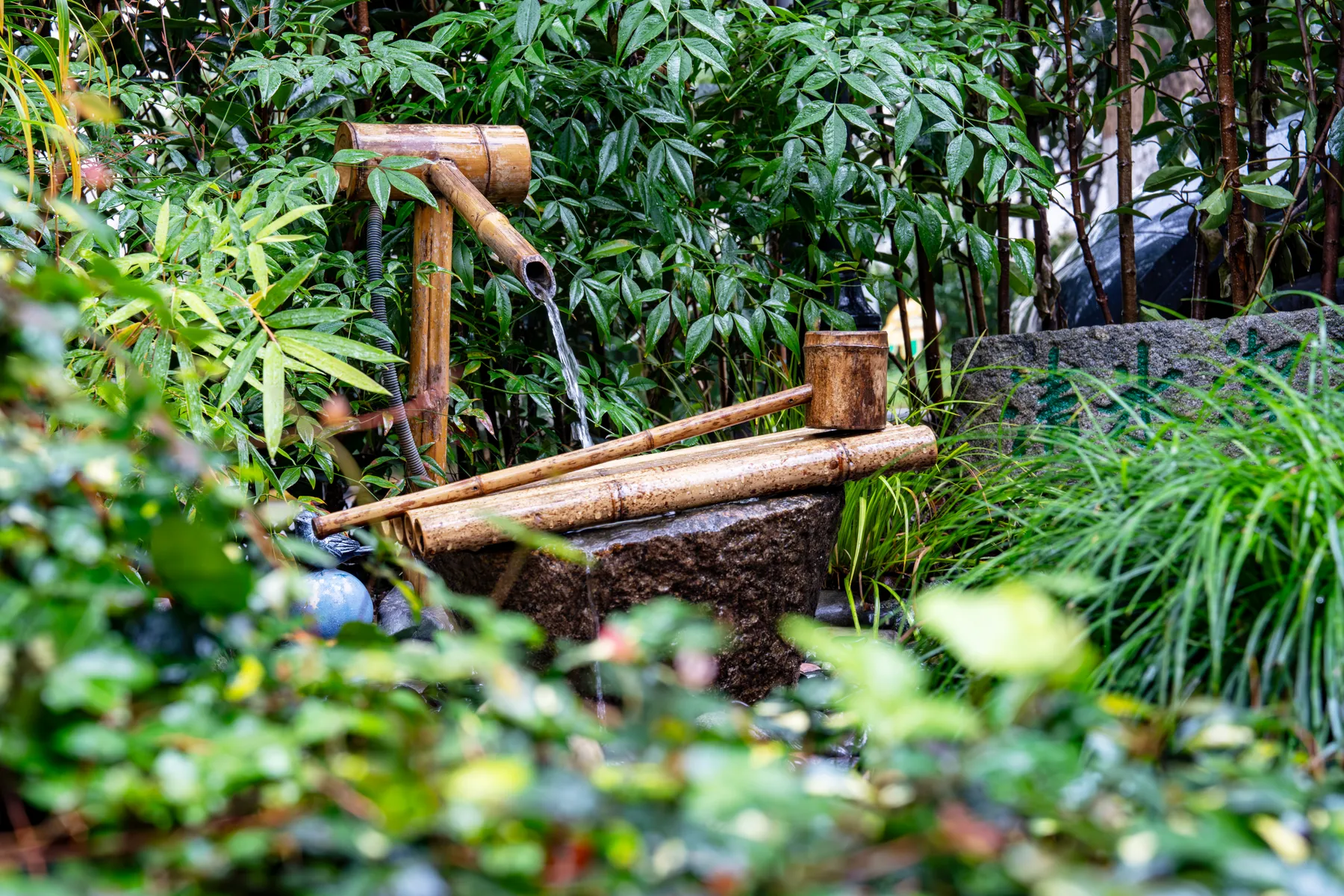
A Japanese onsen hotel is a property, almost always a ryokan, built around an onsen (hot spring) fed from a natural source, and Japanese law defines the onsen by the temperature or mineral content of its water where it leaves the ground. Using one follows a simple order. A wooden bucket, a low stool and a run of taps at knee height come before any water deep enough to sit in, because washing comes first, away from the spring, and that is the one custom a first-time guest most needs to know. A sento, the everyday public bathhouse still found in most Japanese cities, runs on ordinary heated water and keeps the same manners without the geology. A private tub in a ryokan room, filled for one party at a time, may be fed from the spring or filled with heated water. Across all three the manners barely change: wash first, keep the small towel out of the water, and keep the water itself for soaking.
what it is
What an onsen actually is
Japan's Hot Springs Act sets the line precisely. Water counts as onsen if it emerges from the ground at twenty five degrees Celsius or warmer, or, failing that temperature, if it carries a specified concentration of one of nineteen designated minerals, sulphur and iron among them. A sento has no such requirement and no interest in claiming one; it heats ordinary water for residents without a bath of their own at home, a use that has thinned over the decades without disappearing.
A ryokan's private tub sits between the two. Some are supplied from a licensed spring by pipe or by tanker and are onsen in every legal sense; others are well-made tubs of heated water, and since the eye cannot tell the two apart, the difference is set out in writing. How that provenance is checked in a Kyoto ryokan room is told in full in The Room with Its Own Onsen: Kyoto.
In most ryokan the indoor onsen and the outdoor one, the rotenburo, draw on the same source, and the choice between them is one of temperature and air. The indoor pool keeps its heat evenly and suits a short, deliberate soak. The outdoor one gives up its warmth to the air, which is why it comes into its own on a cold evening or in light snow, the steam lifting off hot water into the cold and a maple or a snow-laden pine at the edge of the stone.
the order
How to use an onsen, in order
The order is the same in a mountain ryokan and a city sento.
- Shoes come off at the entrance and stay on a low shelf or in a locker.
- In the changing room, belongings go into a basket or a locker.
- The small towel goes with the guest, folded on the head or set on the stone edge, and never into the water.
- Long hair is tied up, clear of the water.
- Before entering the onsen, a guest washes at one of the low stations along the wall and rinses completely, then pours a few scoops of the spring water over the shoulders, the kakeyu, to meet its heat.
- The water runs hot, often above forty degrees Celsius, so entry is slow.
- Ten to twenty minutes is a good soak. Swimming, diving and splashing have no place in the water, and neither does a phone.
- A cold plunge or a sauna, where the ryokan has one, alternates with the hot spring.
- Before returning to the changing room, a guest dries off at the edge with the small towel, so the floor beyond stays dry, and the minerals of the spring are left to do their work.
Afterwards a ryokan guest changes into the yukata, the cotton robe laid out in the room. It closes left side over right, as a kimono does; right over left is reserved for funeral dress, and the staff notice a reversal at once. The sash is tied at the natural waist in a simple bow, and the yukata is worn to dinner, along the corridors and, in an onsen town such as Kinosaki, through the streets in the evening.
the manners
Onsen with tattoos, and the quiet of the water
Many shared onsen still ask guests with tattoos not to enter, though a growing number of properties, particularly in resort towns, now welcome them, and the Japan Tourism Agency has encouraged the others to reconsider. A private onsen removes the question entirely.
The onsen is a quiet place. Voices stay low, a guest slips in gently and leaves room for others, and the stillness, shared with strangers or with no one at all, is a large part of what the water gives.
For guests who want the water to themselves, a suite with its own onsen is the answer: theirs at any hour, drawn from the same spring as the larger onsen of the ryokan.
The signs need only three words of Japanese. 湯, painted alone in red over a doorway or curtain, means hot water and is the oldest, plainest sign an onsen has. 露天風呂 names an open-air onsen, the one worth stepping outside for. 貸切 marks an onsen kept for one party at a time, the private onsen by another name.
the water
The kinds of spring water
No two springs are the same, and the Japanese read them the way a wine drinker reads a slope. Sulphur springs, the commonest in the volcanic mountains, smell faintly of struck matches and turn milky in the pool; the old wooden inns of Nyuto in Akita are known for water the colour of skimmed milk. Salt springs leave their warmth long after the soak and suit a cold night. Iron springs come out of the ground clear and turn red-brown as they meet the air.
Arima Onsen, in the hills behind Kobe, has both kinds at once and names them after metals: Kinsen, the gold water, rich in iron and salt and rust-red in the pool, and Ginsen, the silver water, clear and carbonated. At Nyuto, one ryokan keeps a Gold spring and a Silver spring of its own, the one cloudy and the other clear, flowing into eight onsen beside a mountain stream. In Hokkaidō, a ryokan at Noboribetsu draws on four kinds of spring water from the steaming crater of Jigokudani above the town.
the towns
The great onsen towns of Japan
Kusatsu, in the mountains of Gunma, has the largest natural flow of any onsen town in Japan, and its centre is the Yubatake, a field of steaming water running down wooden channels in the square, acid and sulphurous and pale green in the boxes. Beppu, on the coast of Kyushu, has more sources and more water than anywhere else in the country, and its steam rises from the streets themselves.
Kinosaki Onsen, near the Sea of Japan in Hyogo, is the town of willows and stone bridges where guests walk the canal in yukata and wooden geta from one of its seven public bathhouses to the next, and its most celebrated ryokan keeps its own onsen on the town's springs. Ginzan Onsen, in the mountains of Yamagata, is a single street of tall wooden inns facing each other across a narrow river, gas-lit at dusk, and the most remarkable of them keeps eight rooms behind a Taisho-era facade. At Yamashiro Onsen in Kaga, one ryokan has kept its three bathhouses on its own spring, in the same family, since 1639.
Kinosaki's most celebrated ryokan →
why a ryokan
Why a ryokan is where all of this settles
In a ryokan the onsen becomes the rhythm of the stay. It is taken before dinner, while the kitchen still has an hour of work ahead of it, to settle a day of walking. It is taken again at night, later than seems reasonable, once the corridor has gone quiet and the water has had the whole evening to keep its heat. And it is taken once more before breakfast, with the morning light coming through the steam. Between the three, the garden beyond the glass passes from evening to full dark to morning, and the guest never has to leave the ryokan to see it.
the journey
An onsen tour of northern Japan in autumn
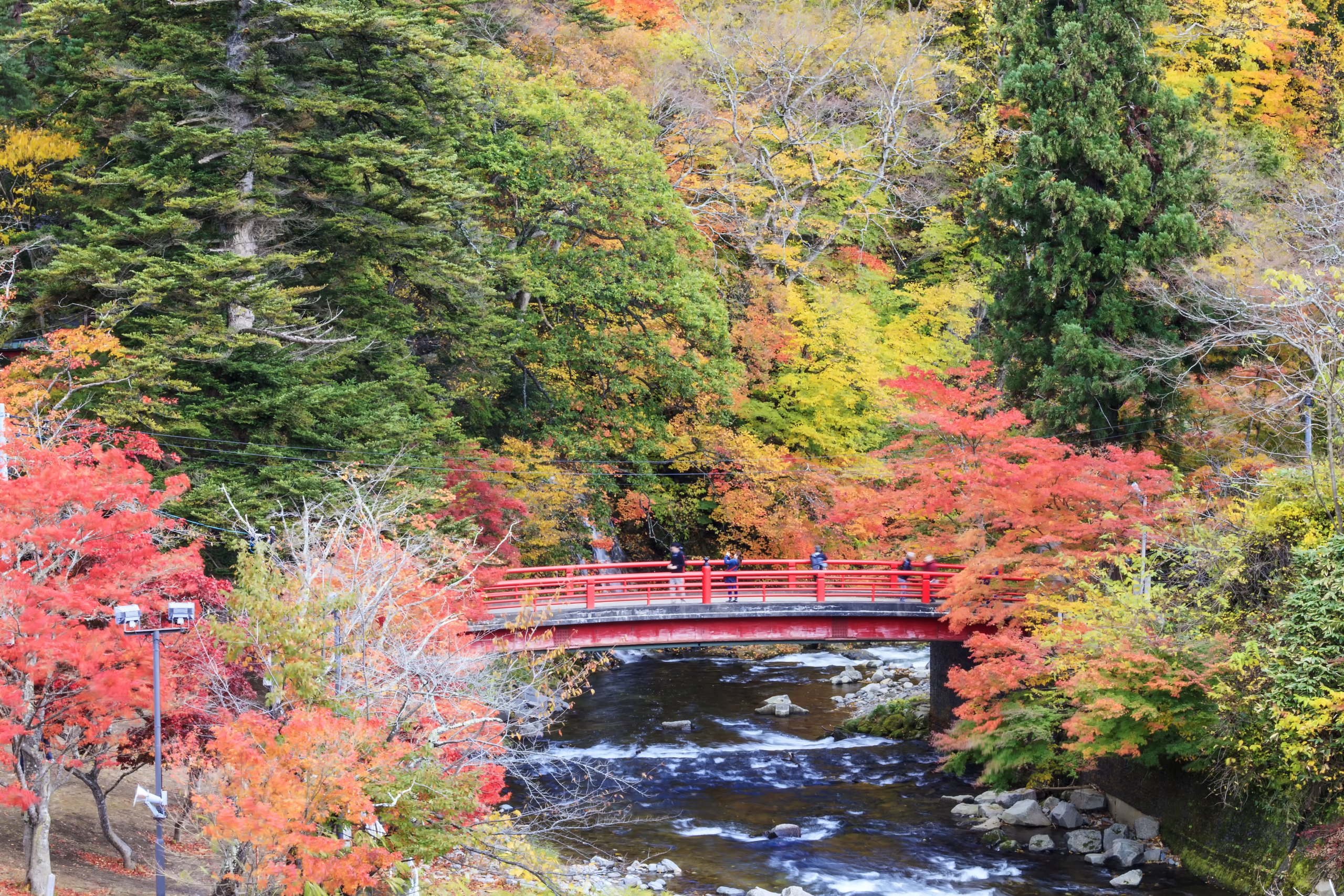
Some of the most storied springs in the country lie on the route of The Autumn Leaves Tour of Northern Japan, from 2 to 13 November 2027, limited to 8 guests. It runs down the spine of the north in autumn and comes back to the water at every stop: a wooden inn in the beech forest at Oirase whose main onsen is built directly over its own spring; an onsen of milky sulphur water more than three centuries old at Nyuto, among the beeches; two nights at Nyuto where a cloudy gold spring and a clear silver one meet; and two more at Ginzan Onsen, in the ryokan of eight rooms behind its Taisho facade, the gas lamps lit along the river after dark.
The Tour Directors see to the etiquette of every onsen on the way, so the water is simply there to be enjoyed.
questions
Questions
What is an onsen hotel?
A property, almost always a ryokan, built around an onsen drawing on a natural hot spring, defined by Japanese law by the temperature or mineral content of its water. Some keep the source on site; others pipe or tanker it in from a licensed spring nearby, and either counts.
What is a Japanese onsen hotel like to stay in?
The onsen sets the rhythm of the stay: taken before dinner, again at night, and once more before breakfast, each at a different hour of light. A private onsen in the room is the most relaxed way of all; a shared onsen follows the order set out above.
How is an onsen used, step by step?
Wash first, seated at the low taps along the wall, and rinse completely. Pour a little spring water over the shoulders, enter slowly, keep the small towel out of the water, stay ten to twenty minutes, and dry off at the edge before returning to the changing room.
Can guests with tattoos use an onsen?
At a growing number of onsen, yes, and the Japan Tourism Agency has encouraged the others to reconsider their bans. A private onsen, in the room or kept for one party, removes the question entirely.
What is the difference between an onsen and a sento?
An onsen is fed by a natural hot spring that meets the legal threshold for temperature or minerals. A sento is a public bathhouse of ordinary heated water. The manners are the same in both.
Is it customary to rinse off after an onsen?
Not after a spring of ordinary strength: the custom is to dry off with the small towel and leave the minerals of the spring to do their work. At the most acidic springs, such as Kusatsu, a rinse in fresh water afterwards is the usual practice.
What are the best onsen towns in Japan?
Kusatsu for the largest natural flow in the country, Beppu for the most springs, Kinosaki for its seven bathhouses along a willow canal, Ginzan for its gas-lit street of wooden inns, and Arima, behind Kobe, for its gold and silver waters.