
The best luxury Japan itinerary for fourteen days runs from Tokyo to Osaka in five stays: three nights in Tokyo, two beneath Mount Fuji on the shore of its lake, four in Kyoto with a day in Nara, two at the onsen town of Kinosaki and two in Osaka, joined by first-class rail and a private car where the rail cannot do the day. It is a fortnight that never asks a traveller to pack for a single night.
Its character shows on the sixth afternoon, in a first-class seat of a Hikari pulling west out of Mishima. The seats are wide and quiet, the luggage has gone ahead by road, and the morning was spent in a ryokan garden at the foot of Mount Fuji. By the hour for tea, the train is in Kyoto.
Below, day by day, are the hotel or ryokan for every night, the way from each place to the next, and the gardens, temples and streets that earn each day its place.
the length
Is 14 days enough for Japan?
Fourteen days is enough for Japan's great central journey, and it is the length at which that journey is taken at leisure. Two weeks take in Tokyo and Kyoto at a proper pace, a night or two in a ryokan beneath Mount Fuji, Nara, an onsen town on the Sea of Japan and Osaka, with no more than five changes of hotel.
It is not enough for all of Japan, and no single fortnight should try. Hokkaido, Kyushu and the art islands of the Inland Sea each deserve a journey of their own. The discipline of a fourteen-day route is to choose one line through the country and to give Kyoto the nights it needs: four, never two.
day one
Day one: arriving in Tokyo, on the palace moat
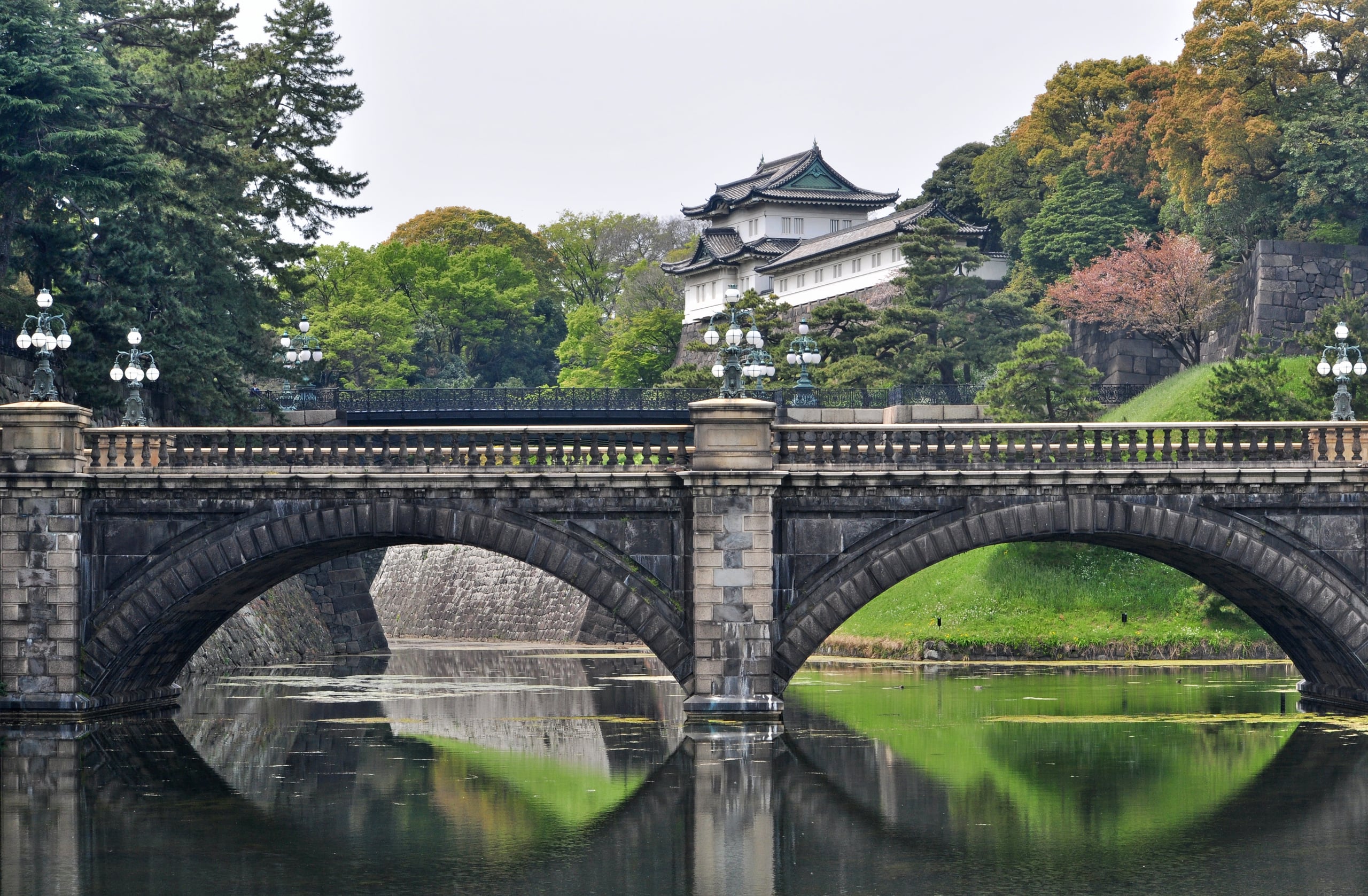
A private chauffeur waits at arrivals, and from Haneda the drive into Marunouchi takes about thirty minutes. The hotel for these three nights stands on the moat of the Imperial Palace, its rooms turned to the old stone walls and the pines of the palace grounds, many of them with a balcony, which is rare in the centre of Tokyo. The first evening asks for nothing more than a walk along the moat as the lights come up in the towers behind it, and an early night.
The other great choice for these three nights is in Toranomon, a hotel whose lobby of hanging lanterns and paper screens, first opened in 1962, was re-created in its new building.
day two
Day two: Tokyo, the palace gardens and Meiji Jingu
The day begins across the moat in the East Gardens of the Imperial Palace, on the ground of the old Edo Castle, where the great stone base of the castle keep still stands above lawns and a garden of pines and azaleas. The gardens close on Mondays and Fridays, and a well-made itinerary turns the Tokyo days around them.
In the afternoon, Meiji Jingu. The forest around the shrine looks ancient and is not: its seventy hectares were planted from about 100,000 trees sent from every part of Japan and completed in 1920, chosen so the wood would look natural for centuries. The gravel approach under the forest is the quietest walk in central Tokyo, and Omotesando's avenue of zelkova leads from the shrine gate into the architecture of the city's flagship shops. At dusk the crossing at Shibuya is a few minutes away, best seen from above.
day three
Day three: Asakusa, Tsukiji and Ginza
Senso-ji in Asakusa is Tokyo's oldest temple, founded in 628, and it is entered beneath the great red lantern of the Kaminarimon and along Nakamise-dori, a street of shops selling crackers, fans and combs that has served pilgrims for centuries. Behind the main hall the lanes of Asakusa keep the low wooden scale of old Tokyo.
The Tsukiji Outer Market, a short drive south, is the morning's second stop: knife makers, tea merchants, tamagoyaki cooked in long copper pans, and oysters opened at the counter. Ginza follows on foot for the department-store food halls and the galleries of its side streets. Dinner is at a sushi counter of eight seats, the chef cutting each piece as it is eaten.
day four
Day four: to Mount Fuji and Oshino Hakkai
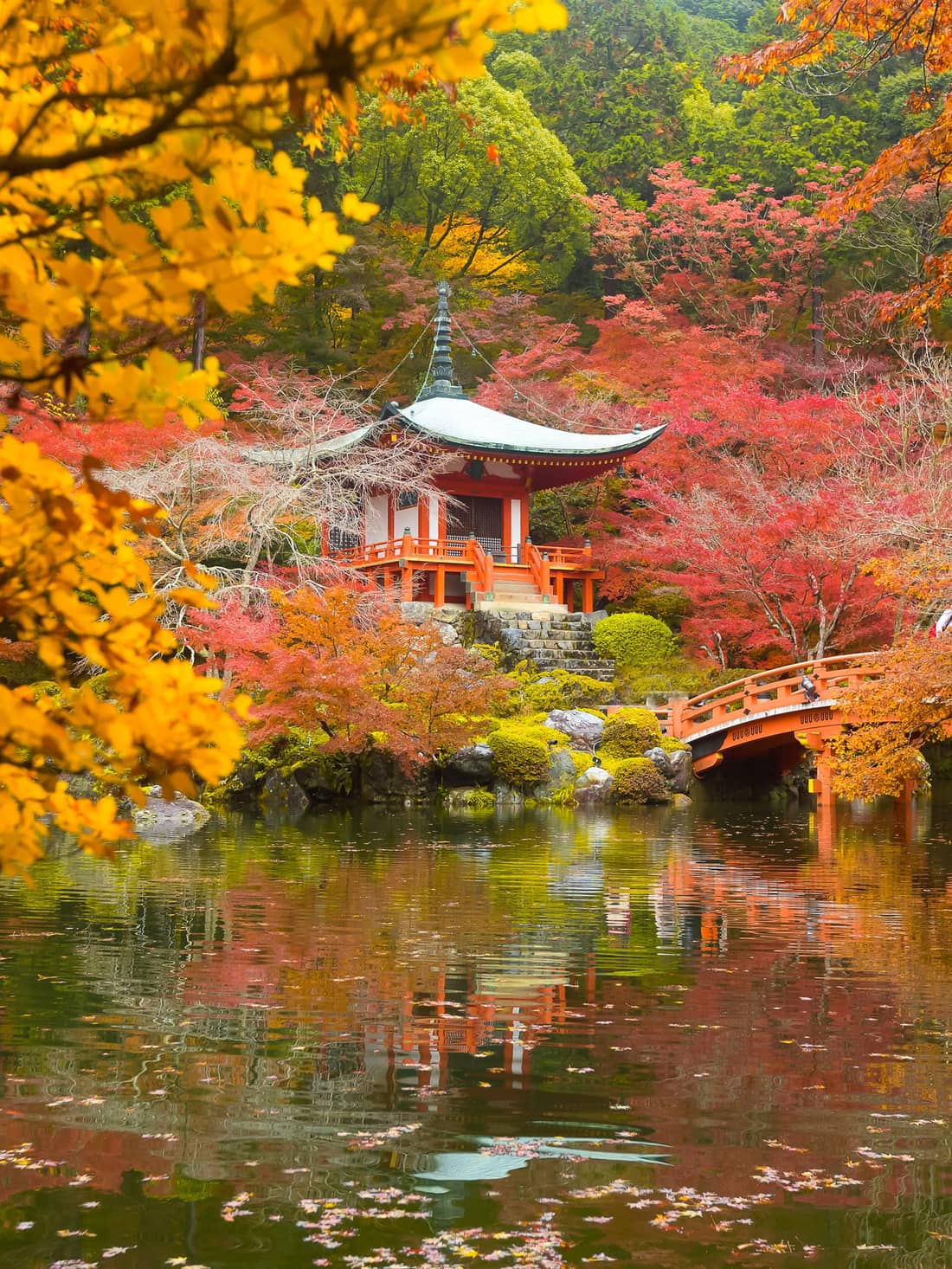
The Fuji lakes are a day for the private car: under two hours west on the Chuo Expressway, with the mountain filling the windscreen for the last part of the drive. On the way, Oshino Hakkai: eight springs where snowmelt from Mount Fuji, filtered for years through the volcanic rock, rises into ponds so clear that every stone and strand of weed on the bottom shows. The springs are a National Natural Monument and part of the Fujisan World Heritage property.
The night is at a ryokan at Fujiyoshida set in more than six hectares of garden, with the Katsura River running through it and an open-air onsen on its roof that steps down in three tiers, each turned to the mountain. Another, on the shore of the lake at Funatsu, looks at Fuji across the water; a third, in the trees above the lake, gives every suite its own outdoor onsen. Dinner is kaiseki, at the ryokan, both nights.
day five
Day five: Mount Fuji from the Kachi Kachi Ropeway
The Kachi Kachi Ropeway climbs from the eastern shore of the lake beneath Mount Fuji to Tenjoyama Park in about three minutes, and from its deck at 1,075 metres the lake lies below and Mount Fuji stands across it to the south. The ropeway takes its name from Kachi-kachi Yama, the folktale of a rabbit who avenges a farmer against a wicked tanuki, and the summit keeps the story with a small shrine and a teahouse.
The afternoon belongs to the lake and the onsen, and the second night gives the mountain a second evening and a second morning, seen from the onsen on the roof.
day six
Day six: to Kyoto in first class
The private car takes about an hour over the hills to Mishima, on the Tokaido Shinkansen, and the Hikari reaches Kyoto in a little under two hours. First class on the shinkansen seats two either side of the aisle, against three and two in the ordinary cars, with a deep recline and a quieter carriage. The luggage travels separately by road to the Kyoto hotel, so the journey is made with a light bag.
The Kyoto nights are in Higashiyama, between Yasaka Shrine and Kodai-ji, in the part of the city that still looks most like old Kyoto. The first evening is a walk downhill to the Shirakawa canal and the teahouse streets of Gion, where the lanterns are lit and the lanes are quiet after the day visitors have gone.
For a traveller who wants Kyoto from a ryokan, the two most celebrated in the city stand a few streets apart in Nakagyo, at its centre.
A hotel between Yasaka Shrine and Kodai-ji, Higashiyama →
day seven
Day seven: Fushimi Inari and Nara
Fushimi Inari lies in the south of Kyoto, on the road to Nara, which is why the two belong to the same day. The vermilion torii climb Mount Inari in their thousands, each the gift of a family or a company, and the higher the path goes the quieter it becomes. A private car makes the pairing easy: Nara is about an hour beyond.
In Nara the Great Buddha of Todai-ji, first cast in 752 and about fifteen metres tall, sits in a hall that remains among the largest wooden buildings in the world. The sika deer of Nara Park wander between the temple gates and bow for crackers. The day ends on the approach to Kasuga Taisha, lined with moss-covered stone lanterns under the cedars, before the drive back to Kyoto.
day eight
Day eight: Kinkaku-ji, Ryoan-ji and Arashiyama
The north-west of Kyoto offers two of its most famous gardens within a short drive of each other. Kinkaku-ji, the Golden Pavilion, sets its three gilded storeys at the edge of a pond made to reflect them. At Ryoan-ji, fifteen stones lie on raked white gravel, placed so that from any point on the veranda one is always hidden.

The afternoon is in Arashiyama, on the western edge of the city. Tenryu-ji, a World Heritage temple, keeps a pond garden laid against the borrowed scenery of the hills; its north gate opens straight onto the bamboo grove, where the stems close overhead and the wind in them is the only sound. Togetsukyo, the long wooden bridge over the Katsura River, is the last view of the day.
day nine
Day nine: Higashiyama, tea and Nishiki Market
The final Kyoto day starts at the hotel door. Kiyomizu-dera's great wooden stage juts from the hillside on a lattice of timber pillars, the whole city spread below it, and the stone steps of Sannenzaka and Ninenzaka lead back down past tea shops and potters to the five-storey Yasaka pagoda.
In the afternoon, a private tea ceremony in a tatami room, the host preparing matcha in its slow, exact sequence, a sweet of the season set before each guest first. Nishiki Market follows: a narrow covered street of pickles, dried fish, knives and tofu, where Kyoto's cooks have shopped for generations. The evening is free, with a kaiseki counter in Gion if the guest wants one.
day ten
Day ten: to Kinosaki Onsen and a ryokan of seven generations
The limited express Kinosaki leaves Kyoto Station for the Sea of Japan coast and arrives at Kinosaki Onsen in about two and a half hours, with a first-class carriage on board. The line runs north through the hills of Tamba and down the valley of the Maruyama River, and the country changes on the way from city to rice terraces and cedar.
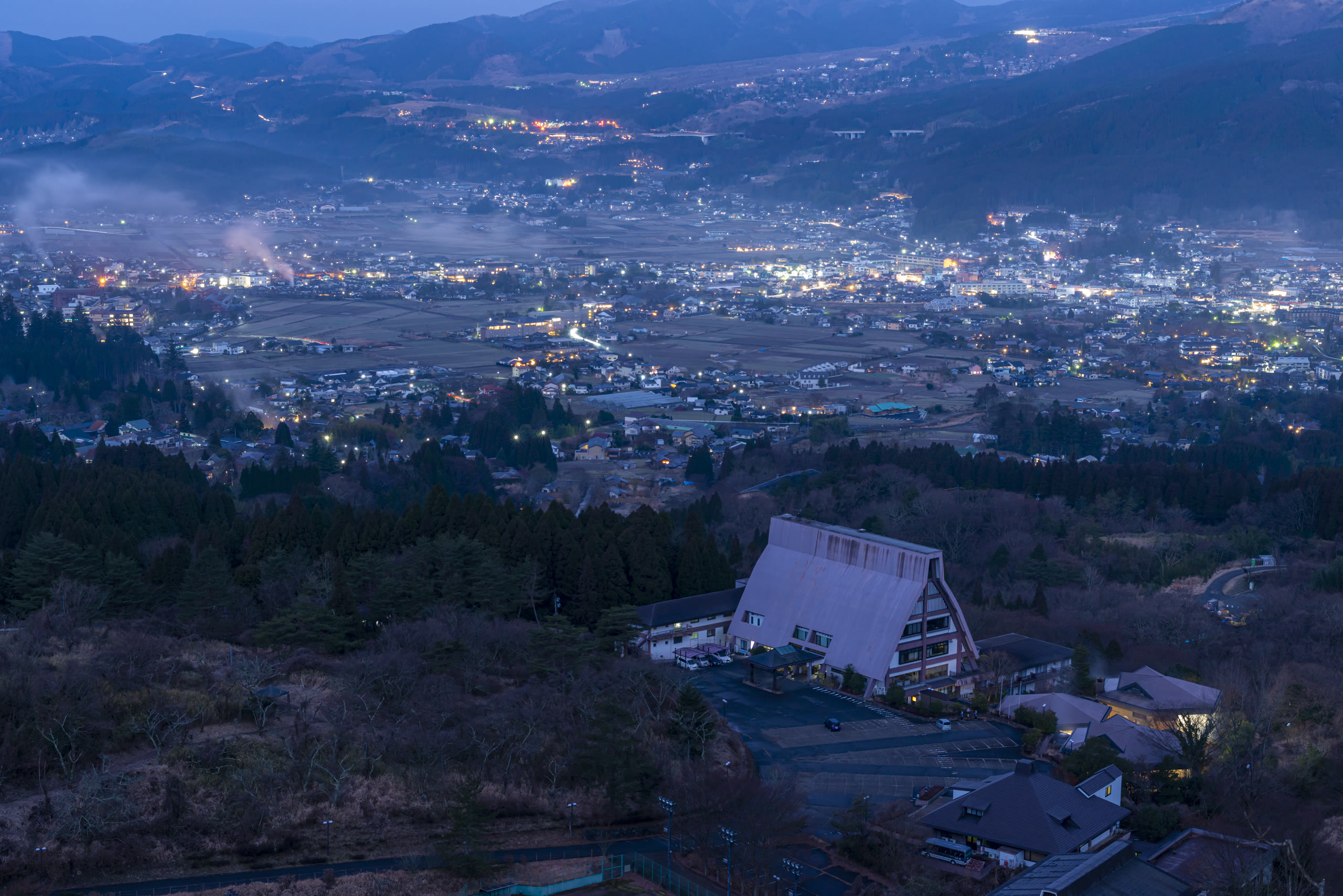
Kinosaki is a small town of willows, stone bridges and wooden inns along a canal, where the street is the corridor between its public onsen. The ryokan, kept by one family for seven generations, opens its tatami rooms onto a garden of pines, moss and stone lanterns. Guests change into yukata and wooden geta at the ryokan and walk the town in them, which is the custom here and the pleasure of it.
day eleven
Day eleven: Kinosaki's seven public onsen
Kinosaki's seven public onsen line the canal and its side streets, each with its own building and its own story: Satono-yu by the station, the largest; Ichino-yu, whose open-air onsen sits in a cave of rock; Mandara-yu, where the spring is said first to have risen; Kono-yu, the oldest, where the town's tale says a stork showed the first bathers the water. Jizo-yu, Yanagi-yu and Goshono-yu complete the round, and a pass from the ryokan opens all seven.
Between onsen, the Kinosaki Ropeway climbs to the temple of Onsen-ji, guardian of the springs, and to a view of the town and the river mouth. From 6 November into March the dinners turn to matsuba-gani, the snow crab of the Sea of Japan. Both evenings' dinners are kaiseki at the ryokan, Tajima beef among them.
On the last evening in Kinosaki the canal lamps come on one by one under the willows, a pair of geta clatters across a stone bridge, and the steam from Ichino-yu drifts over the water towards the hills.
day twelve
Day twelve: to Osaka and the river
The limited express Kounotori runs from Kinosaki Onsen to Osaka in about two hours and forty minutes, again in first class, and the luggage has once more gone ahead. The hotel stands on the bank of the Okawa River in the north of the city, its upper floors of rooms and suites high over the water and the lights.
Osaka was called the kitchen of the nation in the Edo period, and the city still eats with that appetite. The first evening is on the canal at Dotonbori, under the great lit signs, for takoyaki and kushikatsu at the counters where the city itself eats them.
day thirteen
Day thirteen: Osaka Castle and Kuromon Market
Osaka Castle's keep, rebuilt in 1931 on the great stone walls of the sixteenth-century fortress, houses a museum of the castle's history over eight floors and a deck at the top over the moats and the city. Kuromon Market follows, a covered street of fishmongers and grocers where scallops are grilled in the shell and wagyu is seared on skewers to be eaten standing.
The last dinner is at a sushi counter in the city, the kind with a single cypress board and a chef who works for the eight people in front of him, and then the short drive back along the river.
day fourteen
Day fourteen: departure from Kansai
The private car reaches Kansai International Airport in about an hour, and the flights home leave from there. A fortnight that began on the moat in Tokyo ends on the river in Osaka, without a single day of doubling back.
Tipping is not customary in Japan. In restaurants and hotels the service is in the bill.
the other fortnight
Another two weeks in Japan: Kanazawa and Kaga
The strongest alternative fortnight trades Mount Fuji and Kinosaki for the Sea of Japan coast further north. The Kagayaki on the Hokuriku Shinkansen runs from Tokyo to Kanazawa in about two and a half hours, with first class and, above it, GranClass. The night in Kanazawa is beside Kenroku-en, one of Japan's three great gardens, at a hotel with rooms in the Taisho manner and an onsen drawn from its own spring. Forty minutes south, at Yamashiro Onsen, a ryokan of seventeen rooms has been kept by the same family since 1639. From Kanazawa the shinkansen continues to Tsuruga, where the Thunderbird takes over for Kyoto, a journey of a little over two hours in all.
A hotel beside Kenroku-en, Kanazawa →
A ryokan of seventeen rooms, Yamashiro Onsen →
For a traveller who would rather take the fortnight independently but have it written, the Expert Japan Itinerary sets down every hotel, train and sight in order, for journeys of up to fifteen days.
The Expert Japan Itinerary, written for independent travel →
A Japan itinerary for 10 days →
the journey
This Japan itinerary as a private journey
Definitive Japan, a journey of The Private Collection, travels almost exactly this route in thirteen days: three nights in Tokyo, two beneath Mount Fuji, three in Kyoto, two at Kinosaki and two in Osaka, taken privately on the guest's own dates. The Kachi Kachi Ropeway and the springs of Oshino Hakkai, the day in Nara, a private tea ceremony in Kyoto and the seven public onsen of Kinosaki are all part of it, with four evenings of kaiseki at its two ryokan.
A private chauffeur meets the flight, first class carries the party between cities, and the luggage goes ahead from hotel to hotel. A Tour Director, fluent in English and Japanese, is beside the guests from the first evening to the last, so the journey asks nothing of them but to be there.
questions
Questions
Is 14 days enough for Japan?
Yes, for the central journey. Two weeks take in Tokyo, a ryokan beneath Mount Fuji, four nights in Kyoto with a day in Nara, an onsen town such as Kinosaki and Osaka at an easy pace. Hokkaido, Kyushu or the Inland Sea each need a journey of their own.
What is a good 2-week itinerary for Japan?
Three nights in Tokyo, two beneath Mount Fuji, four in Kyoto with a day trip to Nara, two at Kinosaki Onsen and two in Osaka, flying in to Tokyo and home from Kansai. It covers the great sights with no more than five hotels.
How many nights should a 2-week Japan itinerary spend in Kyoto?
Four. Kyoto needs three full days for its temples, gardens and Higashiyama, and a fourth night makes a day in Nara easy without losing any of them.
How do travellers get around on a luxury Japan itinerary?
In first class on the shinkansen and limited express trains between cities, with a private car where the rail cannot do the day, as on the drive to Mount Fuji. Luggage is sent ahead to the next hotel by road, so each journey is made with a light bag.
Where should a luxury Japan itinerary stay?
On the palace moat in Tokyo, at a ryokan with its own onsen beneath Mount Fuji, in the old streets of Higashiyama in Kyoto, at a ryokan kept by one family for seven generations at Kinosaki Onsen, and high over the Okawa River in Osaka.
Should a Japan itinerary include a ryokan?
Yes, at least two nights. A ryokan stay, with kaiseki at dinner and an onsen, is the part of a fortnight most travellers remember longest, and Mount Fuji and Kinosaki both make the case.