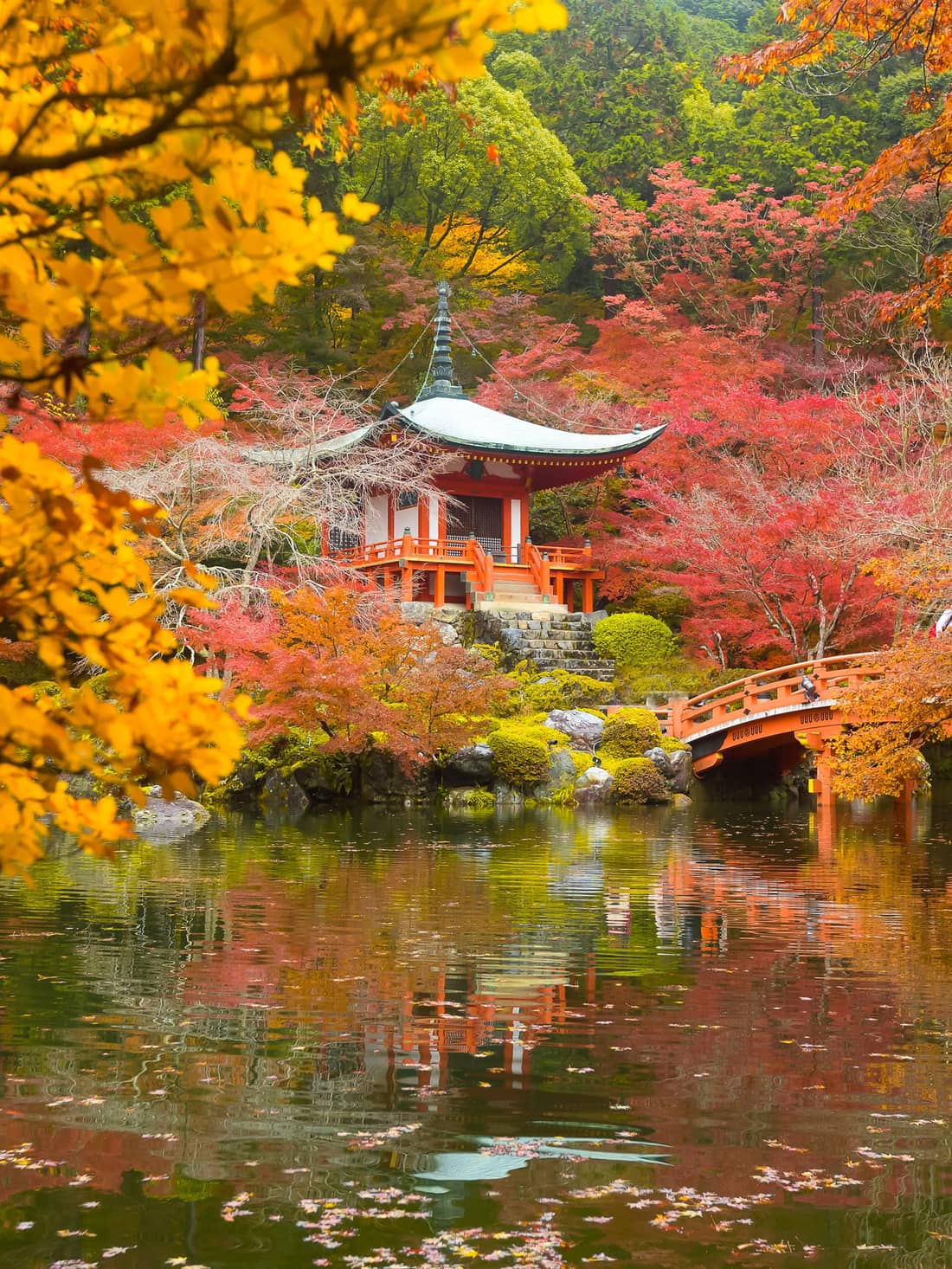

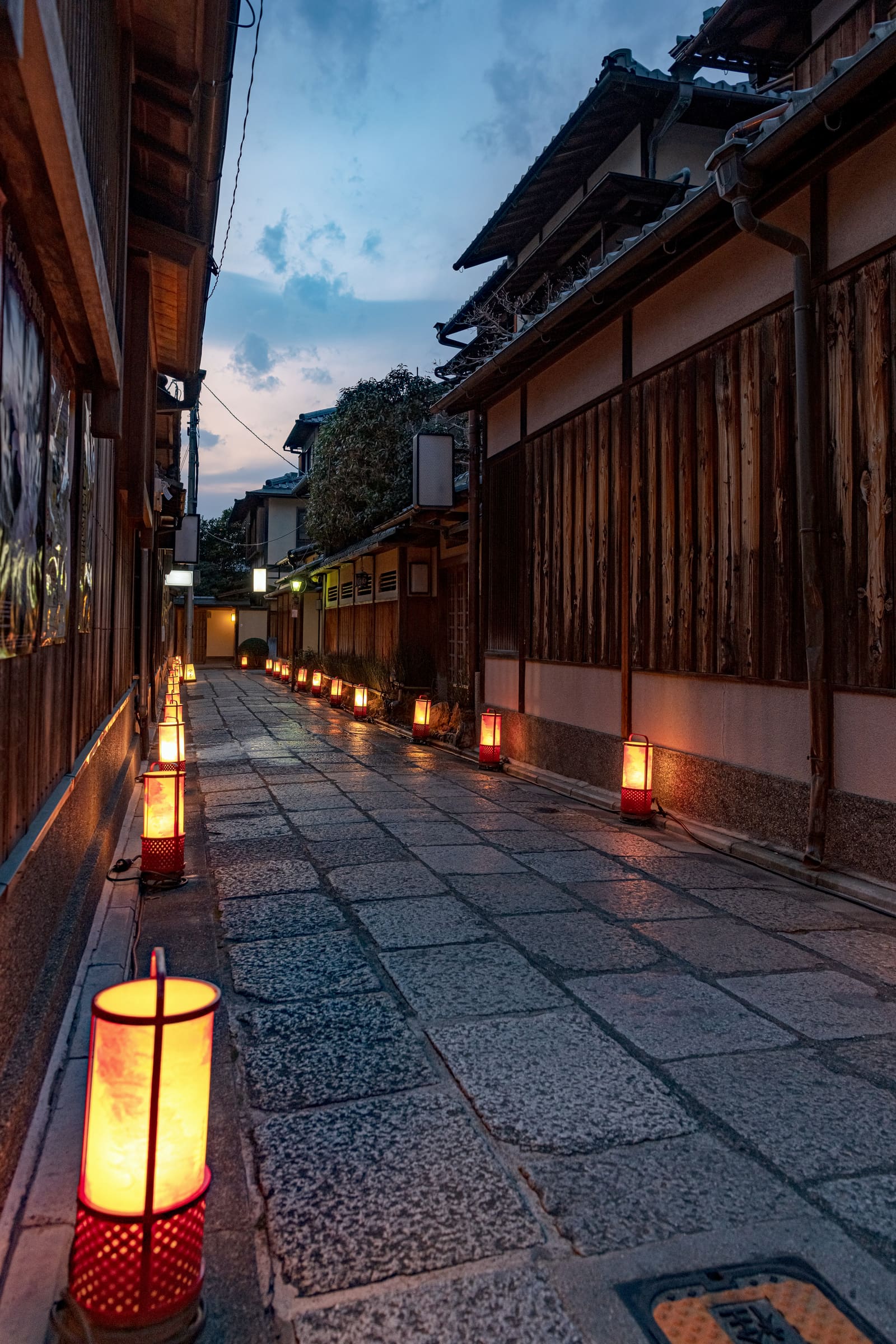
Japan in winter is worth the journey, and for a traveller who loves snow, hot springs and a long dinner it is the best season of the year. Tokyo and Kyoto have dry, clear days. The Sea of Japan coast and Hokkaido lie under deep snow, the onsen are at their most inviting, the winter table is at its richest, and Kyoto is quieter than at any other time.
The proof is a morning in Arashiyama after a night of snow. The Katsura River runs dark and glassy under Togetsukyo Bridge, the hills behind it have gone from green to a grey lacework of white, and the only sound is the weir. A few hours later the snow has slid off the cedars and the city is back to its winter self: cold, bright and walkable, its great gardens close to empty.
Two climates divide the country in winter. Cold air off Siberia crosses the Sea of Japan, picks up moisture and drops it as snow against the mountains of Hokkaido, Tohoku, Niigata, Nagano and the Hokuriku coast. By the time the same air reaches Tokyo, Kyoto and Osaka it has given up its snow and arrives as clear, dry wind. Tokyo's January mean is 5.4°C and Kyoto's close to 5°C, and Tokyo has more hours of sunshine in January than in June or July. Sapporo's January mean is minus 3.2°C, and the city lives under snow from December until March.
A winter journey is built on that division: the cities on the dry side, the snow country on the other, and the shinkansen crossing from one to the other in an hour or two.
the case
Is it worth visiting Japan in winter?
Yes, for four reasons no other season can match.
Snow comes first, and Japan does it better than almost anywhere: the powder of Niseko and Hakuba, the thatched farmhouses of Shirakawa-go buried to the eaves, the rime-coated firs on Mount Zao that the Japanese call juhyo, the snow monsters. Then the onsen. A hot spring is a winter pleasure before it is anything else, and an open-air pool with snow falling on its rocks is the onsen at its most complete. The table follows: snow crab from the Sea of Japan, winter yellowtail, oysters, fugu, and nabe, the one-pot stews a ryokan sets over a flame at the table. And between the New Year holiday and the plum blossom, the temples of Kyoto and Nara see fewer visitors than at any other time of year.
What winter gives up is daylight. The sun sets in Tokyo at about half past four in late December, and days in the snow country are short and soft. The long evenings belong to the ryokan dinner and the onsen, and they are much of the reason to come.
kyoto
Kyoto and Nara in winter: the quiet months
Kyoto in January and February is low light, frost on the moss and temple halls with room to stand in. When snow does fall, a few times a winter, the city goes out to see it: Kinkaku-ji, its gold pavilion under a cap of white, is the picture the whole city waits for, and the raked gravel of the Zen gardens takes on the look of an ink painting.
Winter also opens doors. Each year from early January into March, the city's Winter Special Opening, Kyo no Fuyu no Tabi, admits visitors to temple halls, gardens, painted screens and statues that are otherwise closed, around a theme that changes annually. It is the best reason to choose January over December in Kyoto.
Nara has its own winter evening. On the fourth Saturday of January the dry grass of Mount Wakakusa is set alight after fireworks, and the whole hill burns orange above the old capital.
The great Kyoto ryokan are at their best in this season. Two of the oldest, a few streets apart in Nakagyo, serve winter dishes in their rooms and keep the cold on the other side of the shoji. In the north of the city, a pavilion in a forest garden at the foot of Hidari Daimonji has an onsen of its own.
snow country
Snow country on the Sea of Japan: Kanazawa, Kinosaki and Shirakawa-go
The coast facing the Sea of Japan is where winter becomes a reason to travel in itself, and where the winter table is set.
In Kanazawa the season begins on 1 November, when the gardeners of Kenroku-en start to rig the yukitsuri: ropes running from a mast at the trunk of each great pine to its outer branches, so that the weight of the wet coastal snow is carried and no limb breaks. The Karasaki pine alone takes some 800 of them, hung from five poles. Under snow the ropes become a field of white cones across the garden.
On 6 November the snow crab season opens along the coast from Hyogo to Ishikawa. At Kinosaki Onsen the crab is matsuba-gani, landed at the ports a few minutes away, and from then until March it is the centre of every dinner in town: raw, grilled over charcoal, in a nabe, and finally as a rice porridge cooked in the broth that is left. Kinosaki is the classic winter onsen town, its willow-lined canal and seven public onsen walked in yukata and wooden geta, and its most celebrated ryokan stands on the canal.
Kinosaki's most celebrated ryokan, on the canal →
Inland from Kanazawa, in the Kaga onsen towns, a ryokan at Yamashiro Onsen gives every one of its sixteen rooms an open-air onsen over a garden of red pine and maple, which in January is a garden of snow.
Shirakawa-go, in the mountains between Kanazawa and Takayama, is a village of gassho-zukuri farmhouses, their thatched roofs pitched as steeply as hands in prayer so that the snow slides off. On four evenings each January the village is lit for its winter light-up, in 2027 on 11, 17, 24 and 31 January, and on those evenings visitors are admitted by reservation only. By day, in any week of winter, the village is quieter and the snow on the thatch is just as deep.
nagano
Snow monkeys and the Nagano Alps

The snow monkeys of Japan live at Jigokudani Yaen-koen, a wild monkey park in a steep valley above the town of Yamanouchi in Nagano. The Japanese macaques that range through the forest there come down to a hot spring on the valley floor and, in winter, sit in it against the cold, snow settling on their heads while their faces turn a deeper red. They are wild, free to come and go, and the spring is their winter habit.
The park opens from nine until four between November and March, and the way in is a level forest path of about thirty-five minutes through cedars heavy with snow. Nearby Shibu Onsen and Yudanaka are old onsen towns of narrow lanes, and the mountains of Hakuba and Myoko lie within an easy drive.

North of Nagano city, the approach to the Okusha of Togakushi Shrine runs through an avenue of cedars some four centuries old, the vermilion Zuishinmon gate halfway along it under a heavy roof of snow. It is one of the most beautiful winter walks in the country.
the snow
Skiing in Japan: Niseko, Hakuba and Myoko
For skiers the answer to Japan in winter is three mountains: Niseko in Hokkaido, Hakuba in Nagano and Myoko in Niigata, where Lotte Arai Resort stands alone on its own mountain. Each is unmistakably Japan, and each runs in English, on the mountain and at the front desk. The season runs from December into April, and January and February bring the deepest powder.
In Niseko, a ryokan of fifteen villas stands in the birch forest of Hanazono, each villa with an indoor and an outdoor onsen fed by the ryokan's own spring and Mount Yotei across the snowfields. It is the place to end a ski day.
Luxury ski journeys in Japan: Niseko, Hakuba and Myoko →
A Japan ski itinerary, written for your party to travel independently →
hokkaido
Hokkaido in winter: snow festival, drift ice and cranes
Hokkaido in winter is a different country again. In early February the Sapporo Snow Festival fills Odori Park with sculptures of snow and ice, some the size of a building, with Susukino's ice carvings and the family slides at Tsudome alongside it for about a week.
Further east the Sea of Okhotsk freezes from the north, and from late January the drift ice reaches the coast. The icebreaker Aurora sails from Abashiri into it from late January until late March, an hour among plates of white ice that grind and part beneath the bow; the Garinko, with two great drills at its prow, sails from Monbetsu. On the Kushiro marsh the red-crowned cranes gather on the snow at the feeding grounds near Tsurui and dance in pairs, wings open, the courtship of a bird brought back from the edge of extinction.
tohoku
Tohoku in winter: Ginzan Onsen, Nyuto and the snow monsters
The north of Honshu has some of the loveliest onsen villages in Japan, and winter is their season. Ginzan Onsen in Yamagata is a single street of three- and four-storey wooden ryokan facing each other across a narrow river; at dusk, under snow, with the gas lamps lit, it looks like a scene from a woodblock print. Its most remarkable inn has been rebuilt behind tall panels of glass and fine bamboo lattice.
At Nyuto Onsen-kyo, in the beech forest of the Towada-Hachimantai National Park in Akita, the ryokan sit alone in deep snow. One of them has two springs of its own, one clear and one cloudy, flowing into eight onsen beside a mountain stream.
On Mount Zao, the winter wind off the Sea of Japan coats the firs near the summit in layer on layer of rime and snow until they stand like figures, the juhyo. They form from late December, are at their fullest from late January into February, and are seen from the Zao Ropeway, by day and on lit evenings.
the weather
How cold Japan is in winter, and what to wear
Tokyo, Kyoto and Osaka in winter feel like a crisp European winter in a mild year: days around 9 to 10°C, nights near freezing, and frost more common than snow. A good wool coat, scarf and gloves are enough, and shoes that slip on and off easily matter more than boots, because temples, ryokan and many restaurants are entered in socks. Hokkaido, Tohoku and the mountains are properly cold, with Sapporo below zero for much of January and February, and call for a down coat, a warm hat and boots with a good grip. Every hotel, ryokan, train and taxi is heated, and the cold is mostly a matter of the walk between them.
the months
December, January or February: choosing the month
December brings the last maples to Kyoto's moss in its first days, the illuminations of Tokyo, and the run-up to the New Year. From the last days of December to about 3 January the country stops for the New Year: many sights and restaurants close and the whole of Japan travels home, which makes it a wonderful time to be in a ryokan and a difficult one for sightseeing. January, after the holiday, is the quietest month in Kyoto and the start of the deepest snow in the north. February is the month of the snow festival, the drift ice and the cranes, and by its end the first plum blossom is out in Kyoto.
the journey
A Japan winter itinerary
The best winter journey in Japan crosses the two climates. A fortnight begins in Tokyo, takes the Hokuriku Shinkansen through the snow to Kanazawa, with a day among the farmhouses of Shirakawa-go, crosses to Kinosaki for two nights of crab and onsen, and ends in Kyoto for its quiet temples and the Winter Special Opening. A skiing party adds a week at Niseko and the drift ice of the east, or Hakuba and the snow monkeys. In winter the order of the days matters more than in any other season, because the light is short, the New Year closes the country for a few days, and the great ryokan of the snow country have only a handful of rooms.
Late on a January afternoon in Kinosaki the snow begins again, lit gold under the lamps along the canal. A pair of geta clatters over a stone bridge, steam drifts from the door of one of the town's public onsen, and somewhere above the street a ryokan kitchen is setting out the crab.
A winter like this is what The Custom Tour of Japan is made for: a private journey for one party, on its own dates and from five nights, planned and run by Luxury Japan Travel with a Tour Director beside the party every day and a private car and driver in each city. It can join Kyoto in the weeks of the Winter Special Opening to a suite at Kinosaki with an onsen of its own and the crab brought to the room one course at a time, then go north to a villa in the Niseko forest with two private onsen and a guide who knows where the powder fell overnight, or to the drift ice off Abashiri and the cranes dancing on the Kushiro marsh.
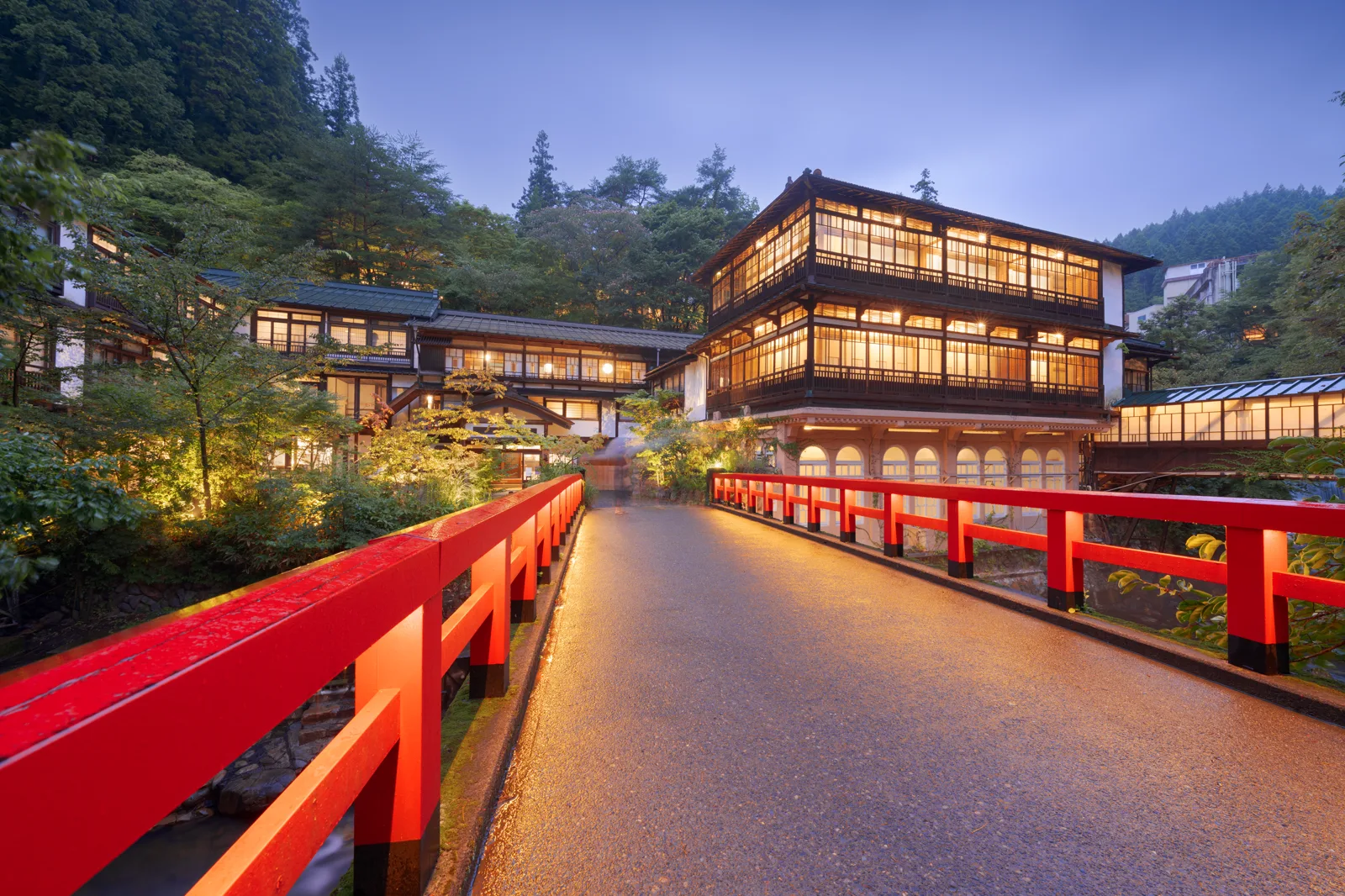
questions
Questions
Is it worth visiting Japan in winter?
Yes. Winter brings deep snow to Hokkaido, Tohoku and the Sea of Japan coast, onsen at their best, snow crab and the richest food of the year, and Kyoto at its quietest, with clear, dry days in Tokyo and Kyoto.
Is Japan very cold in winter?
That turns on the side of the mountains. Tokyo's January mean is 5.4°C and Kyoto's is close to 5°C, with dry, sunny days. Sapporo's January mean is minus 3.2°C, and Hokkaido, Tohoku and the mountains lie under snow from December to March.
Where is the best place to see snow in Japan?
Shirakawa-go and Kanazawa on the Sea of Japan side, Ginzan Onsen and the snow monsters of Mount Zao in Tohoku, Nagano and Hakuba in the Alps, and Hokkaido, from Niseko to the drift ice of the Sea of Okhotsk.
When can you see the snow monkeys in Japan?
The macaques of Jigokudani Yaen-koen in Nagano sit in the hot spring during the cold months, from about December to March. The park opens from 9:00 to 16:00 between November and March and is reached by a forest path of about 35 minutes.
Is December a good time to visit Japan?
Early December brings the last autumn colour to Kyoto and the start of the snow in the north. From about 29 December to 3 January the country stops for the New Year and many sights close, so January and February suit sightseeing better.
Where should you go in Japan in winter?
Kyoto and Nara for quiet temples and the Winter Special Opening; Kanazawa, Kinosaki and Shirakawa-go for snow, crab and onsen; Nagano for the snow monkeys; Niseko, Hakuba and Myoko for skiing; and Hokkaido for the snow festival, drift ice and cranes.