
The best first trip to Japan is Tokyo, then Kyoto with a day in Nara, then Osaka, travelled in that order over seven to ten days, with nine as the right number: three nights in Tokyo, three in Kyoto and two in Osaka, joined by the shinkansen. It is the route almost every first visitor is told to take, and the advice is right, for reasons that have to do with the order of the cities as much as the cities themselves.
It begins somewhere on the Tokaido Shinkansen, a little over two hours out of Tokyo. The train crosses the Kamo River and slows into Kyoto Station, and the carriage that left a capital of fourteen million people delivers its passengers to a city of temples, wooden townhouses and gardens of raked gravel. For many first visitors that arrival is the moment the journey turns, and the route is built around it.
the route
Where to go in Japan for the first time
Tokyo, Kyoto, Nara and Osaka. Together they are what the Japanese travel trade calls the Golden Route, and for a first visit nothing replaces it. Each city does something the others cannot, and the four sit along one railway line, so the whole journey runs without a single flight inside Japan.
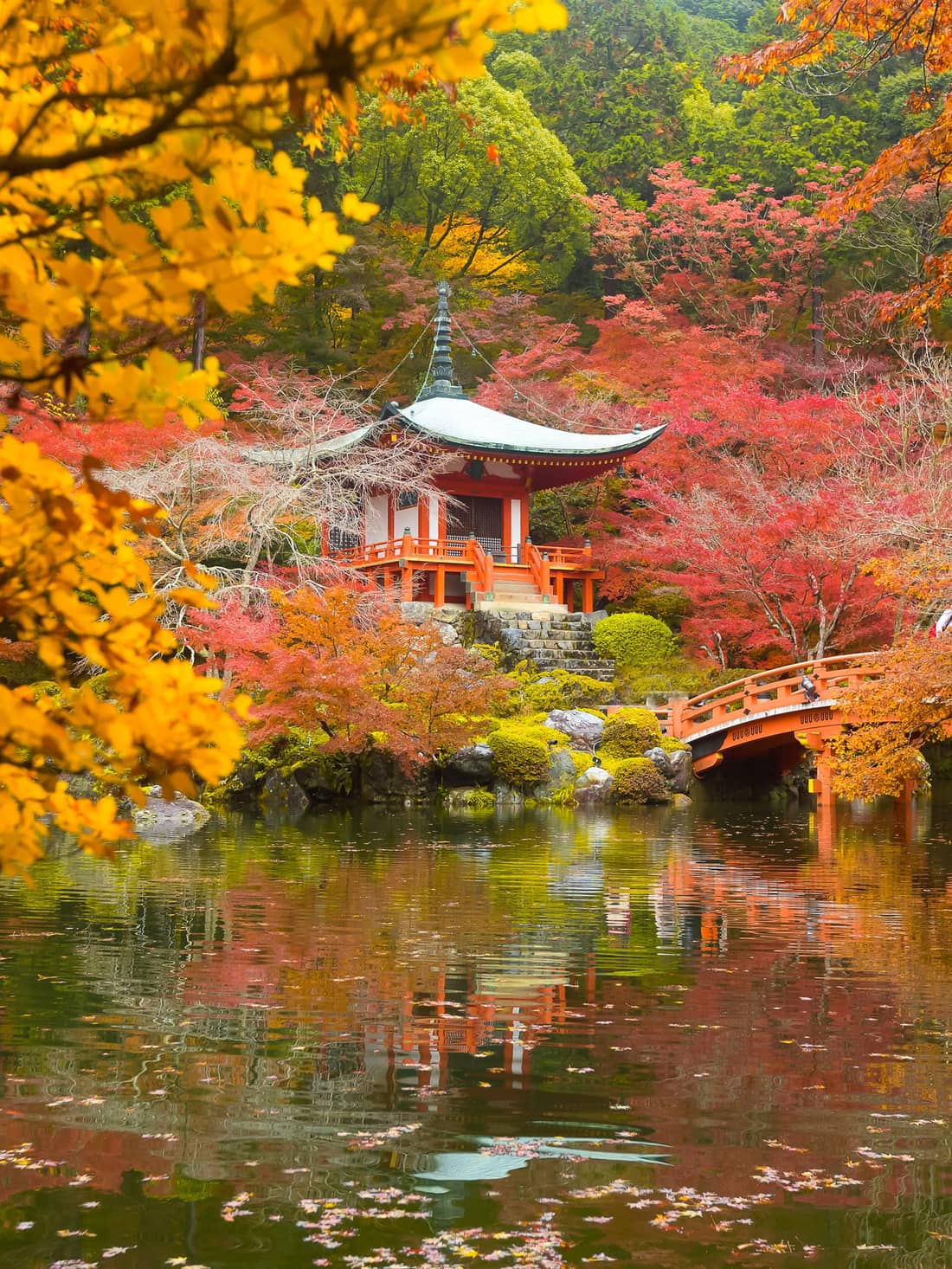
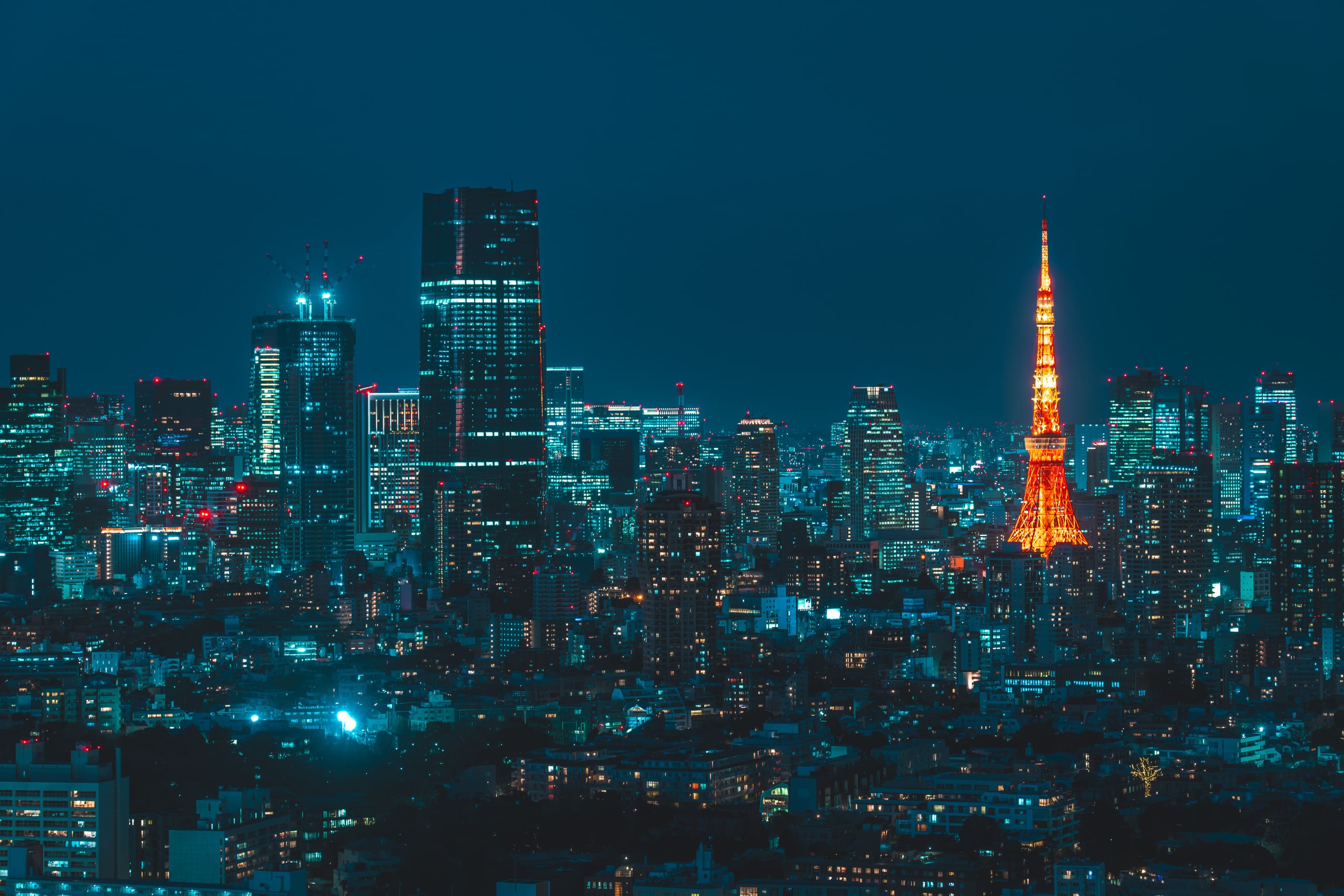
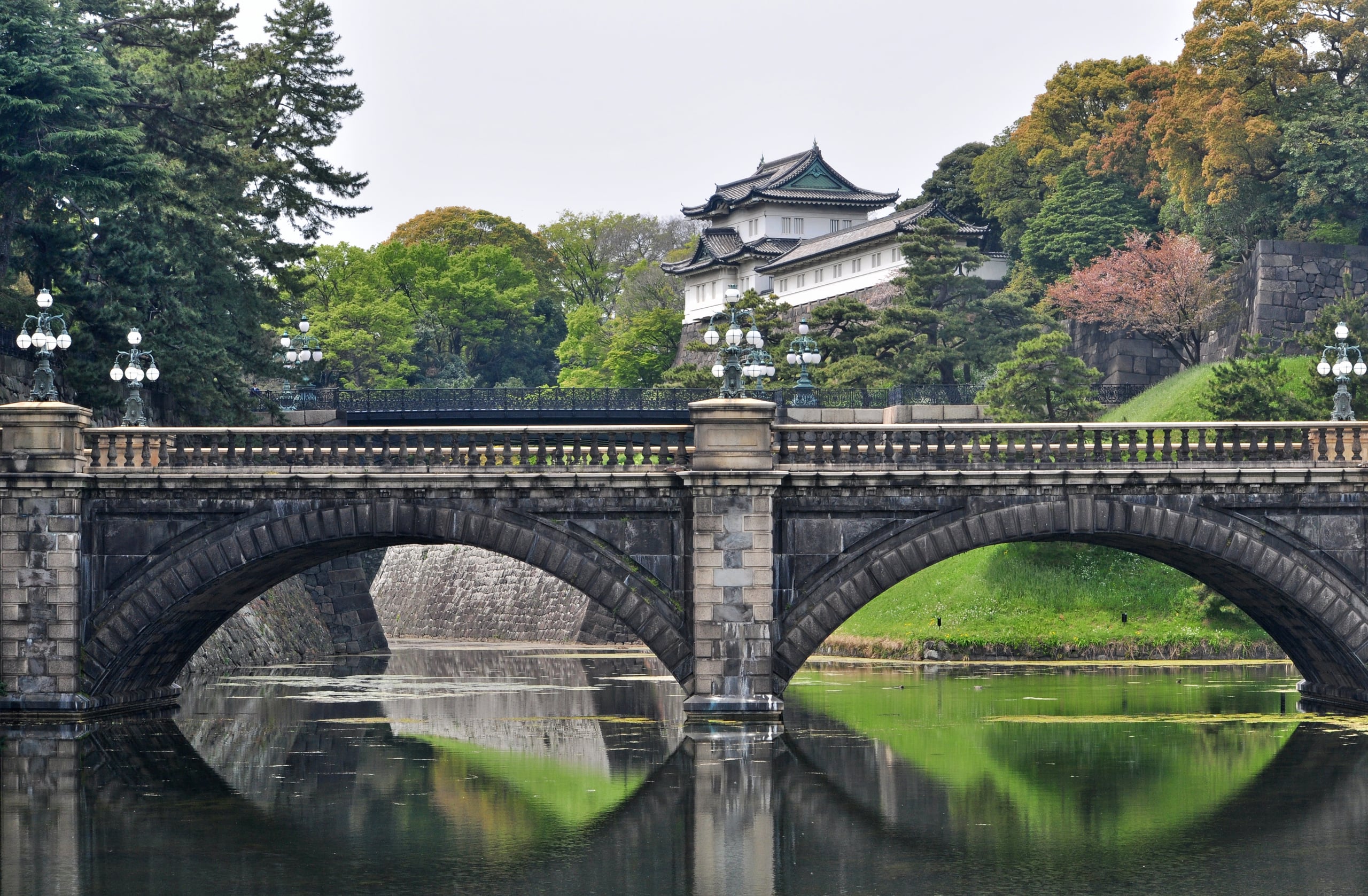
Tokyo is the arrival: a capital that runs to the minute, with Senso-ji in Asakusa, the forest around Meiji Jingu, the Imperial Palace East Gardens, the Tsukiji Outer Market at lunchtime and Ginza after dark. Kyoto is the depth: Kinkaku-ji, Kiyomizu-dera above Higashiyama, the bamboo grove at Arashiyama, the vermilion gates climbing Mount Inari at Fushimi Inari, the lanes of Gion in the evening. Nara, under an hour from Kyoto, is home to Todai-ji, whose bronze Great Buddha stands almost fifteen metres high, and a park where nearly 1,500 sika deer walk freely among the visitors. Osaka is the table: Dotonbori lit up over its canal, Kuromon Market, and Osaka Castle above its moats, in the city Japan has called its kitchen since the age of the shoguns.
the order
Why Tokyo first, then Kyoto, then Osaka
Tokyo comes first because the long-haul flights land there, at Narita and Haneda, and because a first day in Japan is best spent in a city that asks nothing of the visitor but to walk and look. The jet lag is absorbed by a city that is open late.
Kyoto comes second because it rewards a traveller who has already adjusted. By the third or fourth day the body clock has turned, the trains are familiar, and the quieter city opens on its own terms. Arriving in Kyoto first, straight off an overnight flight, wastes the city on a tired traveller.
Osaka comes last because it sits beside Kansai International Airport, and a journey that flies into Tokyo and out of Osaka never travels the same line twice. Osaka is loud, generous and built around eating, the right city for the last two nights.
The rail times make the shape easy. Tokyo to Kyoto by Nozomi takes about two hours and ten minutes. Kyoto to Nara takes thirty-five minutes on the Kintetsu limited express. Kyoto to Osaka is about thirty minutes on the JR Special Rapid, or fifteen on the shinkansen. Kyoto to Kansai Airport, for those who fly home from there, is about eighty minutes on the direct train.
how long
How many days a first trip to Japan needs
Seven to ten days for the Golden Route, and nine is the number that works best.
Seven days covers Tokyo and Kyoto with a day trip to Nara, but it is a short week once the arrival day and the departure day are counted, and Osaka shrinks to an evening. Ten days adds a slower morning here and there. Nine days, three nights in Tokyo, three in Kyoto and two in Osaka, is the balance: two full days in Tokyo, two in Kyoto with one of them given to Nara, and an Osaka stay long enough to eat well twice. Fewer nights turn the trip into a series of check-ins, and beyond nine the best use of extra days is a fourth place.
With eleven days the right addition is a ryokan, and the classic choice is Kinosaki Onsen, two and a half hours from Kyoto by limited express, a canal town of willows and wooden inns on the Sea of Japan side of Hyogo. With thirteen, the next addition is two nights beneath Mount Fuji, on the shore of the lake, about two hours by direct limited express from Shinjuku. A fortnight changes the shape of the journey altogether.
the trains
Getting around: the shinkansen, first class and IC cards
The Tokaido Shinkansen runs 372 trains a day between Tokyo and Osaka, and the Nozomi, the fastest, leaves Tokyo several times an hour. Seats are reserved by car and by letter, the train arrives at a marked place on the platform, and it leaves to the second. For a first visitor the main decision is the carriage. First class on the shinkansen seats four across instead of five, and on a journey of two hours it is the right ticket.
Shinkansen first class and GranClass, explained →
Supreme Class, the shinkansen's private cabins →
Inside the cities, an IC card does the work. Suica in Tokyo, ICOCA in Kansai and PASMO all work on one another's trains and buses across the country, and in convenience stores and vending machines. Welcome Suica Mobile puts the same card on a phone. A tap at the gate replaces every ticket machine in the city.
Cash still matters more than first-timers expect. International cards are taken in hotels, department stores and most restaurants in the cities, but Japan remains a cash culture, and smaller shops, temple offerings and some country ryokan take yen only. The ATMs in convenience stores and post offices accept overseas cards. Tipping is not customary in Japan.
the luggage
Luggage sent ahead: the habit that changes the trip
Seasoned travellers in Japan rarely take a large suitcase onto the shinkansen, and the first-time visitor should not either. On the Tokaido, Sanyo and Kyushu lines, a bag whose length, width and height add up to more than 160 centimetres needs a reserved seat with an oversized baggage area. The station stairs, the ticket gates and the crowds at the doors make the same case.
The answer is takuhaibin, the door-to-door delivery service that every hotel front desk in Japan arranges. A suitcase handed over at the desk in Tokyo is waiting in the room in Kyoto, by the next day on most routes, and the traveller boards with a light bag. Japan treats it as ordinary, and it turns the move between cities into two easy hours at the window.
the mistakes
What are the biggest mistakes on a first trip to Japan?
Six come up again and again, and every one of them is avoidable at the planning stage.
Too many cities
The map makes it tempting. Hiroshima is a short run further west on the shinkansen, Kanazawa lies up the Hokuriku line, Hakone is close to Tokyo, and the railway makes all of it look effortless. Every one of them means a check-out, a transfer and a check-in, and on a first trip of under two weeks the better choice is to add none of them. Four cities in nine days, with Nara as a day out, is already full.
Kyoto squeezed into a day
The most common mistake of all is to treat Kyoto as a day trip from Osaka or a single night between Tokyo and somewhere else. Kyoto has more of Japan's great temples and gardens than any other city, they are spread from Arashiyama in the west to Higashiyama in the east, and the evening is when the city is at its best: the day visitors leave, the lanterns come on along Hanamikoji, the wooden lattices of the teahouses glow amber, and somewhere up the hill a temple bell sounds once. A traveller who leaves at dusk misses it. Three nights is the minimum.

Underestimating Kyoto's distances
Kyoto looks compact on a map and is not. Kinkaku-ji is in the north-west, Fushimi Inari in the south-east, Arashiyama on the far western edge, and the city buses that join them are crowded and slow in traffic, as Kyoto's own visitor bureau points out. Even the quick way to Kinkaku-ji from the station, the subway north and a bus west, takes about half an hour. The answer is to plan each day by district: Higashiyama and Gion one day, Arashiyama another, Fushimi Inari paired with Nara on a third, since the JR Nara Line runs from Kyoto Station past Inari on its way south. A private car for the days that cross the city repays itself in hours.
Golden Week and the New Year left unplanned
Japan travels at home in three great waves: Golden Week, from 29 April to 5 May; Obon, in mid-August; and the New Year, from about 27 December to 4 January. During these weeks the trains and hotels fill with Japanese families, and the Nozomi on the Tokaido line runs with every seat reserved and none left open on the day. Over the New Year many restaurants, shops and some sights close as well. A first trip that falls in those weeks is planned around them from the start.
The best time to visit Japan →
Heavy luggage on the trains
A large case on the shinkansen means a reserved oversized-baggage seat, a fight with the overhead rack, and the station stairs at every change. Sending the luggage ahead by takuhaibin is so simple and so universal that carrying it is the mistake.
Skipping a ryokan night
Many first trips stay in hotels from start to finish and leave without ever sleeping on tatami. A ryokan is the Japanese inn, and a night in one is the single experience that a hotel in Tokyo or Kyoto cannot give.
the ryokan
What a ryokan night adds
The evening at a ryokan has its own order. The guest arrives in the afternoon, is shown to a tatami room with an alcove with a scroll and a single flower, changes into a yukata, and walks out to the onsen (hot-spring bath) before dinner. Dinner is kaiseki, a sequence of small seasonal courses served at a low lacquered table, and while it is cleared the futon are laid out on the tatami. In the morning breakfast arrives in the same room: grilled fish, rice, miso and pickles.
Kinosaki Onsen is the place to do it on a first trip. Its seven public bathhouses line a willow-lined canal, and guests walk between them in yukata and wooden geta as the lamps come on along the water. The wooden ryokan on its main street has been kept by the same family for seven generations, its tatami rooms opening onto a garden of pine, moss and stone lanterns. Two nights there fit neatly between Kyoto and Osaka.
A wooden ryokan of seven generations, Kinosaki →
the hotels
Where to stay on a first trip
The address does as much work as the hotel. In Tokyo, a base near Tokyo Station, in Marunouchi or Nihonbashi, puts the shinkansen platforms a few minutes away. In Kyoto, the eastern districts of Gion and Higashiyama keep the old city at the door, so that the evening walk begins on the step. In Osaka, the hotels beside Osaka Castle Park sit above the moats, with the station a short walk away.
A Japan itinerary for 10 days →
One week in Japan: a 7-day itinerary →
the journey
A first trip to Japan, taken privately
Essential Japan, the first journey of The Private Collection, is this route exactly: nine days, three nights in Tokyo high over Nihonbashi, three in Kyoto in the old streets of Higashiyama with a day in Nara, and two in Osaka beside the castle park, taken privately on the guest's own dates.
A private chauffeur meets the flight, the cities are joined in first class, and the luggage goes ahead between hotels, so the trains and the cases never become the guest's concern. A Tour Director is with the guests every day, from Senso-ji and Meiji Jingu to Fushimi Inari, Todai-ji and Osaka Castle, and the tables follow the route: sushi at a counter in Tokyo and again in Osaka, kaiseki in Kyoto, a private tea ceremony, and a sake tasting among the old breweries of Fushimi. Classic Japan adds the two ryokan nights in Kinosaki; Definitive Japan adds two more beneath Mount Fuji.
questions
Questions
Where should a first trip to Japan go?
Tokyo, Kyoto, Nara and Osaka, the route known as the Golden Route. Tokyo first, then Kyoto with a day in Nara, then Osaka, flying into Tokyo and home from Osaka's Kansai Airport so that no line is travelled twice.
How many days does a first trip to Japan need?
Seven to ten days, and nine is the right number: three nights in Tokyo, three in Kyoto with a day in Nara, and two in Osaka. With eleven days, add two nights at a ryokan in Kinosaki Onsen.
What are the biggest mistakes on a first trip to Japan?
Too many cities, Kyoto squeezed into a day, underestimating the distances across Kyoto, travelling over Golden Week or the New Year without seats and rooms settled, carrying heavy luggage on the trains, and leaving without a night in a ryokan.
Is a week enough for Japan?
A week covers Tokyo and Kyoto with a day in Nara, but Osaka shrinks to an evening once the arrival and departure days are counted. Nine days gives Tokyo and Kyoto two full days each, with Nara from Kyoto, and Osaka two nights.
Which comes first, Tokyo or Kyoto?
Tokyo. The long-haul flights land there, and a city that asks nothing but walking suits the first jet-lagged days. Kyoto rewards a traveller who has already adjusted, and Osaka, beside Kansai Airport, ends the journey.
How long is the train from Tokyo to Kyoto?
About two hours and ten minutes on the Nozomi, the fastest shinkansen on the Tokaido line. Kyoto to Osaka is about thirty minutes by JR Special Rapid, and Kyoto to Nara thirty-five minutes by Kintetsu limited express.
Is cash needed in Japan?
Yes, some. International cards are taken in hotels, department stores and most city restaurants, but smaller shops, temples and some country ryokan take yen only. ATMs in convenience stores and post offices accept overseas cards.