
Where to stay in Kyoto is decided by district first and room second: Higashiyama or central Kyoto for a first visit, Gion and Arashiyama for their evenings, the northern hills or Ohara for a slower and cooler stay. Whether the room is in a ryokan, a machiya or a hotel matters less than the neighbourhood around it.
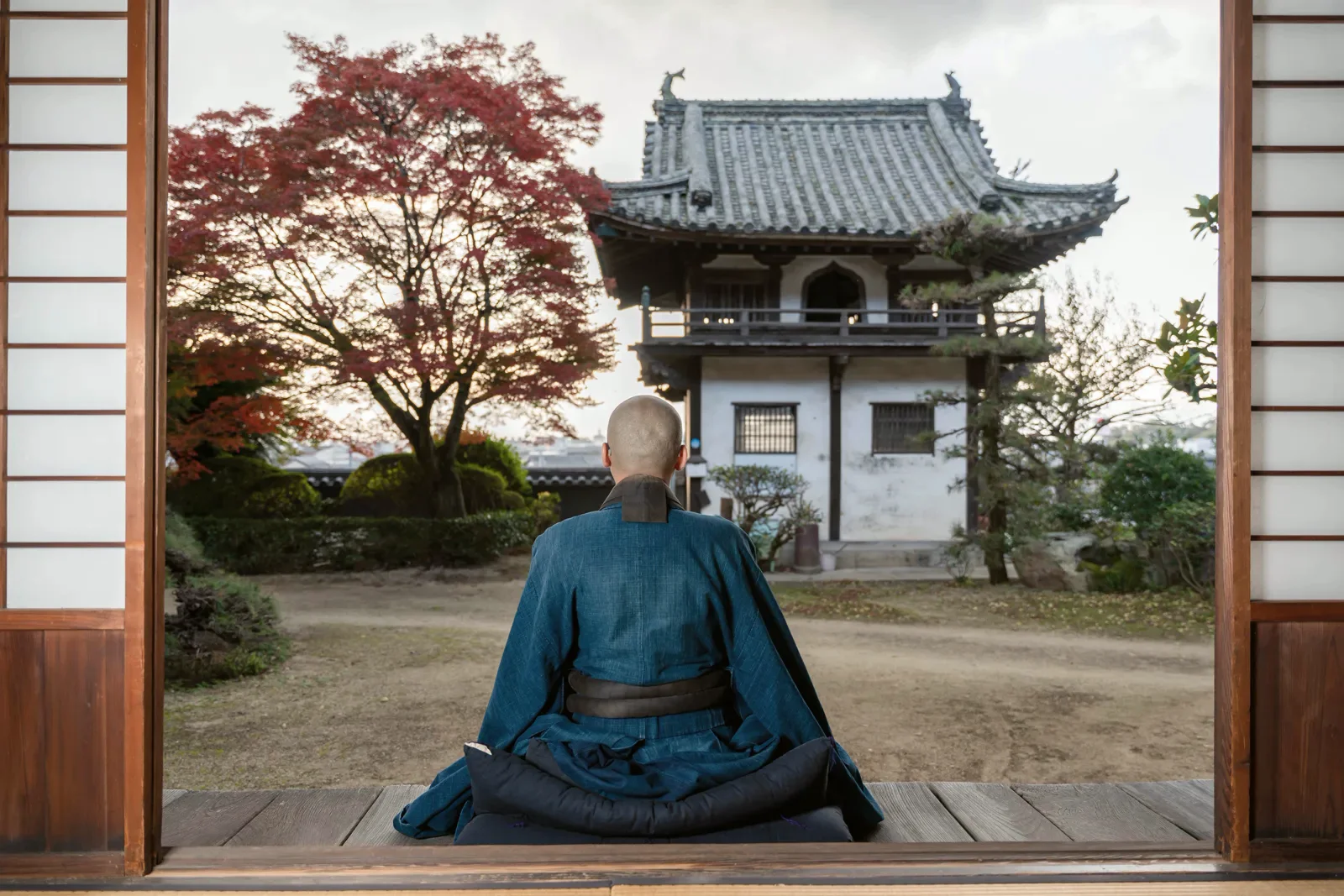
The morning shows why. In a room at the foot of the eastern hills, a paper screen turns the early light into a pale square on the tatami, and beyond it a small garden holds one pine and a stone basin still dark from the night's rain. A delivery van moves through the lane, a bicycle bell rings once, and the first sound inside the room is the kettle for tea. A few hundred metres west, on the shopping streets of Kawaramachi, the same hour belongs to traffic.
the kyoto room
Ryokan, machiya or hotel
Each of the three kinds of room gives Kyoto in a different way. A ryokan gives ceremony: tea on arrival, an onsen or a cedar bath before dinner, kaiseki served in the room, and the futon laid while the guest is at the table. A machiya, one of the old timber townhouses behind a narrow lattice front, gives a home of one's own in the city, with a courtyard garden the width of a corridor and no staff in the evening. A fine hotel gives space, a concierge and a calm base for a full itinerary.
A machiya needs a real neighbourhood around it, a corner shop and the ordinary traffic of people who live there, or it feels lonely once the shutters are drawn. A ryokan belongs to its district almost as much as to its garden, because the walk back after an evening out is part of the stay. A hotel can sit further from the old lanes and still serve its guests well, because what it offers is ease of movement.
Two of the most celebrated ryokan in Japan stand in the old centre, facing each other across Fuyacho-dori in Nakagyo, a short walk from the Imperial Palace park. Kyoto is not a hot-spring city, and most of its ryokan baths are deep tubs of fragrant hinoki filled with heated water. A guest who wants an onsen in town looks to Arashiyama, which has its own spring, or to the few hotels that draw one from deep beneath the city.
the districts
Kyoto's districts, and where to stay in each
- Higashiyama: stone steps and old lanes against the eastern hills, at their best early and late in the day. Some of the city's great hotels stand on the slope of Ninenzaka and beside the old pond gardens at the foot of the hills, a short walk from Kiyomizu-dera.
- Gion and Shirakawa: teahouse lanes and a stone canal under willows. The rooms here are few, in small hotels and ryokan along the canal, and the Yasaka Shrine is a few minutes' walk away.
- Arashiyama: the Oi River and the western hills, which belong to their residents again once the day visitors have gone. Upstream from the Togetsu Bridge, the river gorge holds ryokan reached by boat.
- The northern hills, around Kamigamo, Takagamine and Kitayama: old shrine land, cooler air and quiet residential streets. Takagamine sits at the foot of the hill marked by the bonfire character of the Hidari Daimonji, lit each August on the last night of Obon.
- Central Kyoto, around Karasuma, Kawaramachi and Nijo: shops, galleries and transport close at hand. The great hotels of the centre stand on the Kamo River at Nijo and opposite Nijo Castle, and one of them draws its own hot spring from deep beneath the city.
Central Kyoto is easily underrated. Around Karasuma and Kawaramachi the trains, shops, galleries and restaurants are all close at hand, which makes a long and full stay much simpler. A central room needs stillness of its own, though, or a guest can feel the street never ended.
Beyond the city, Ohara is a temple village among wooded hills to the north-east, and Kurama and Kibune lie further into the northern mountains, where cedar forest and a cold river replace the warm air of the basin. A night at a ryokan in Kibune, with dinner served on a platform over the river in summer, suits a second or third visit.
every season
Choosing a Kyoto stay for the season
The seasons do not treat every district equally. Central Kyoto's stone and asphalt keep the summer heat long after dark, while the northern hills and the riverside at Arashiyama cool within an hour of dusk. In July and August a room with air and shade around it is worth more than the same room would be in April or November.
Winter reverses the calculation. The damp cold of the basin settles hardest in the low centre, and a ryokan built around an open garden, with paper screens for walls, feels the season far more than a modern hotel does. The reward is a garden room in snow, the screens lit from within and a deep bath waiting, which is one of Kyoto's great winter pleasures for a guest who chooses it knowingly.
Shorter days change the walk home. In November and December dinner comes earlier, and the walk back through Higashiyama or Gion is made in full dark, when the lanes are lit only by lanterns.
what decides it
What decides it
The choice comes down to how a guest wants the day to begin and end. Some want to wake beneath the eastern hills and walk up to Kiyomizu-dera after breakfast; others want a canal outside the window, or the lobby of a hotel that can arrange the day. At night the question is whether dinner is taken in the ryokan, followed by a walk through Gion after dark, or brought back across the river to a city room where sleep needs no further decision.
A first visit and a return ask different things of a district. A first stay sits best in Higashiyama, central Kyoto or a well-placed hotel, with the most famous temples and lanes within an easy walk while the guest is still learning the city. A return can afford Arashiyama's evenings, the northern hills, or a night at Ohara, Kurama or Kibune, because the main sights are already known. Guests on a third or fourth visit often leave the centre altogether.
in short
Questions a guest asks first
Where is the best place to stay in Kyoto?
Higashiyama or central Kyoto for a first visit; Gion or Arashiyama for their evenings on a return trip; the northern hills or Ohara for a slower, cooler stay once the main sights are known.
Should a first-time visitor stay near Gion?
Gion suits a return visitor more than a first one, because its lanes are at their best in the evening and ask for discretion around the teahouses. A first stay sits best in Higashiyama or central Kyoto, both within an easy walk of Gion.
Read the manners a guest needs in Gion →
More of the Japan Edition on Kyoto →
Luxury hotels and ryokan in Kyoto, ranked →
Luxury Kyoto tours: in blossom, in maple, and in private →
The Custom Tour of Japan begins with exactly this question, because it is created from a blank page for one party: the district, the room and the order of the nights are chosen around how that party wants each Kyoto day to begin and end, and a ryokan can follow a city hotel in the same week. In Kyoto the Tour Director chooses the hour for each temple garden, the quiet one, and stands beside the guests to say what they are looking at.