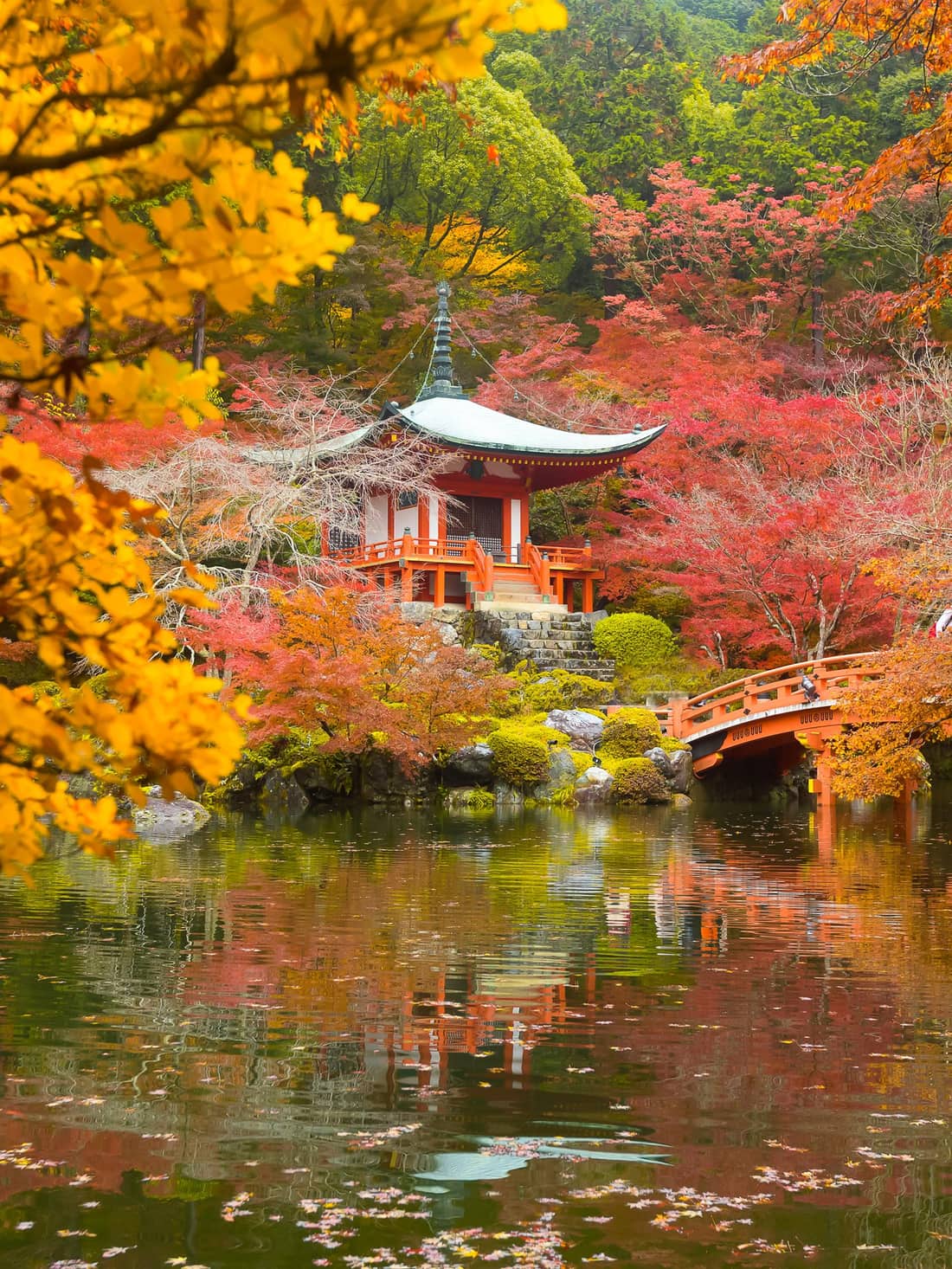

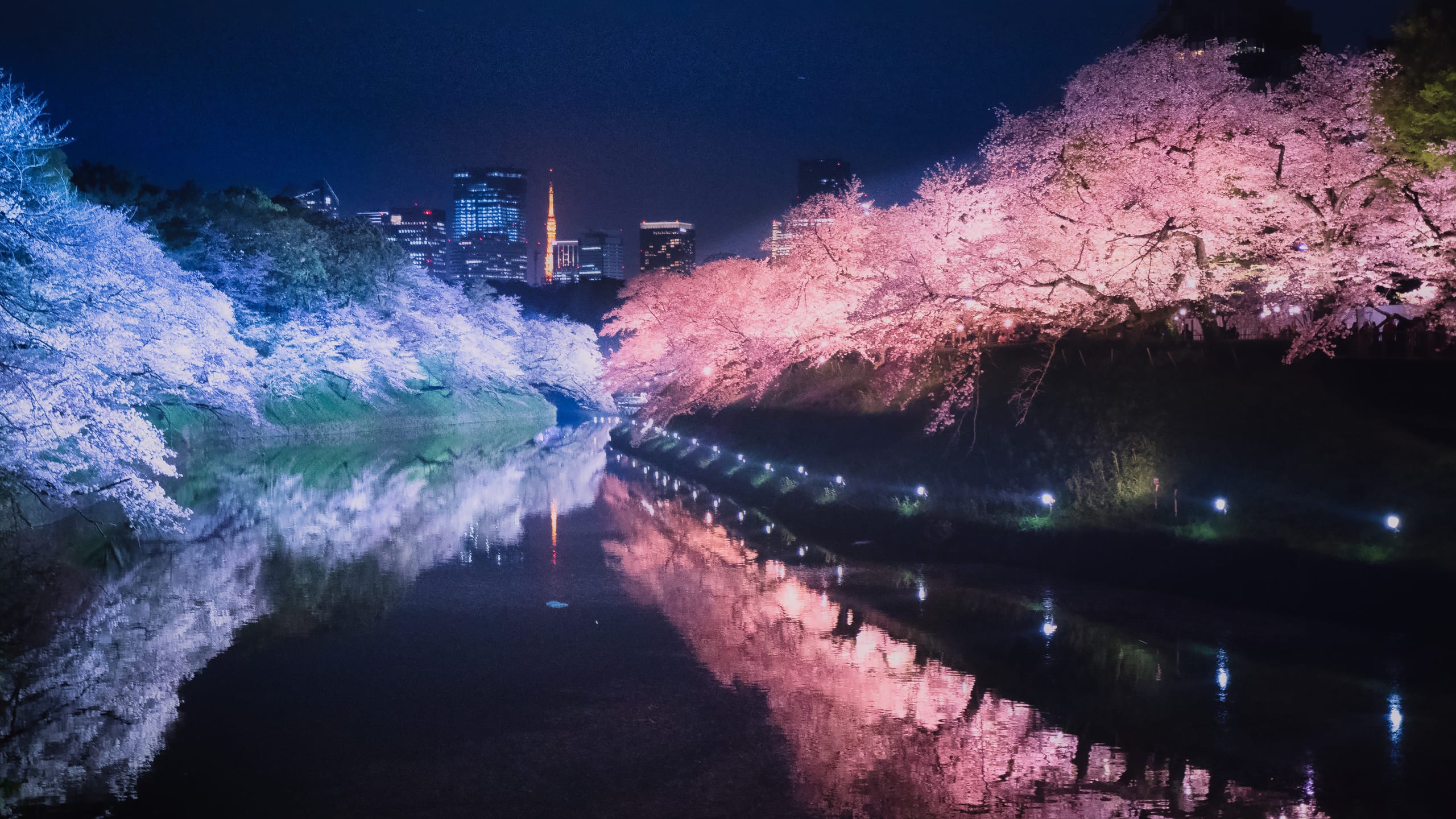
The right cherry blossom tour of Japan for 2027 answers five questions before anything is signed: how many guests travel together, which hotels and ryokan are booked, who leads every day, which way the route runs through the season, and whether the departure is guaranteed to run. The Classic Cherry Blossom Tour of Japan holds the number at eight, the size that fits at one table and on one rug beneath the trees.
Late March and the first days of April are the most sought-after fortnight in the Japanese year. Tokyo's cherry trees reach full bloom around 31 March in an average year and Kyoto's around 4 April, on the Japan Meteorological Agency's thirty-year record, and the whole country turns out beneath them: office parties under Ueno's lanterns, families on the lawns of the old palace grounds, school-leavers on the banks of the Kamo. Choosing a tour for these weeks comes down to the details a brochure photograph leaves out.
Cherry blossom forecast 2027, city by city →
The Classic Cherry Blossom Tour of Japan runs twelve days from Tokyo to Osaka, 30 March to 10 April 2027, for 8 guests, by Luxury Japan Travel.
the five questions
Five questions that separate one cherry blossom tour from another
- How many guests? The number decides whether hanami is a rug for the party beneath one tree or a coach park beside a famous one.
- Which hotels and ryokan, by name? Spring is the season Kyoto's best rooms are hardest to find. A tour that names every property before booking is telling its guests exactly where they will sleep.
- Who leads every day? The person at the front of the group shapes every hour of a spring day in Japan, from the order of the gardens to the table at dinner.
- Which way does the route run? The order of the cities, and the nights given to each, decide whether the days are spent in the blossom or on the motorway between it.
- Is the departure guaranteed? A guaranteed departure runs once it is confirmed, whatever the final number of guests. A departure that needs a minimum can still be cancelled weeks before.
Those five answers decide everything else. Two twelve-day tours can share an itinerary on paper and part company the moment the bags are unloaded: at the hotel's distance from the old quarter, at the size of the room, at whether dinner is a set menu in a banquet room or kaiseki at a counter of ten.
the number
Group size: why eight changes the spring
Hanami, the Japanese custom of sitting beneath the cherry trees, was never meant to be watched from a footpath. It means a rug on the grass, a meal opened in the shade of the branches, cold sake, an afternoon given over to the trees overhead. Eight guests sit on one rug, beneath one tree.
The number decides the evenings too. A private teahouse room in Gion seats a party at one low table, where a maiko can pour for every guest and a geiko can teach the drinking games of the ozashiki to the whole room at once. A sushi counter of ten seats takes eight together. On the first-class cars of the shinkansen, eight seats sit in two rows; at a ryokan of a few dozen rooms, eight guests are received as one party, the way the house receives a family.
And it decides the pace. Eight people leave a hotel in the time it takes one car to come round. A morning at the Chidorigafuchi moat, the rowing boats drifting beneath the branches and the petals lying on the water, belongs to a party that can leave the hotel in minutes.
The blossom is the same every spring. What changes is how many people stand between a guest and the tree.
the nights
Hotels and ryokan named before booking
Kyoto in the first week of April is the hardest city in Japan to sleep well in. Its best hotels are small, its great ryokan smaller, and many open their rooms a year ahead. In April 2026 the city's hotels ran at 85 per cent occupancy and at the highest average room rate the Kyoto City Tourism Association has recorded since its survey began in 2014. A tour that names its hotels tells its guests where they will sleep; a star rating tells them only the category.
Three things are worth reading closely. Where the hotel stands: in Kyoto, a hotel in Gion or Higashiyama puts the lanes and canals at the door, while one beside the station adds a taxi queue to every outing. Whether the ryokan night is a real ryokan, with kaiseki served in the room and a bath fed by its own spring, or a hotel with tatami. And how many nights each hotel holds: three in one place lets the party unpack, while a new hotel every night turns a spring tour into a relay.
the route
The route through the season
Most cherry blossom tours of Japan run the Golden Route, Tokyo to Kyoto by way of Mount Fuji, and finish in Osaka. The differences sit inside it. How many nights in Kyoto, which is the reason most people come: two is a glimpse, three leave room for the quieter gardens as well as the famous ones. Whether Fuji is a view in passing or two nights at its foot, each room with its own open-air bath with Fuji in view. Whether the tour adds anything beyond the Golden Route itself: the old onsen town of Kinosaki on the Japan Sea, say, where the blossom leans over a willow-lined canal and guests walk between seven public bathhouses in yukata and wooden geta.
Empty afternoons matter more in spring than in any other season. The parks and trains are at their fullest in this season, and a tour that fills every hour sends its guests home tired. The tours worth choosing leave whole afternoons empty on purpose.
the leader
Who leads it, and whether it runs
The person leading a cherry blossom tour shapes every day of it. A Tour Director who lives in Japan and leads the whole journey knows by the third day who wants the extra hour in a garden and who wants the afternoon at the hotel.
Then the plain question: will it run? Many departures carry a minimum number, and if it is not reached the departure is cancelled, sometimes weeks before, after the flights are bought. A guaranteed departure runs once the booking is confirmed. For a fixed fortnight in spring, with hotels and flights committed months ahead, that guarantee is worth asking about before anything else.
the tour
The Classic Cherry Blossom Tour of Japan, 2027
The Classic Cherry Blossom Tour of Japan answers all five questions on its first page. It runs from 30 March to 10 April 2027, twelve days from Tokyo by way of Mount Fuji to Kyoto, Kinosaki and Osaka, and it is limited to 8 guests. You stay in the finest luxury hotels and ryokan in Japan, each one chosen personally by us for its luxury, its comfort and its setting. Kyoto has three nights in the old quarter of Gion, and Mount Fuji two, each room with its own open-air bath with Fuji in view. Luxury Japan Travel's own Tour Directors lead every day, and the departure is guaranteed to run from two guests.
Its days hold two hanami picnics, beneath the cherry trees of Yoyogi Park in Tokyo and in the park of the Kyoto Imperial Palace, each a bento from a Michelin-starred kitchen on rugs at the water's edge; the Chureito Pagoda with Fuji behind it; an evening with the geiko and maiko of Gion in a private teahouse room; and a last night at an Osaka sushi counter.
questions
Questions
What is the best cherry blossom tour of Japan for 2027?
The one that caps its group, names every hotel and ryokan before booking, keeps its own Tour Director with the guests every day, gives Kyoto at least three nights, and is guaranteed to run. The Classic Cherry Blossom Tour of Japan, 30 March to 10 April 2027, is built on all five, for 8 guests at most.
When do cherry blossom tours of Japan run?
From late March to mid-April for Tokyo, Mount Fuji, Kyoto and Osaka, where full bloom falls around 31 March in Tokyo and 4 April in Kyoto in an average year. Hokkaido's season follows from late April into May.
How many people are on a cherry blossom tour of Japan?
The Classic Cherry Blossom Tour of Japan holds the number at eight, the size that fits at one table and on one rug beneath the trees. It is limited to 8 guests and guaranteed to run from two.
Is a cherry blossom tour of Japan suitable for travellers from the United States, Australia or the United Kingdom?
Yes. The tour begins in Tokyo and ends in Osaka, with luxury transfers for each couple to and from the airport, so guests fly in and out on the flights that suit them.