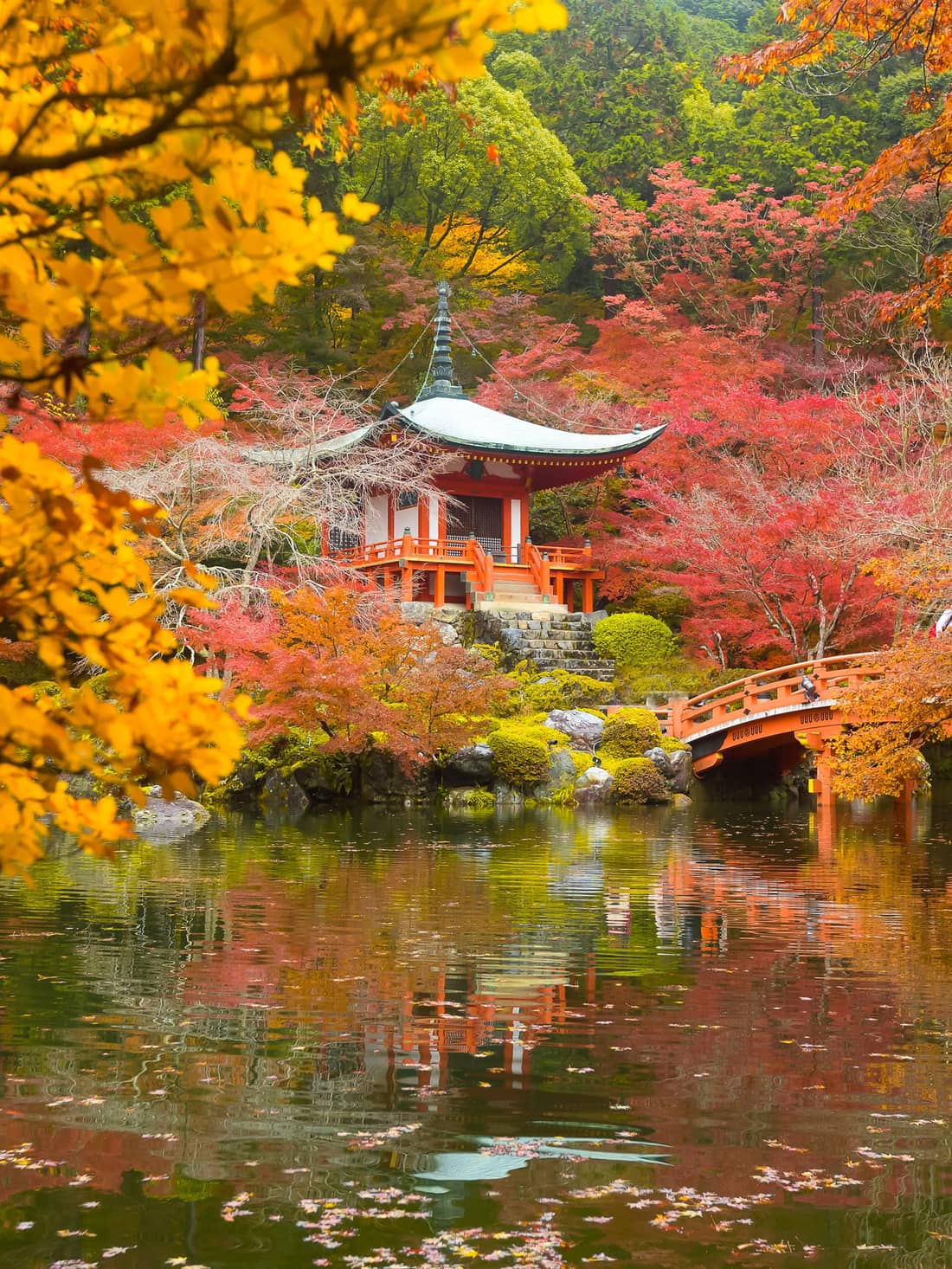

Japan in February is two seasons a day's travel apart. In Sapporo the first week belongs to the Snow Festival, when Odori Park fills with sculptures of packed snow as tall as a house, and on the Okhotsk coast at Abashiri the drift ice has come in from the north and turned the sea white to the horizon. In Kyoto, at the same moment, the plum trees in the garden at Kitano Tenmangu are coming into flower, weeks before any cherry.
hokkaido
The Sapporo Snow Festival and Otaru's candles
The Snow Festival runs for about a week at three sites. Along the length of Odori Park the great sculptures stand in a line, some of them copies of real buildings at full height, carved by teams who begin with the snow trucked in from the hills. In Susukino, the entertainment district to the south, the sculptures are of clear ice and are lit from within after dark, and at Tsudome, on the edge of the city, the snow is given over to slides.
Under an hour away by train, Otaru lights its own festival in the same season, a smaller and gentler one. For the Snow Light Path, Yuki Akari no Michi, the stone warehouses along the Otaru canal are lined with small snow lanterns, each with a candle, and floating candles are set out on the dark water between them. The old railway line through the town is lit the same way, a path of small flames through the snow.
the east
The drift ice and the cranes
The ice is the reason to go to the Okhotsk coast in February. It forms at the mouth of the Amur river, far to the north, and drifts south on the wind and the current until it reaches Hokkaido, the southernmost coast in the northern hemisphere where drift ice is seen. The icebreaker Aurora sails out of Abashiri through the floes, which grind against the hull and close again behind it. Further up the coast at Mombetsu the Garinko drives through the ice on two great screws at its bow, turning like drills, and the sound of the ice breaking under them carries across the harbour.
Inland, on the Kushiro marsh, the red-crowned cranes come to their winter feeding grounds at the Tsurui-Ito sanctuary and the Akan International Crane Centre. They are tall, white birds with a patch of bare red skin on the crown, and in February pairs begin the dance that the Ainu imitated in their own: wings open, heads back, the two birds leaping on the snow and calling to each other, a sound that carries for a long way in the still cold of the morning.
kyoto
Setsubun and the plum in Kyoto
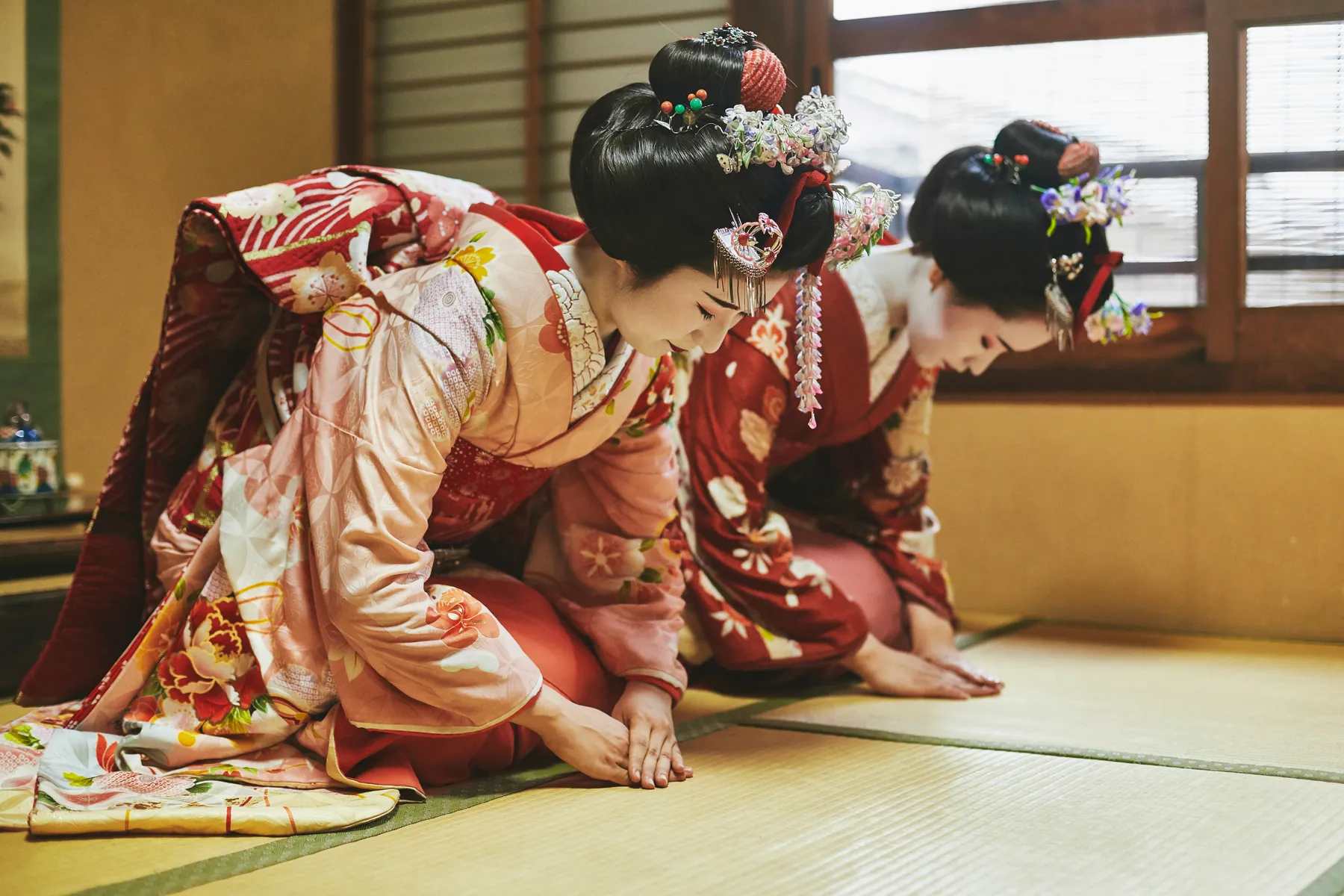
Setsubun, the day before the old calendar turns to spring, falls on or around 3 February. At temples and shrines across the country roasted soybeans are thrown to drive out bad luck and call in good. At Kitano Tenmangu the geiko and maiko of Kamishichiken perform a dance on the open stage for anyone who comes. On the far side of the city, at Yoshida Shrine below Mount Yoshida, the festival ends on the night of 3 February with a great fire, taller than a man, in which the old year's amulets and charms are burned.
The plum garden at Kitano Tenmangu has some fifteen hundred trees of about fifty kinds, white, red and a pink between, and the shrine loves the plum because Sugawara no Michizane, the scholar enshrined there, loved it. On 25 February, the day of his death, the shrine keeps the Baikasai, and the geiko and maiko of Kamishichiken serve matcha and sweets to guests at an open-air tea ceremony under the plum trees. On a still day the scent of the white plum carries across the whole precinct.
the season
Snow on the gardens, and the winter sake
In Kanazawa the snow lies on the gardens through February. In Kenroku-en the pines are strung with yukitsuri, ropes fanned from a tall central pole to each branch so the snow cannot break them, and the lines of rope against the white are the picture of the city in winter.
February is also the heart of the sake year. The brewers work through the cold months, when the low temperature keeps a slow fermentation clean, and the new sake pressed from the first tanks of the season, shiboritate, is sold unpasteurised in the brewery towns of Fushimi and Nada: sharp and fresh, sometimes with a faint prickle on the tongue.
the weather
February weather, and Kyoto's cold from the ground
Kyoto has a word for its winter cold, sokobie, the cold that rises from the ground, because the city sits in a basin closed on three sides by hills and the chill settles there on still nights. On the Japan Meteorological Agency's normals for 1991 to 2020 its February days reach 10°C (50°F) and its nights 1.6°C (35°F), close to Tokyo's 10.9°C and 2.1°C (52°F and 36°F). Sapporo, at 0.4°C and -6.2°C (33°F and 21°F), has 91.9 millimetres of precipitation in the month, almost all of it as snow.
the calendar
Holidays, and the two busy weeks
February has two national holidays, National Foundation Day on 11 February and the Emperor's Birthday on 23 February. Sapporo is the exception to the quiet: its hotels are full for the week of the Snow Festival, and Odori Park is crowded every evening. Chinese New Year, which falls in late January or February, brings a week of visitors from across Asia to Tokyo, Kyoto and Sapporo. Outside those weeks the temples and gardens of Kyoto are as quiet as they are in January.
Japan in winter: where to go, and why it is worth it →
The Sapporo Snow Festival: dates, sites and where to stay →
the journey
A private journey through Japan in February
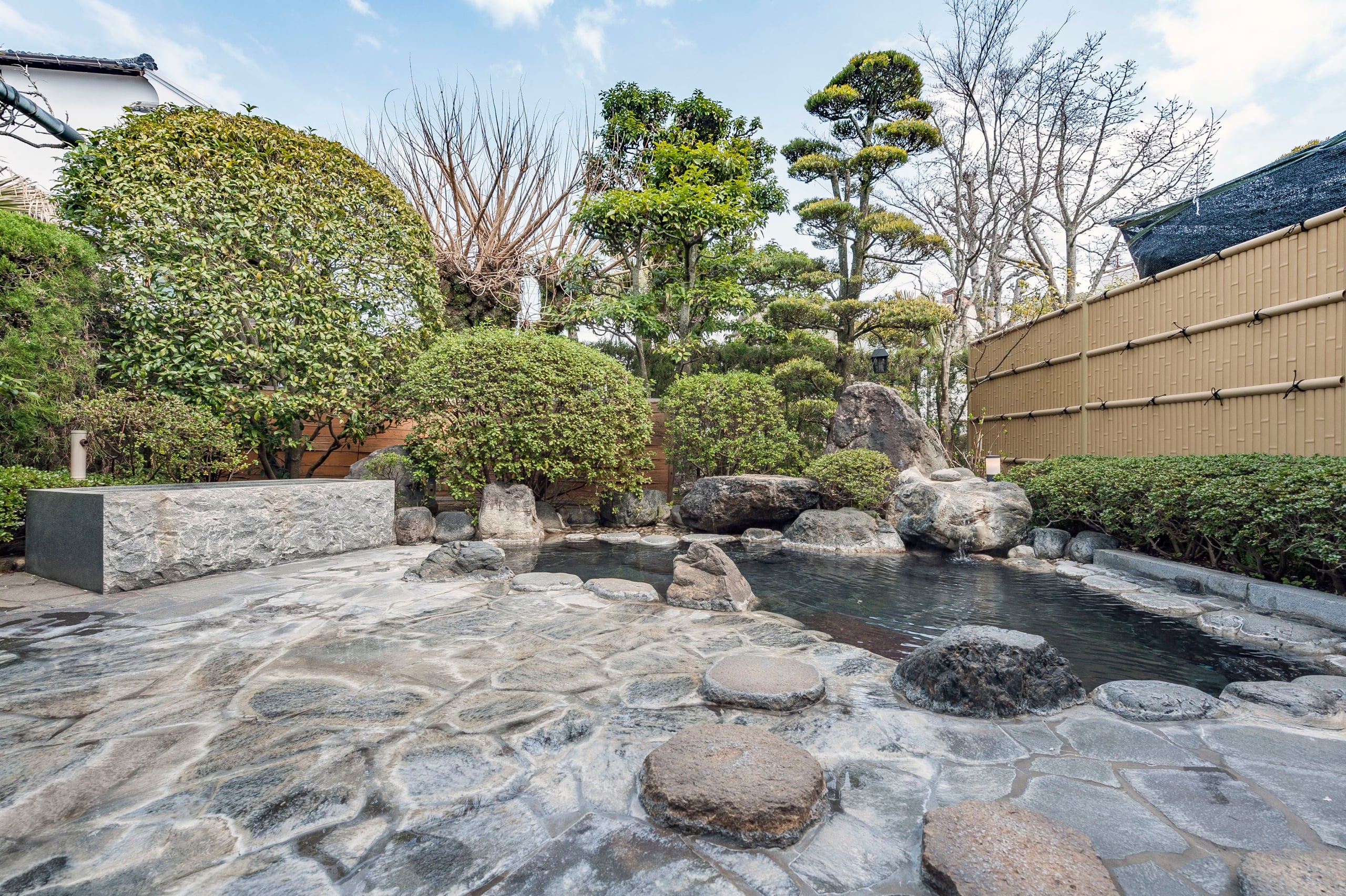
February suits a journey in two halves, and The Custom Tour of Japan is how Luxury Japan Travel makes one: a private journey for one party, on its own dates and from five nights, with a Tour Director beside the party every day. The first half belongs to the east of Hokkaido, the drift ice off Abashiri and the red-crowned cranes dancing on the Kushiro marsh, with an outdoor onsen in falling snow at the end of each day.
The second half turns south to Kyoto and the plum garden of Kitano Tenmangu, with an evening a few streets away in Kamishichiken, in a teahouse that receives guests only by introduction, where geiko and maiko dance and then sit and talk. On the coast below Kobe a brewer in Nada takes the party through the cellars and pours the year's sake beside the tanks it came from, in the same weeks the shiboritate is pressed.