
Christmas in Japan is kept on the evening of the twenty-fourth, and kept with great style: dinner for two, a white cake crowned with strawberries, avenues strung with champagne-gold light from Marunouchi to Ōdori Park and, in a great many homes, a bucket of fried chicken collected from a counter where a life-size Colonel Sanders stands dressed as Father Christmas. The twenty-fifth is an ordinary working day, and the shutters a visitor expects come down a week later, for the new year. Japan took a winter festival from abroad and remade it as an evening for lovers, sweeter and a good deal more playful than the original, and the result is one of the most charming weeks of the Japanese year. For those who want it white, the snow of Niseko, Hakuba and Myoko is a short flight or a few hours from Tokyo.
the eve
What is Christmas Eve like in Japan?
Ask anyone in Tokyo who Christmas is for and the answer is a sweetheart. Kurisumasu Ibu, Christmas Eve, is the evening couples plan for weeks: a table in a French dining room high above the city, a slow walk beneath the lit trees afterwards, gifts exchanged over dessert. Small children have their own Christmas, and Santa-san leaves their presents on the morning of the twenty-fifth. For everyone else, the twenty-fourth is the date.
The season even has its own anthem. Tatsuro Yamashita's "Christmas Eve", a wistful song about waiting on a cold night for someone who may not come, has entered the Japanese singles chart every December for forty consecutive years, from 1986 to 2025, a run that stands in the Guinness World Records. In Japan it is to December what the carols are elsewhere.
The romance took its modern shape in the bubble years of the late 1980s, when a Tokyo hotel room on Christmas Eve became the most coveted address of the year for young couples and the magazines published the dining rooms in which to be seen. The grand hotels still dress for the evening, with towering trees in their lobbies, Christmas menus in their restaurants, and the whole lit city laid out below the windows of their upper floors.

the chicken
Why does Japan eat KFC at Christmas?
And then there is the chicken. In December 1974 Kentucky Fried Chicken Japan ran its first Christmas campaign under the line Kurisumasu ni wa Kentakkii, Kentucky for Christmas, selling a bucket of chicken with a bottle of wine as a Christmas party for grown-ups. The story the company tells begins with a foreign customer in Tokyo who could find no turkey and settled, happily, for fried chicken. Takeshi Okawara, who managed Japan's first restaurant and later ran the company, is credited with the idea of a Christmas party barrel, and with dressing the Colonel's statues outside the shops in red suits and white beards, which they still wear every December.
Half a century on, Christmas Eve is the busiest day of the chain's year in Japan, around ten times an ordinary day. The orders are placed weeks ahead, and on the evening of the twenty-fourth the queues at the counters are part of the festival itself.
It is worth doing once, and doing properly. The original 1974 bucket came with wine, so the right way to honour it is with a bottle of vintage champagne, on the twenty-fourth, in a suite with the lights of Tokyo spread out below.
the cake
What is a Japanese Christmas cake?
The cake is the other half of the evening. Fujiya, the Yokohama confectioner, sold Japan's first Christmas cake in December 1910, a plain cake finished in white fondant and silver dragées. In 1922 the same firm rebuilt the American strawberry shortcake on a light sponge, and once refrigerators reached Japanese kitchens in the late 1950s, whipped cream and fresh strawberries could make the journey home from the shop. The red and white of strawberry on cream are also the colours of celebration in Japan, the kōhaku of a festive banner, and the cake has worn them every December since.
The strawberries are a winter fruit here, grown under glass so that varieties such as Amaou from Fukuoka and Tochiotome from Tochigi fill the shops in December, glossy, fragrant and as large as a small plum.
At the top of the market the cake becomes couture. The patisseries of Tokyo's grand hotels present their Christmas collections in the autumn, cakes sculpted in chocolate, sugar and fruit, each ordered weeks ahead and collected on the twenty-third or the twenty-fourth from a counter that runs, for those two days, with the composure of a jeweller's. The food halls of the department stores in Ginza and Nihonbashi do the same on a gentler scale. Which cake, from which counter, and by which date it must be ordered, is exactly the kind of detail an Expert Japan Itinerary settles long before the journey begins.
the lights
Where to see the Christmas illuminations in Tokyo and Sapporo
Japan calls them illuminations, and every city has them. Most are lit in November and left burning well past Christmas, so a visit need not fall on the Eve to see them glowing.
- Marunouchi, Tokyo: the trees of Marunouchi Naka-dori wrapped in close to a million champagne-gold lights, from mid-November 2026 to mid-February 2027.
- Roppongi, Tokyo: the Keyakizaka avenue of Roppongi Hills lit in white and blue, with Tokyo Tower closing the view, until Christmas Day.
- Ebisu, Tokyo: a Baccarat chandelier of some 8,500 crystals, five metres tall, hung each winter at Yebisu Garden Place.
- Ōdori Park, Sapporo: the White Illumination, lit from 20 November to 25 December 2026, with the Munich Christmas Market beside it in the park's second block.

Marunouchi in the early evening carries the season most completely. The office towers empty into a street lit from above by a canopy of bare branches strung with gold, coats are drawn tighter as the light goes, and couples slow beneath the trees before a warm doorway closes the cold out behind them.
Sapporo is the city for a white Christmas. It averages more than a metre of snowfall across December, by the Japan Meteorological Agency's own records, and the Munich market's glühwein and roasted almonds are taken in the snow beneath a park full of light. Kobe's Luminarie, once a fixture of the weeks before Christmas, now shines in late January.
kyoto
Christmas in Kyoto
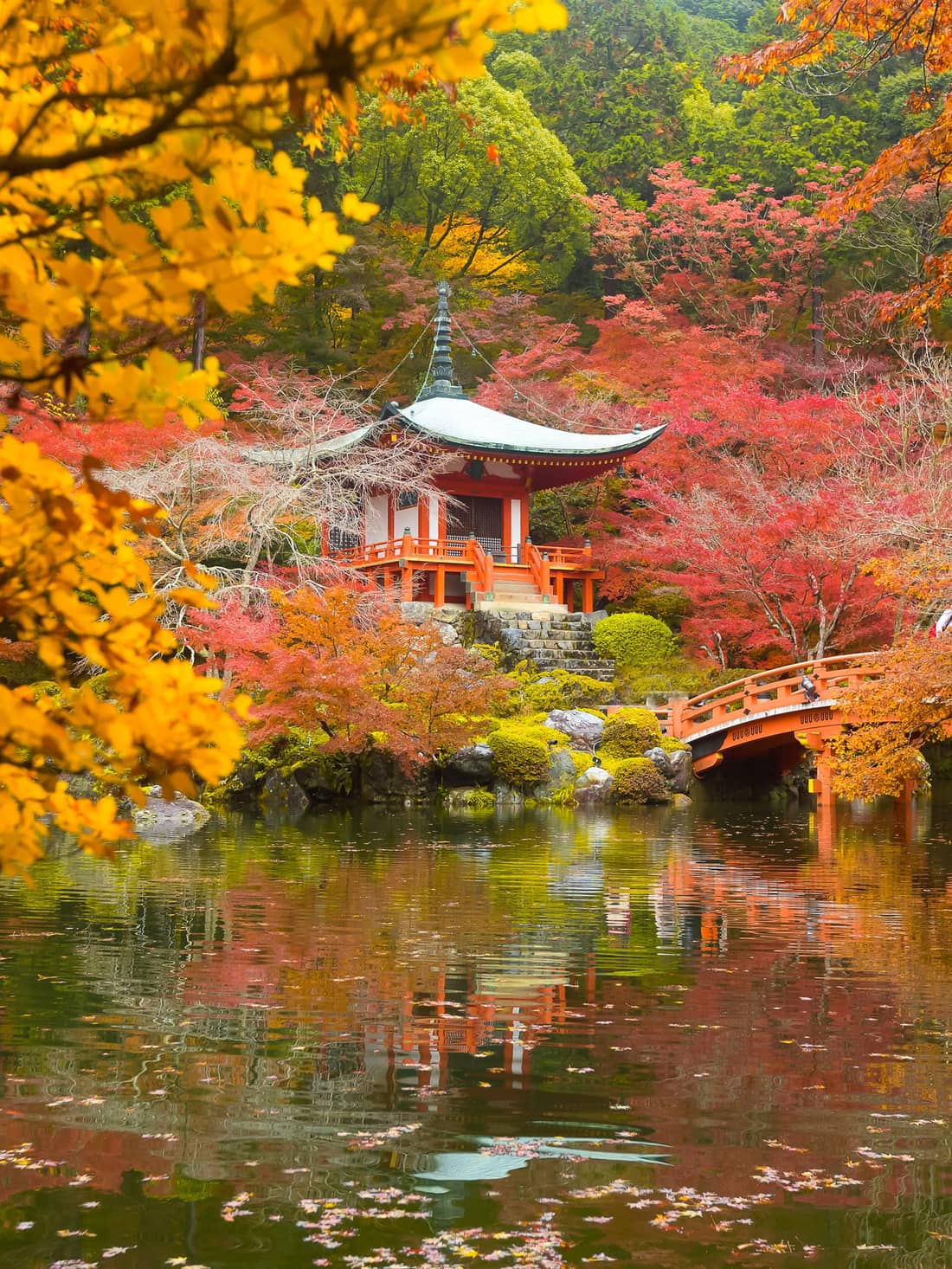
Kyoto keeps Christmas lightly, and that is its gift to a visitor in December. The temples that draw long queues in spring stand open and quiet, the raked gravel of the Zen gardens keeps its lines undisturbed under a low winter sun, and the city offers two markets of its own in place of a Christmas fair. On 21 December the monthly fair at Tō-ji becomes Shimai-Kōbō, the last of the year, its precinct filled with stalls of New Year decorations, pickles and old indigo cloth. On the twenty-fifth, while Tokyo is at its desks, the fair at Kitano Tenmangū becomes Shimai-Tenjin, the city's farewell to the year, held on Christmas Day by a calendar centuries older than Christmas in Japan.
A Kyoto Christmas Eve belongs at a kaiseki counter, where December brings the most generous menu of the winter: snow crab from the Sea of Japan coast, winter yellowtail, and the great white Shōgoin turnip from the city's own fields, simmered until it is almost translucent.
the snow
Skiing in Japan at Christmas: Niseko, Hakuba and Myoko
The most romantic Christmas in Japan is a white one, spent on the mountain. Three ski areas lead, because each is in Japan yet runs in English, with instructors, mountain guides and ski schools teaching in it. Niseko, in Hokkaidō, opens its lifts in the last week of November beneath Mount Yōtei, the snow-capped cone the island calls Ezo Fuji, and through Christmas week the village of Hirafu is lit for the season, its onsen steaming in the cold air. Hakuba, in the Northern Alps of Nagano, raced the downhill of the 1998 Winter Olympics on Happō-one and skis beneath peaks of almost three thousand metres. Myoko, across the prefectural line in Niigata, offers Lotte Arai, where the ungroomed bowls inside the boundary are skied with a mountain guide and the onsen and dinner wait at the foot of the day.

Beyond the three, Rusutsu, Furano, Kiroro and Tomamu in Hokkaidō and Nozawa Onsen in Nagano complete the map of Japan's international ski mountains, and each is planned with the same care. The ski Christmas worth planning pairs the two halves of the country: Christmas Eve in Tokyo under the lights of Naka-dori, then north to the powder for the days that follow, with a suite, an open-air onsen and a winter kaiseki waiting at the end of every afternoon on the slopes.
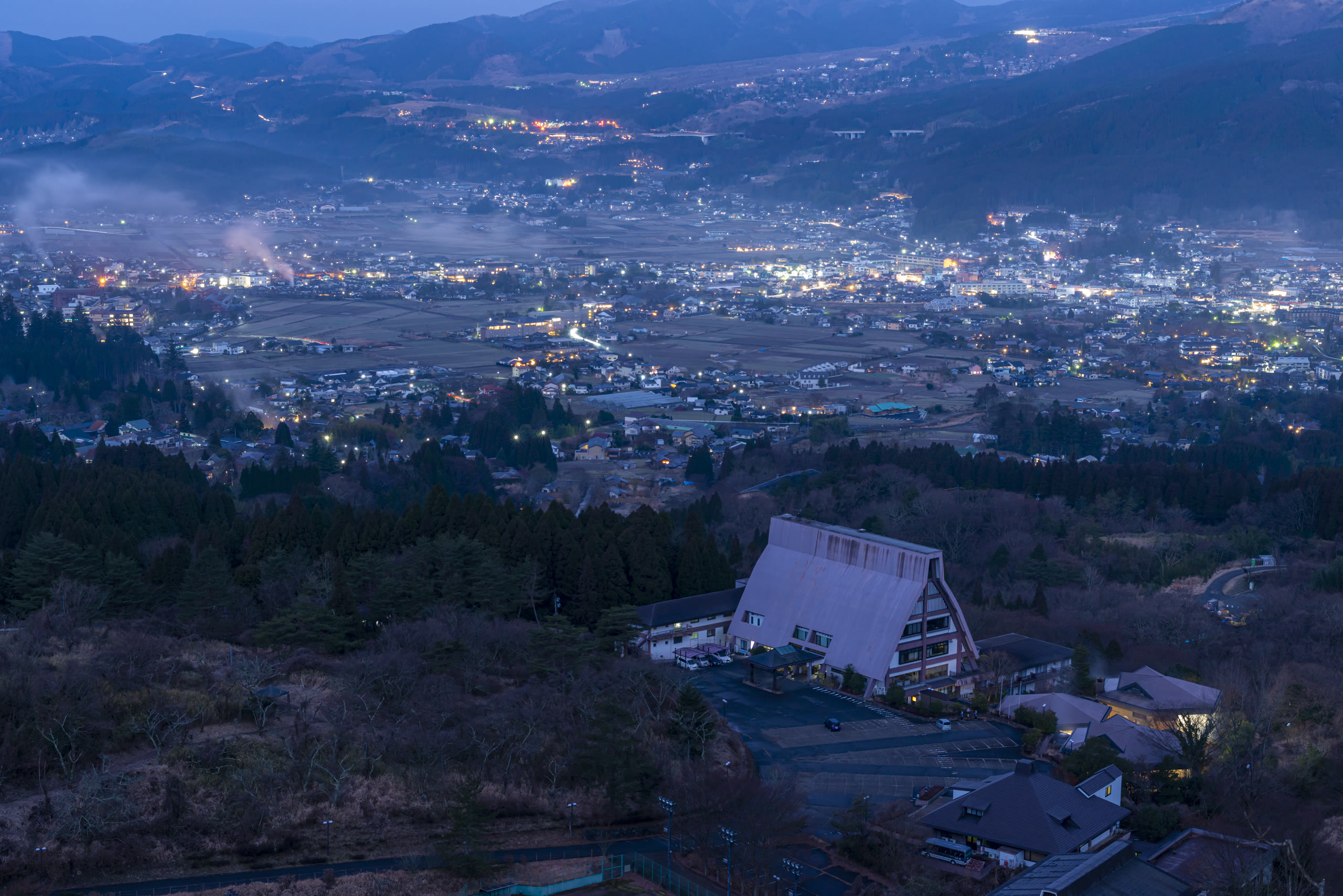
A snowbound Christmas need not involve skis at all. From Kyoto, Kinosaki Onsen on the Sea of Japan coast is an easy journey north: a willow-lined canal, seven public onsen visited in a yukata and wooden geta from one evening to the next, and snow crab in season from November to March. From Tokyo, the snow country of Nagano and Niigata lies within a few hours, where a ryokan with its own open-air onsen sits under falling snow and the windows look out on white roofs and cedar.
This is where Luxury Japan Travel's Japan ski itinerary comes into its own. The ski edition of the Expert Japan Itinerary chooses the mountain for how each person skis, then the hotel and the room, the instructor or mountain guide teaching in English, the lift pass and the rental, the flight north or the first-class seats from Tokyo, and the day the skis leave by courier so they are waiting at the hotel on arrival. It arrives within seven working days, ready to book and travel.
Begin a ski itinerary for Christmas in Japan →
Luxury ski journeys in Japan: Niseko, Hakuba and Myoko →
Luxury ski holidays in Japan for couples →
the plan
How to spend Christmas in Japan beautifully
The Christmas worth planning is a fortnight in three movements. Tokyo comes first, in the middle of December, when the lights are up, the hotels are dressed and the cake is ordered. Christmas Eve itself belongs to Tokyo too: a counter or a dining room high over the city, then the walk down Naka-dori under the gold. On the twenty-fifth the journey turns west to Kyoto, for Shimai-Tenjin and the quiet gardens of the days that follow.
Those who want snow go north instead, to Sapporo's market and the onsen of Hokkaidō, or to the slopes of Niseko, Hakuba or Myoko. And those who stay on find the country turning, a week later, into something else entirely: the Japanese New Year is the great festival of the Japanese calendar, and Christmas is its overture.
Read what follows: New Year in Japan →
Japan in December: the weather, the lights and where to go →
the itinerary
A Christmas journey in Japan, planned in full
For travellers who would rather see Japan at Christmas on their own, with every day of it already worked out, Luxury Japan Travel writes the Expert Japan Itinerary for the city and ryokan journey, and its ski edition, the Japan ski itinerary, for Christmas on the mountain. Each begins with a written set of questions about the dates, the pace and the Christmas in mind, and arrives within seven working days as one complete document: every day planned from morning to evening, the hotels and ryokan recommended for each night with the room to ask for, the counters and dining rooms worth an evening, and the bookings that fill early, Christmas Eve's table, the hotel cake and the Christmas week on the mountain among them. One revision is included, and every page is written by the experts behind Luxury Japan Travel's own tours.
questions
Questions
Is Christmas a good time to visit Japan?
Yes. The illuminations are lit from November, Christmas Eve is a romantic evening in Tokyo, Kyoto's temples and gardens are quiet in late December, and the ski season in Niseko, Hakuba and Myoko is under way.
Can you ski in Japan at Christmas?
Yes. Niseko in Hokkaidō opens its lifts in the last week of November, and Hakuba and Myoko follow in December. All three run in English, with instructors, mountain guides and ski schools teaching in it, which makes them the natural choice for a ski Christmas in Japan.
Does Japan celebrate Christmas?
Yes, as a secular celebration centred on Christmas Eve, which couples spend together over dinner, gifts and the illuminations. The twenty-fifth is an ordinary working day, with no public holiday.
Why do Japanese people eat KFC at Christmas?
Because of a 1974 Kentucky Fried Chicken campaign, Kurisumasu ni wa Kentakkii (Kentucky for Christmas), which sold a bucket of chicken with wine as a Christmas party meal. Christmas Eve is now the chain's busiest day of the year in Japan, and the orders begin weeks before.
What is a Japanese Christmas cake?
A light sponge layered and covered with whipped cream and topped with fresh strawberries, eaten on Christmas Eve. Fujiya of Yokohama sold Japan's first Christmas cake in 1910, and the strawberry version became the standard in the decades after the Second World War.
Is Christmas a holiday in Japan?
No. Banks, offices and shops keep their ordinary hours on 25 December. The closures come at the new year, when government offices shut from 29 December to 3 January.
Where is the best place to spend Christmas in Japan?
Tokyo for Christmas Eve and the illuminations of Marunouchi, Roppongi and Ebisu; Kyoto for quiet temples and the Shimai-Tenjin market on the twenty-fifth; Sapporo for snow, the White Illumination and the Munich Christmas Market.