

Gion is not closed to tourists. Its streets, its shrine approach and its two public dance theatres stay open to everyone. What closed, in the spring of 2024, was a short run of private lanes behind them, signed off limits in Japanese, English and Chinese, with a fine of 10,000 yen for anyone who walks in. The rules for the rest of Kyoto's geisha district follow from why those lanes closed. For years the women who work in Gion had been followed to their doors, filmed at arm's length and caught by the sleeve for a photograph, and on one occasion reported by the district's own council a cigarette end was pushed into a maiko's collar. A small minority of Kyoto's visitors behaved this way, and the lanes were closed to all of them.
the record
Why Gion closed its private lanes
Gion has received visitors for three hundred years, and its geiko and maiko dance on public stages every spring and autumn for audiences who have crossed the world to see them. The trouble came from a particular kind of visitor and a particular kind of tour. In December 2023 the Gion-machi Minami-gawa Chiku Kyōgikai, the council of residents and shopkeepers for the southern half of the district, told the city that its lanes had become unliveable. Tour groups were being sold on the promise of photographing a maiko in the alleys. Visitors waited outside okiya, the homes where geiko and maiko live and dress, to follow them to the ochaya where they were expected, filming the walk. Doorways were blocked and private gardens entered, and a maiko's kimono, a garment made by hand over months, was torn by a stranger reaching for a picture.
The council announced its decision in March 2024. In April the first sign went up at Kosode Kōji, the most heavily used cut-through towards the teahouses, and the rest of the named lanes were signed through that summer. The lanes are shidō, private roads owned by the residents rather than the city, so the council needed nobody's permission. The fine is a community penalty and not a criminal one, and it depends on a visitor reading the sign. Journalists who waited at Kosode Kōji in the weeks that followed found that visitors read it and turned back.
Overseas press ran the story as a "tourist ban", which overstated it. Hanamikōji, the wide public street that carries every visitor through Gion, was never touched, and neither were the Shirakawa canal walk and the approach to Yasaka Shrine. What closed was a few hundred metres of alleys behind Hanamikōji, most of them ending at an okiya door or a teahouse entrance. Everything a visitor comes to Gion to see is still there to be seen.
today
Gion today
Two and a half years on, the signs are still in place, the fine is unchanged and the list of closed lanes has neither grown nor shrunk. The private lanes are quiet. Japan's visitor numbers have broken records since, though, and the pressure that produced the signs has moved onto the public street: Hanamikōji at dusk is a crowd, and a geiko crossing it to reach an engagement still meets a wall of phones.
What the episode changed is the way Kyoto speaks to its visitors. The city now says plainly what it once left to inference: that its old neighbourhoods are homes and workplaces, and that the maiko on the corner is on her way to work.
the manners
Geisha etiquette in Gion
Everything Gion asks of a visitor follows from one fact. A geiko or maiko in the street is a professional between engagements. Her okiya and the ochaya expecting her keep a timetable, her kimono and hair took an hour or more to prepare, and the walk between the two doors is the only part of her working day a stranger will ever see. Seen as a commute, which is what it is, every rule below is obvious.
- No photograph without her consent. Expect her to decline, because she is expected somewhere, and take a decline as final. No photograph at close range, and none that stops her or slows her.
- No following. A visitor who tails a maiko to her door has crossed the line the signs were put up for.
- No touching, ever: the sleeve, the obi and the hair ornaments are part of her work.
- No entering a lane marked private, however short or empty it looks.
- No standing in a doorway, an okiya entrance or a lane to take a photograph or to look at a phone. Someone lives or works behind every door.
- Quiet after dark in the residential lanes, where voices carry between timber houses.
- No smoking on the street, which Kyoto forbids in its central districts, and no eating while walking, which is a discourtesy anywhere in Japan and doubly so here.
A visitor who keeps to these is welcome in every public street in Gion, and always was.
the invitation
How to see geiko and maiko in Gion
Gion has always opened its own doors to those who come through them properly. Gion Kōbu stages the Miyako Odori every April, a month of daily performances in formal kimono to shamisen and drum, first danced in 1872 when Kyoto held an exhibition to revive the city after the emperor had moved to Tokyo; Gion Higashi answers each November with the Gion Odori. Both are ticketed and open to anyone who reserves a seat, and both put the training the private lanes protect onto a public stage, on the district's own terms.
The evening a visitor imagines, a private room in a working ochaya with geiko and maiko seated among the guests, is real, and it cannot be bought at the door. An ochaya receives guests it already knows, or guests introduced by someone it trusts. Ichigensan okotowari, no first-time guests without an introduction, has governed the ochaya for far longer than Gion has had street signs, and it rests on the same principle as the signs: the ochaya decides whom it receives, and it decides on the strength of a relationship that money alone cannot buy.
in short
Questions a guest asks first
Is Gion closed to tourists?
No. Gion's public streets, Hanamikōji, the Shirakawa canal walk and both public dance theatres remain open to every visitor. A short list of private lanes behind them was closed in 2024, with a fine of 10,000 yen for entering.
What are the rules in Kyoto's geisha district?
Stay out of any lane marked private, however short or empty it looks. Do not photograph a geiko or maiko without her consent, follow her, touch her kimono or obi, or block a doorway to wait for her. Keep voices down after dark in the residential lanes, and do not smoke or eat while walking.
What counts as geisha etiquette?
Treat a geiko or maiko in the street as a professional on her way to work. Every rule in Gion follows from that, and a visitor who keeps it in mind needs no other guidance.
Read Kyoto's Geisha Districts, on the five hanamachi →
An evening with geiko in Kyoto, by introduction →
by introduction
An evening with geiko in Gion, by introduction
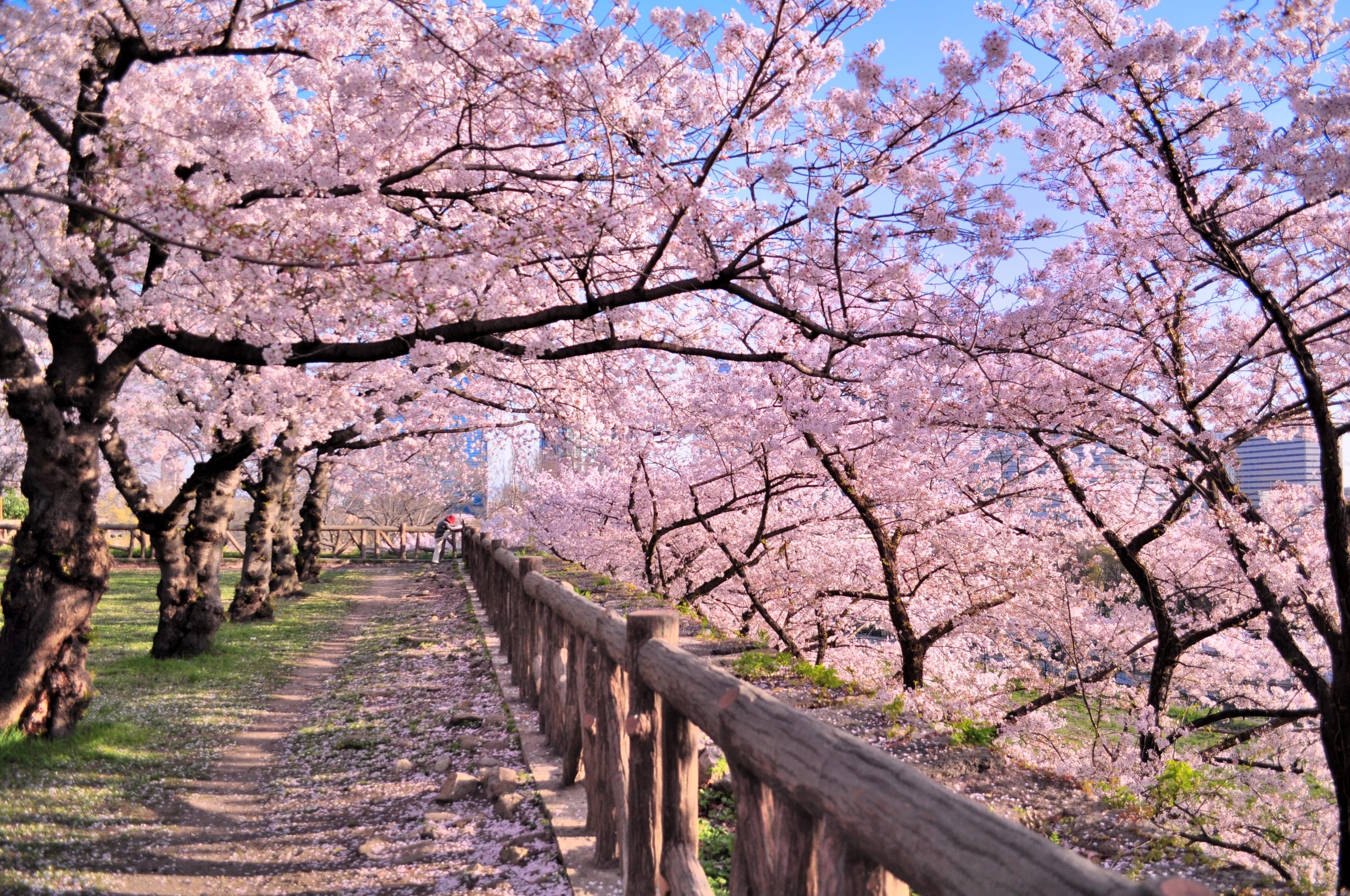
Luxury Japan Travel has introductions to teahouses in Gion and in Kamishichiken, kept current season after season by a Tour Director who has sat at those tables for years, and it is that relationship that opens the door. On The Classic Cherry Blossom Tour of Japan, from 30 March to 10 April 2027, the eighth evening is spent in a private teahouse room in Gion, in the middle of three nights in Kyoto in blossom. Geiko and maiko dance, pour and lead the old games of the ozashiki, then sit and talk about a life of training that most visitors glimpse only from the end of a lantern-lit lane.
The Tour Director is in the room, and each guest knows beforehand how the evening runs and what is expected at the table, so the hours belong to the company and the dance. It is an evening seen from inside one of the doors Gion closed its lanes to protect, on a journey limited to 8 guests that also lays a hanami picnic beneath the cherry trees of the Kyoto Imperial Palace park.