
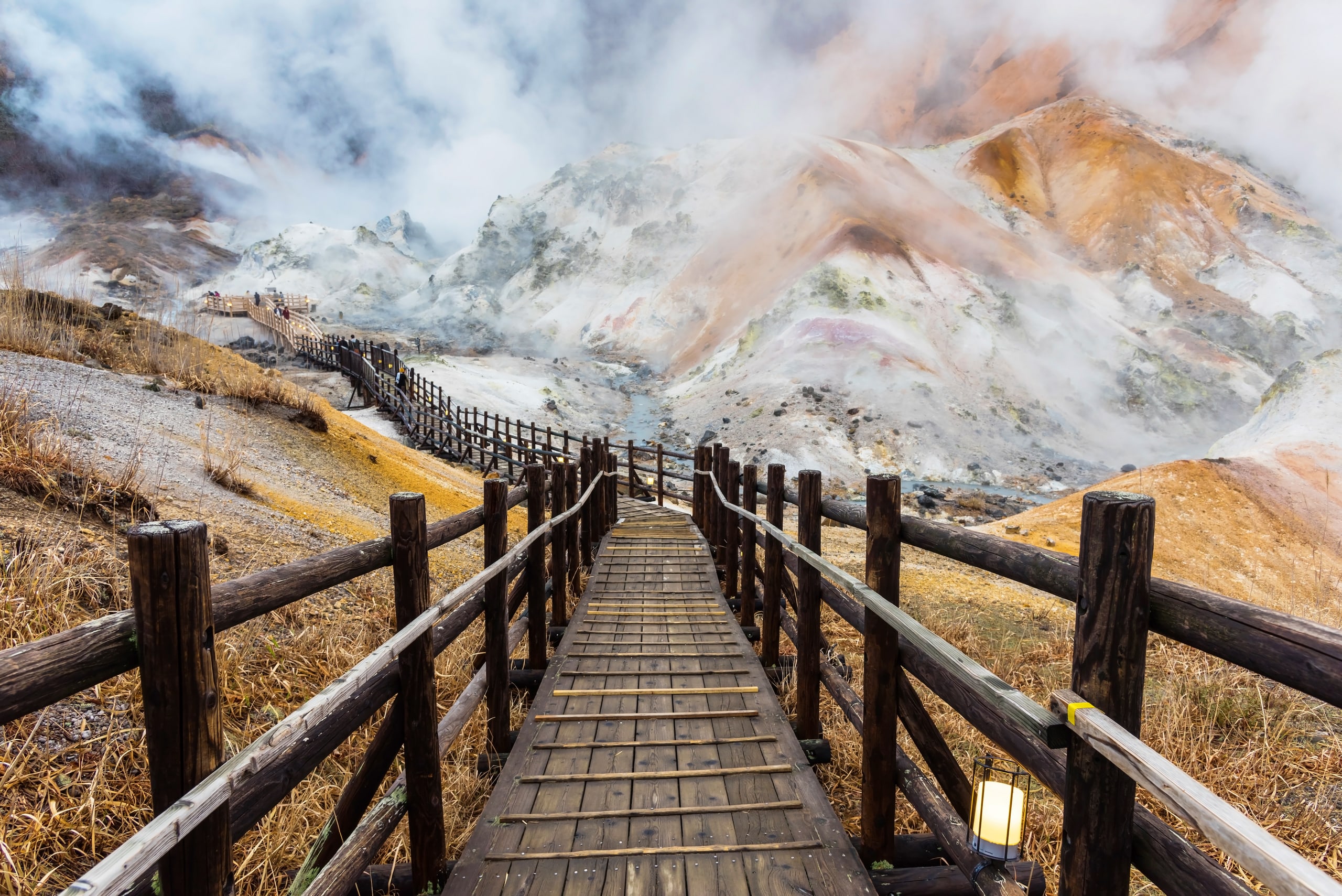
At New Chitose Airport in February, the doors from arrivals open onto cold with weight to it: still air, hard light off ploughed snowbanks, the smell of diesel from buses left running against the temperature. Land at the same airport in July and the doors open onto soft moving air off the farmland, the green smell of cut grass and wet tarmac, and a high, clear sky with the light lasting until close to eight in the evening. The island has four seasons, and none of them resembles the others.
The best time to visit Hokkaidō for a first journey is July, when the rest of Japan is at its hottest and the north is cool, dry and green, with the lavender out on the hills of Furano and the sea urchin at its best on the Shakotan coast. For snow and the drift ice, the month is February. For cherry blossom, it is the first half of May, weeks after Kyoto has finished. For autumn colour, it is late September in the mountains of Daisetsuzan, earlier than anywhere else in the country.
winter
Hokkaido in winter: snow, ice and the Sapporo Snow Festival
Winter is the season most travellers already carry in their mind when they picture Hokkaidō, and it earns the reputation. On the Meteorological Agency's 1991 to 2020 normals, Sapporo averages minus 3.2 degrees Celsius in January and minus 2.7 in February, and January alone lays down some 137 centimetres of snow across the city, close to five metres over a whole winter. Streets are cut through drifts taller than a car. Roofs are pitched steep enough to shed their own weight, and the roads, the footpaths and the bus timetables of a city of nearly two million are all built around the snow.
Most of that snow comes from cold, dry Siberian air crossing the warmer Sea of Japan on its way to the island. The crossing loads the wind with moisture, and the mountains along Hokkaidō's western side wring it out as snow, light and dry, on most days of the coldest months. That is why Niseko, two hours by road from Sapporo, has some of the most reliable powder skiing in the world from December into April, with onsen waiting at the foot of the slopes.
Each February the city puts its snow on show in Ōdōri Park, the green avenue cut through its centre as a firebreak. In 1950 six Sapporo high school students built six snow statues there. The festival that grew from them now runs for about a week, its sculptures of snow and ice as tall as buildings, lit through the evening, and the crowds have passed two million.
Otaru, on the coast west of the capital, is winter at its most intimate. Its canal, lined with stone warehouses built for the herring trade, turns monochrome under snow, the gas lamps and lit windows reflected in black water between white banks. Farther east, the Okhotsk coast takes the harder version of the season, with drift ice from the Amur pressing in against Abashiri and Monbetsu from late January into March.
spring
Spring in Hokkaido: cherry blossom in May
Spring reaches Hokkaidō after it has finished with the rest of the country. Snow retreats from the cities first, then the fields, then the mountain edges, and the cherry blossom that closes in Kyoto by the second week of April opens in Sapporo around the first of May. At Hokkaidō Shrine and the surrounding Maruyama Park, cherry and plum bloom together in the same short week, a coincidence the calendar does not allow further south.
The setting changes the blossom as much as the date does. Parks that were bare and brown three weeks earlier fill with colour under a wide sky, the trees set against open lawns and distant mountains still carrying snow, where Kyoto sets them against temple walls and stone embankments. A traveller who has missed the blossom everywhere else in Japan finds it in the north a month later.
summer
Hokkaido in summer: the cool season
By July the island is cool where Honshū is heavy with heat. Sapporo's July afternoons average 25 degrees against Kyoto's 32, the air is dry, and the evenings cool quickly once the sun drops behind the hills. Roads run long and straight through wheat and dairy country, and the summer is made for distance: a day on a clear caldera lake, the next on a coast of impossible blue, the next among the farm hills of the centre.
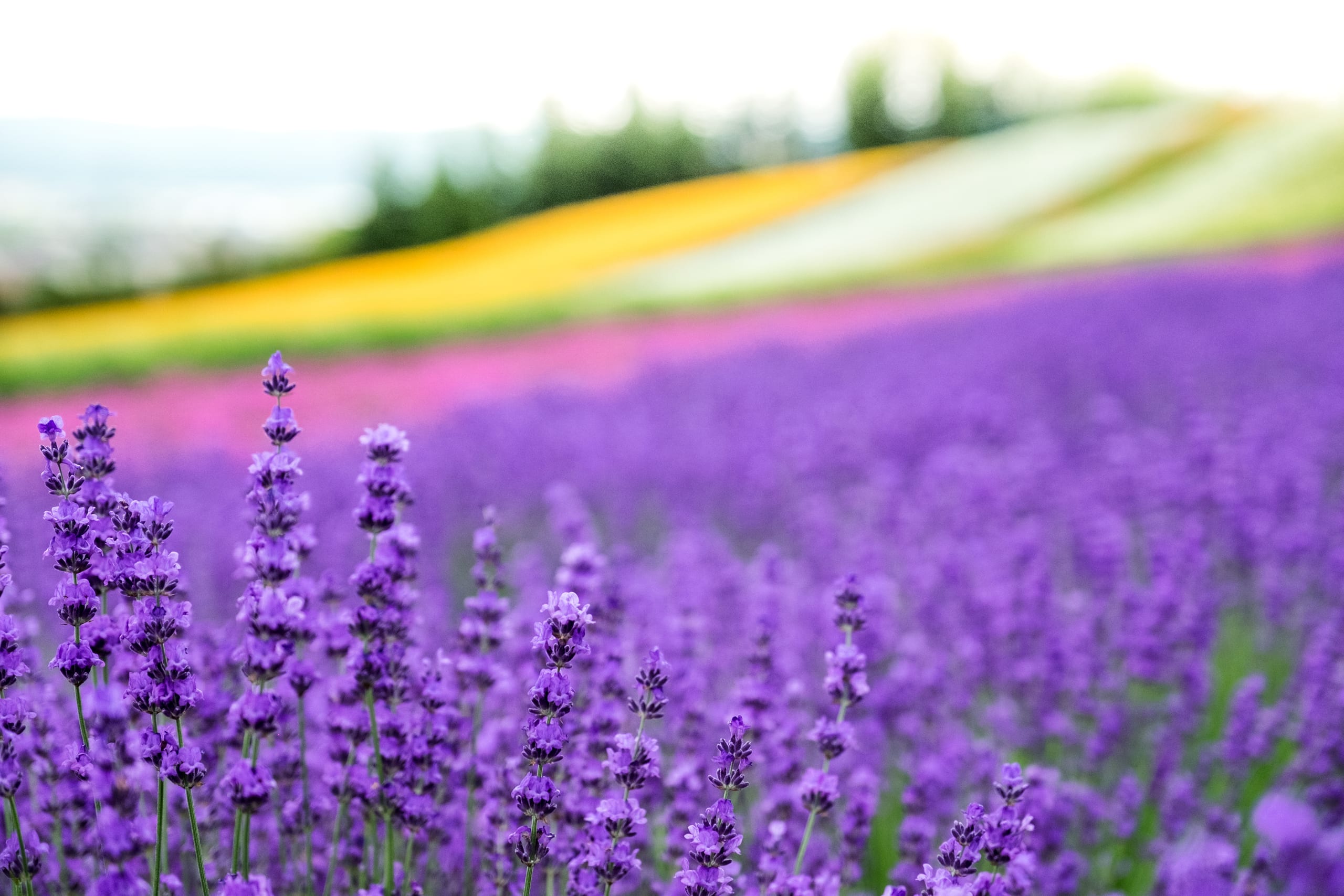
Inland, the slopes around Furano turn to lavender through July, banded with poppy and baby's breath on the hillsides above the town. On the Shakotan Peninsula west of Otaru, the sea urchin season runs through the summer, and the urchin is lifted from water so clear that the rocks on the bottom show from the cliffs above. Over Lake Toya, fireworks go up every night from late April until the end of October.
autumn
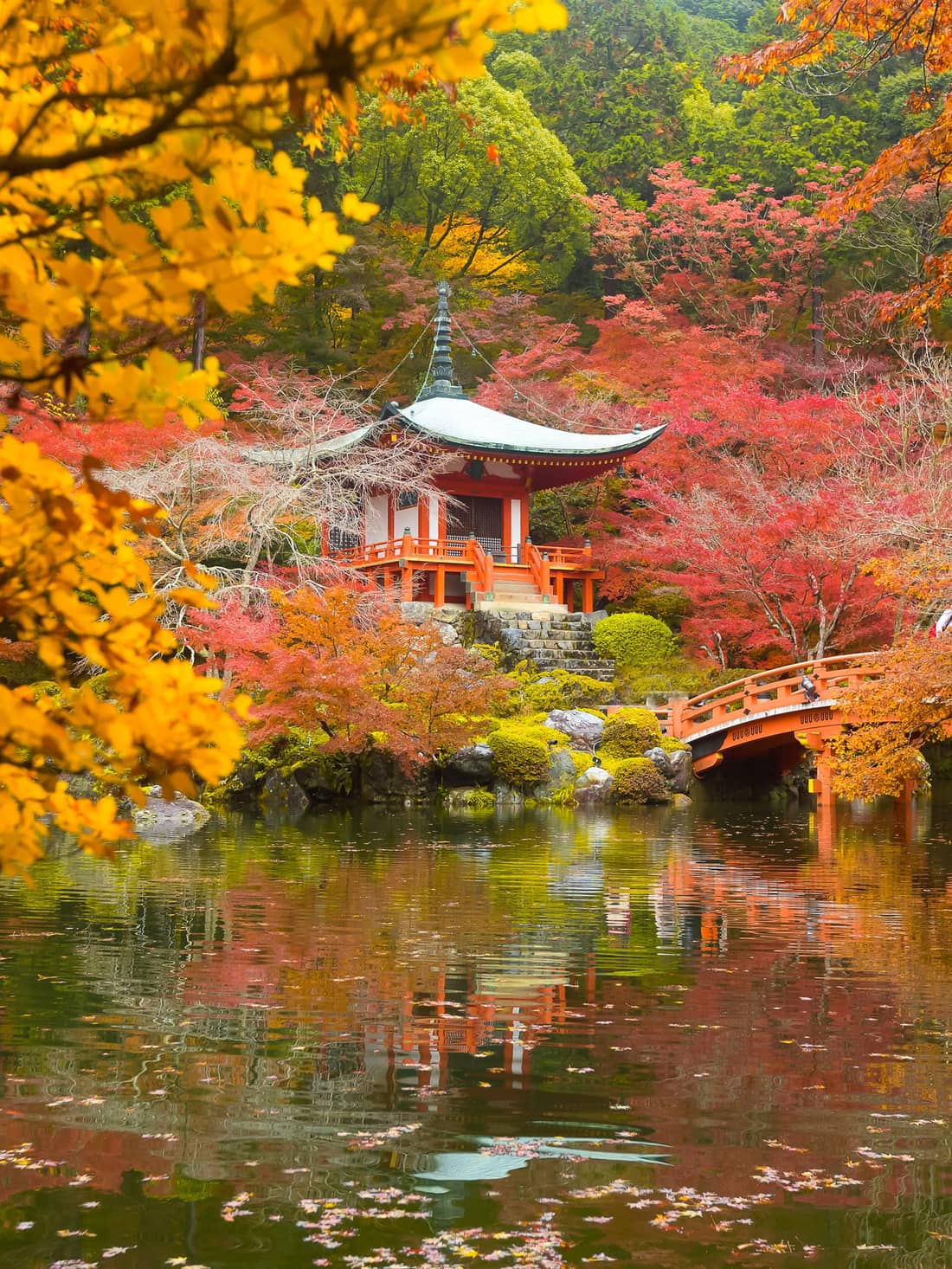
Autumn in Hokkaido: the first colour in Japan
Autumn reaches Hokkaidō before the rest of Japan has let go of summer. In the high country of Daisetsuzan National Park, colour begins in the alpine plants and dwarf shrubs from around the middle of September, weeks ahead of the mountains further south and two months ahead of Kyoto's maples. Asahidake, the range's tallest peak at 2,291 metres, takes the first frost onto its upper slopes while the lowlands are still green.
Mikuni Pass, on Route 273 between Sounkyo and Nukabira, is the place to watch that change from above. At 1,139 metres it is the highest pass on any national road in Hokkaidō, and its observatory looks out over a forest of Sakhalin fir, white birch and rowan turning red, orange and gold together, the long red arc of the Matsumi Ōhashi bridge curving through the middle of the view some thirty metres above the valley floor.

Below the passes, the farmland turns on a slower clock. The larch windbreaks between the fields go gold against pasture that is still green, and the hills around Furano and Biei, which spent July in lavender, spend October in ochre and rust. Sapporo and the lowlands reach their own colour in late October and the first days of November, by which time the high passes are bare and the first snow is on Asahidake.
A Hokkaido itinerary: seven and ten days, by season →
More of the Japan Edition on Hokkaido →
the journey
A summer tour of Hokkaido
The Summer Tour of Hokkaido is built on that cool July, with two departures in 2027, from 25 June to 6 July and from 11 to 22 July. Across twelve days it gives a day to the lavender of Furano in the older fields away from the farm shop, two nights to Lake Shikotsu in a suite with its own open-air onsen at the water's edge, and a night above Lake Toya, where the fireworks are watched from the onsen on the terrace.
On the Shakotan coast, lunch is the morning's sea urchin at a counter run by the family that lands the catch. The tour is limited to 8 guests, and its Tour Directors travel every mile of it beside them.
questions
Questions
Which month is the best month to visit Hokkaido?
July, for a first journey: the north is cool and dry while the rest of Japan is at its hottest, with lavender on the hills of Furano and sea urchin in season on the Shakotan coast. February is the month for snow and drift ice, the first half of May for cherry blossom, and late September for the first autumn colour in Japan, on Daisetsuzan.
When is cherry blossom season in Hokkaido?
Spring reaches Hokkaidō after it has finished with the rest of the country. The cherry blossom that closes in Kyoto by the second week of April opens in Sapporo around the first of May, and the first half of May is the time to go. At Hokkaidō Shrine and Maruyama Park, cherry and plum bloom together in the same short week.
How much snow does Hokkaido get in winter?
On the Meteorological Agency's 1991 to 2020 normals, January alone lays down some 137 centimetres of snow across Sapporo, close to five metres over a whole winter. Most of it comes from cold, dry Siberian air crossing the Sea of Japan, which is why Niseko has some of the most reliable powder skiing in the world from December into April.