


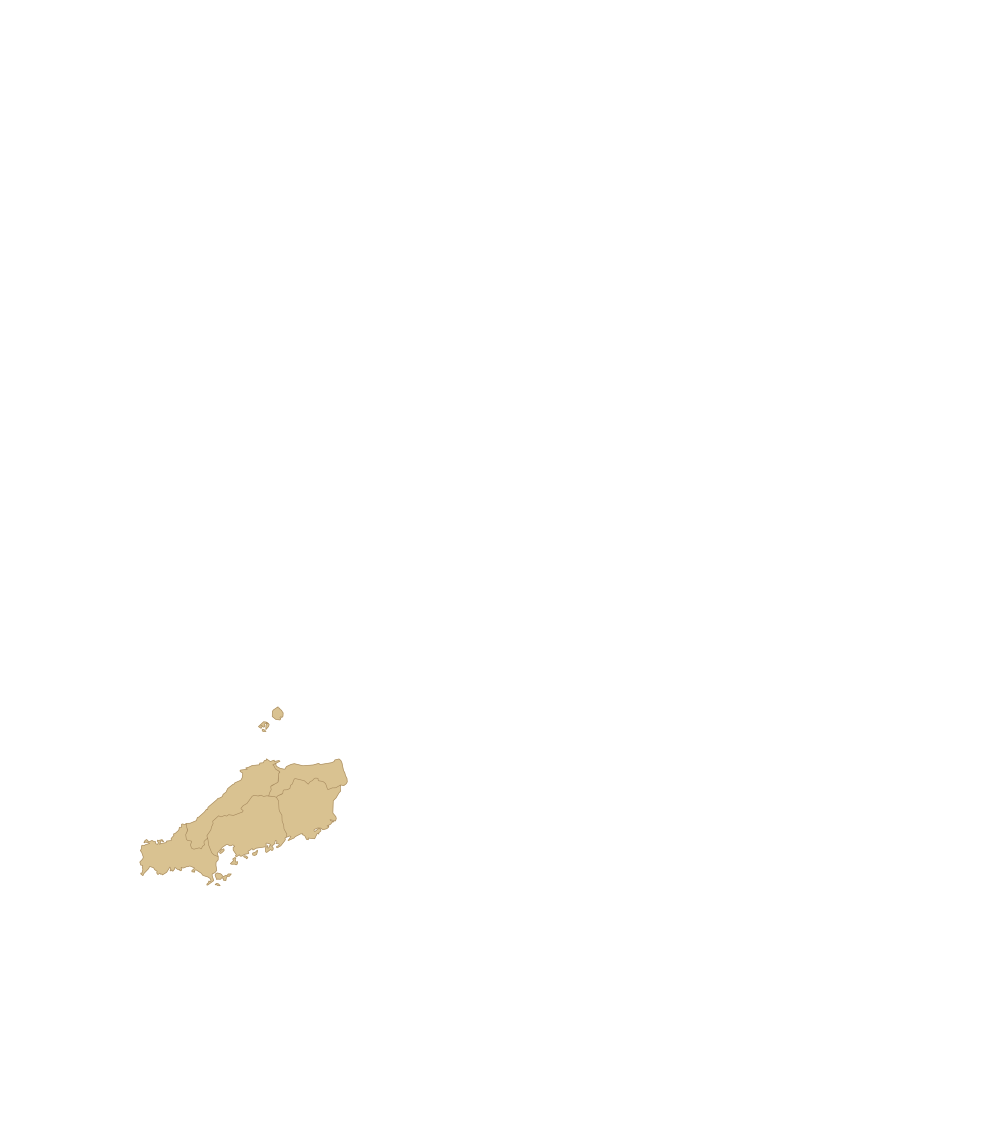


tohokuprefecture
Fukushima
Fukushima is the southernmost prefecture of the Tohoku region, the prefecture of the samurai town of Aizu-Wakamatsu, the thatched post town of Ouchi-juku and the lakes of Mount Bandai, a little over an hour from Tokyo to Koriyama by the Tohoku Shinkansen.
- Prefecture
- Fukushima
- Region
- Tohoku
- Journeys
- The Custom Tour of Japan
overview
A castle town of loyal samurai, a street of thatch, and lakes of many colours.
Fukushima is the third-largest prefecture in Japan and the closest of the northern prefectures to Tokyo, divided by its mountains into three regions: the coast, the central valley around Koriyama and Fukushima city, and Aizu in the west, a high basin ringed by mountains. It is Aizu that most travellers come for, and it has one of the deepest histories in the north.
Aizu-Wakamatsu was the castle town of the Matsudaira lords, kinsmen of the Tokugawa shoguns, and its samurai were known throughout Japan for their discipline and their loyalty. In the Boshin War of 1868 they stood by the shogun to the end, and the story of the Byakkotai, the young samurai of the White Tiger Corps who died on the hill of Iimoriyama believing the castle lost, is still told in every school in Japan. The castle, rebuilt, stands again in its park, and the town keeps its sake breweries, its lacquer workshops and the red cow toy, the akabeko, made here for centuries.
South of the town, Ouchi-juku is a post town of the Edo period on the old road from Aizu to Nikko, its main street lined with thatched houses. North, Mount Bandai rises above Lake Inawashiro, and in 1888 the fall of its northern flank dammed the rivers to create the lakes and ponds of Urabandai, among them the Goshiki-numa, five ponds of blue, green and turquoise in the forest. With the onsen of Higashiyama and Ashinomaki, the sake of Aizu and the kura storehouses of Kitakata, it is a rewarding region for a traveller who knows Tokyo and wants the old provinces within easy reach.
see and do
What to see in Fukushima
Tsuruga Castle
The castle of the Aizu lords, rebuilt in 1965 on its original stone walls and roofed with the red glazed tiles found only here, with a museum of the Aizu samurai inside and a teahouse of the Momoyama period in the grounds.
Iimoriyama and Sazaedo
The hill where the young samurai of the Byakkotai are buried, looking across to the castle, and on its slope the Sazaedo, a wooden hall of 1796 built as a double spiral, so that visitors go up and down without meeting.
Nisshinkan
A reconstruction of the school of the Aizu samurai, where the sons of the domain were trained in letters, ethics and the martial arts, with its classrooms, archery range and swimming pool.
Oyakuen
The garden of the Aizu lords, laid out around a pond with a tea house, and planted with the medicinal herbs that the domain grew for its people.
Ouchi-juku
A post town of the Edo period on the road to Nikko, its broad street lined with some thirty thatched houses, protected as a historic district, where buckwheat noodles are eaten with a long green onion in place of chopsticks.
To-no-Hetsuri
A line of tall cliffs of soft rock along the Okawa River near Ouchi-juku, carved by water and weather into towers and overhangs, crossed by a suspension bridge.
Goshiki-numa
A string of ponds in the forest of Urabandai, each a different colour from blue to emerald, joined by a level path of about an hour through the trees.
Lake Inawashiro
The fourth-largest lake in Japan, at the foot of Mount Bandai, and on its shore the birthplace and memorial museum of the bacteriologist Noguchi Hideyo.
Kitakata
A town of thousands of kura, the thick-walled storehouses of the merchants, built for sake, soy sauce and miso, and known across Japan for its ramen.
experiences
The best of Fukushima
The story of Aizu
A day in Aizu-Wakamatsu with a historian, from the castle to the school of the samurai and the hill of the Byakkotai, telling the story of the domain that stood by the shogun to the last.
Sake in Aizu
A tasting in one of the old breweries of Aizu-Wakamatsu, where cold winters and the soft water of the mountains make some of the most admired sake in Japan.
Aizu lacquer
A morning with a lacquer craftsman, watching the layers of urushi applied and polished, in a town that has made lacquerware for more than four centuries.
A ryokan in the hills
An evening at an onsen ryokan of Higashiyama, in a valley just outside Aizu-Wakamatsu, with an open-air onsen by the river and a dinner of Aizu beef and mountain vegetables.
plan your visit
Fukushima on a journey through Japan
- How long to stay
- Two or three nights: two in or around Aizu-Wakamatsu for the town, Ouchi-juku and the lakes of Bandai, with a third for Kitakata or the Tadami valley.
- Getting there
- By the Tohoku Shinkansen from Tokyo to Koriyama in a little over an hour, then about an hour by train or car to Aizu-Wakamatsu. Ouchi-juku is under an hour by car from Aizu-Wakamatsu, and Urabandai a little less. From Nikko, a private car reaches Aizu in about two and a half hours.
journeys
Fukushima on a private journey
We bring guests to Fukushima on the Custom Tour of Japan, created around your party alone, on your dates, with your own Tour Director.
questions
Fukushima: questions answered
What is Fukushima famous for?
Fukushima is famous for the samurai town of Aizu-Wakamatsu and Tsuruga Castle, the thatched post town of Ouchi-juku, the lakes of Mount Bandai, its sake and its peaches.
How do you get from Tokyo to Aizu-Wakamatsu?
By the Tohoku Shinkansen to Koriyama, a little over an hour, then about an hour by train on the Ban-etsu West Line or by car.
How far is Ouchi-juku from Aizu-Wakamatsu?
Under an hour by car, through the valley to the south.
What is the Byakkotai?
The Byakkotai, or White Tiger Corps, was a unit of young Aizu samurai in the Boshin War of 1868. A group of them died on Iimoriyama, believing the castle had fallen, and their graves remain there.
How many days do you need in Fukushima?
Two nights cover Aizu-Wakamatsu, Ouchi-juku and the lakes of Bandai at an easy pace, and a third adds Kitakata or the Tadami valley.
What is Goshiki-numa?
Goshiki-numa, the five-coloured ponds, is a group of lakes and ponds in Urabandai formed in 1888, when the northern flank of Mount Bandai dammed the valley, each tinted a different blue or green by minerals in the water.
Can Fukushima be part of a private tour of Japan?
Yes. The Custom Tour of Japan is created around your party alone, on your dates, with your own Tour Director, and it can go anywhere in the country, Fukushima included. If you would rather travel independently, the Expert Japan Itinerary plans every day for you.
tohoku
More in Tohoku
Fukushima, planned for you.
Tell us when you would like to travel and what draws you to Fukushima, and we will answer with a Custom Tour of Japan created around your party alone, or, if you would rather travel independently, an Expert Japan Itinerary that plans every day for you.