
tohokuiwate
Hiraizumi
Hiraizumi is a small town in Iwate Prefecture, in the Tohoku region of northern Honshu, which was for a century the capital of the Northern Fujiwara and whose temples and gardens are a World Heritage Site.
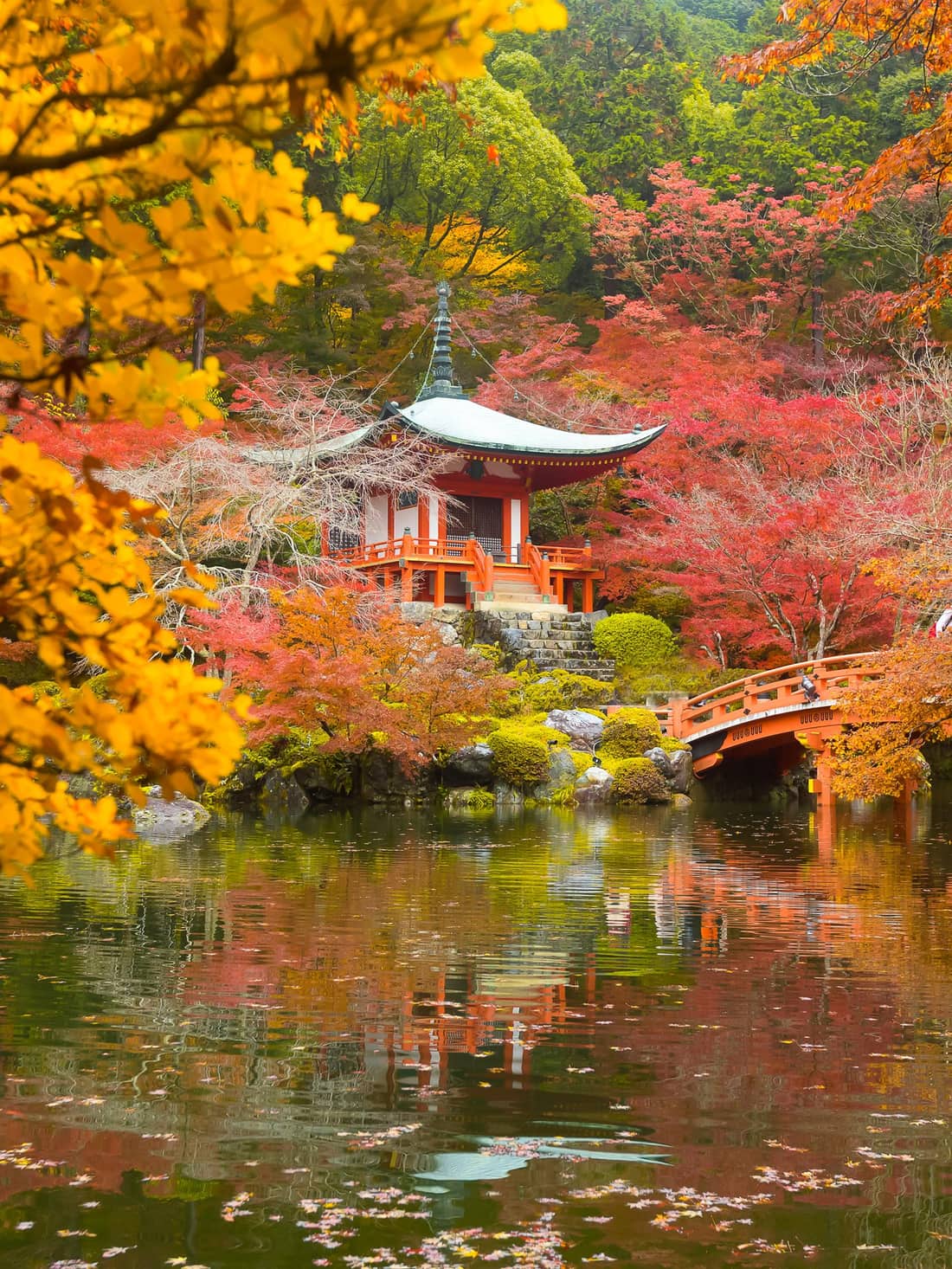
The Kannondo of Ganjoju-in, Chuson-ji
- Prefecture
- Iwate
- Region
- Tohoku
- Journeys
- The Custom Tour of Japan
overview
A golden hall on a wooded hill, and a garden made in the image of paradise.
For four generations, from about 1100 to 1189, the Northern Fujiwara ruled the north of Japan from Hiraizumi. Their wealth came from gold, which the region produced in quantity, and from horses, and they spent it on a capital to rival Kyoto: temples by the dozen, palaces, and gardens laid out to represent the Pure Land, the paradise of the Buddha Amida, after the long wars of the north had ended.
The dynasty ended in 1189. Fujiwara no Yasuhira, under pressure from the new shogun Minamoto no Yoritomo, attacked the shogun's brother Yoshitsune, who had taken refuge in Hiraizumi, and was then destroyed by Yoritomo's armies in turn. The city burned and faded, but much was left: the golden hall of Chuson-ji, the garden of Motsu-ji, and the outlines of temples and ponds beneath the fields. In 2011 they were inscribed together as a World Heritage Site, Hiraizumi: Temples, Gardens and Archaeological Sites Representing the Buddhist Pure Land.
Five centuries later the poet Basho came to Hiraizumi on the journey he described in The Narrow Road to the Deep North, stood on the hill where Yoshitsune died, and wrote of summer grasses where warriors had dreamed. The town keeps that mood: quiet, green, and generous to those who give it time.
Our tours stay overnightOur tours visit for the dayOn a Custom Tour of Japan
see and do
What to see in Hiraizumi
Chuson-ji
A temple on a wooded hill founded, by tradition, in 850 and greatly enlarged by Fujiwara no Kiyohira from 1105, reached by the Tsukimizaka, a slope shaded by tall cedars planted by the Date lords of Sendai.
The Konjikido
The Golden Hall of 1124, a small square hall covered inside and out in gold leaf and inlaid with mother-of-pearl, ivory and lacquer, where the remains of the first three Fujiwara lords lie beneath the altars. It was among the first buildings designated a National Treasure, and is kept today within a protective hall.
The Sankozo
The treasure house of Chuson-ji, with thousands of objects of the Fujiwara age, among them Buddhist sutras copied in gold and silver ink on indigo paper.
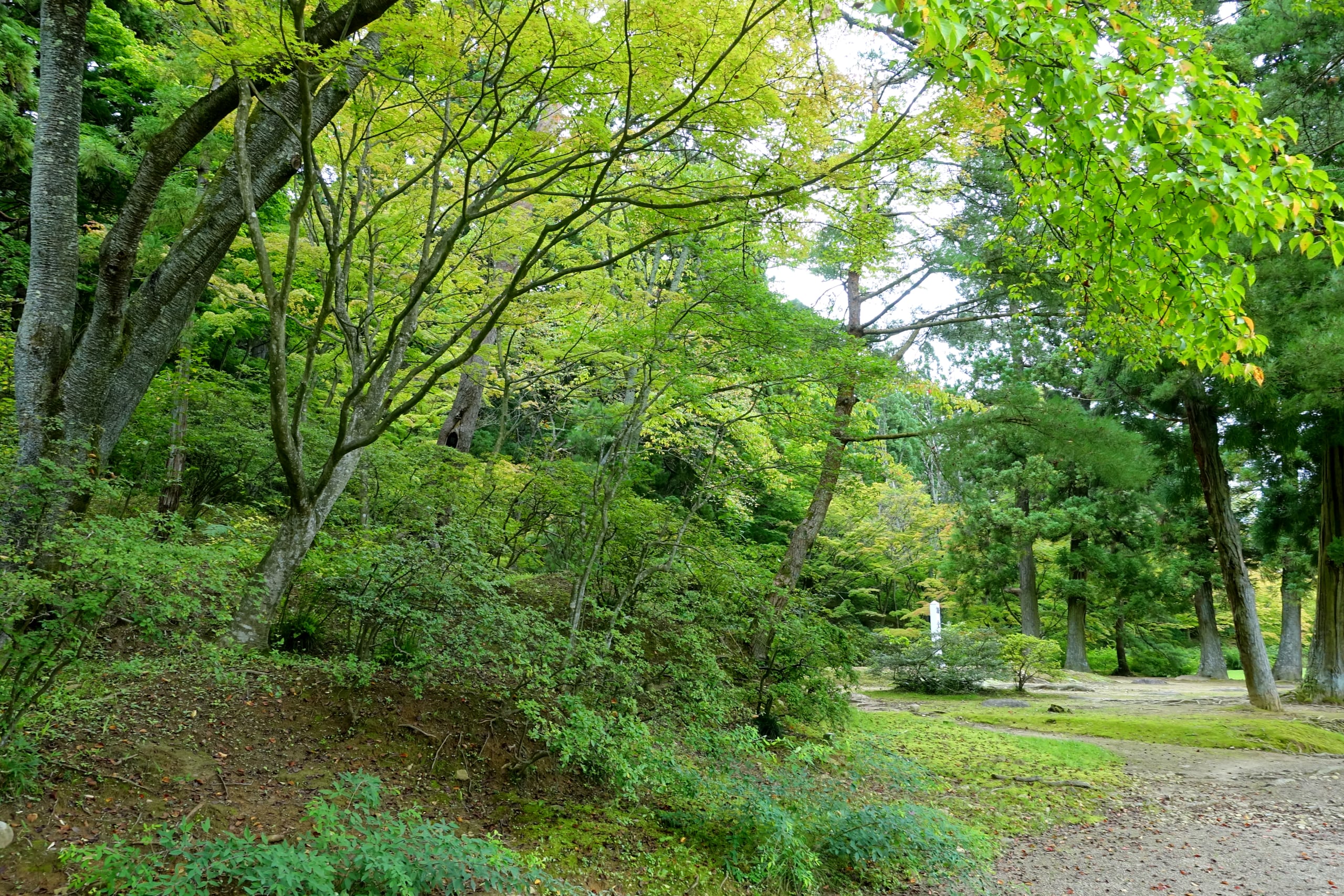
The grounds of Motsu-ji The Hakusan Shrine Noh stage
An open-air Noh stage of 1853 within the precinct of Chuson-ji, designated an Important Cultural Property and still used for performances.
Motsu-ji
The great temple of the second and third lords, of which the garden survives: the pond of Oizumi-ga-ike with its island, rocky promontory and pebbled shores, laid out in the twelfth century, and a winding garden stream of the Heian period, the only one of its kind still in existence.
Kanjizaio-in
The site of a temple built by the widow of the second lord, its pond and garden traced again on the open ground beside Motsu-ji.
Muryoko-in
The site of a temple built by the third lord, Hidehira, on the model of the Phoenix Hall of the Byodo-in at Uji, its island and pond now a grassy outline aligned so that the sun sets behind Mount Kinkei.
Takadachi Gikeido
A small hall on a bluff above the Kitakami River, built in 1683 in memory of Minamoto no Yoshitsune, who died here in 1189, with the view Basho looked out on and a stone carved with his poem.
Geibikei Gorge
A gorge of the Satetsu River about thirty minutes to the east, where flat-bottomed boats are poled for an hour and a half between limestone cliffs some fifty metres high, the boatman singing the songs of the valley.
Takkoku no Iwaya
A hall of the god Bishamonten built into the face of a cliff, its scarlet timbers half set into the rock, with a great face of the Buddha carved into the stone beside it.
Genbikei
A gorge of the Iwai River near Ichinoseki, where the water has carved potholes and channels in the rock and the stream runs a vivid green.

experiences
The best of Hiraizumi
The Pure Land, explained
Chuson-ji and Motsu-ji with a guide who reads them as the Fujiwara intended, paradise in gold and in water, and tells the history of the north that most visitors never hear.
Geibikei by boat
An hour and a half on the Satetsu River in a wooden boat poled by a boatman who sings as he steers, the cliffs rising sheer on either side.
The table of Iwate
Wanko soba, mouthfuls of soba served one after another into your bowl until you close the lid, and the beef of Maesawa, near Hiraizumi, among the most prized wagyu of the north.
Basho's road
A slow afternoon following the poet from Takadachi to Chuson-ji, his haiku read aloud where he wrote them.
plan your visit
Hiraizumi on a journey through Japan
- How long to stay
- A full day covers Chuson-ji, Motsu-ji and Takadachi, and a night nearby allows the gorge at Geibikei and an easy pace.
- Getting there
- By the Tohoku Shinkansen from Tokyo to Ichinoseki in about two and a quarter hours, then about fifteen minutes by car. Sendai is about thirty minutes from Ichinoseki by Shinkansen, and Matsushima about an hour and a half by car.
- Pairs well with
- Hiraizumi lies on the Shinkansen line north of Sendai, so it falls between Sendai and Matsushima to the south and Kakunodate and Nyuto Onsen to the north west.SendaiMatsushimaKakunodateNyuto OnsenYamaderaIwate
journeys
Hiraizumi on a private journey
We bring guests to Hiraizumi on the Custom Tour of Japan, created around your party alone, on your dates, with your own Tour Director.
questions
Hiraizumi: questions answered
Is Hiraizumi a World Heritage Site?
Yes. In 2011 Chuson-ji, Motsu-ji, the sites of Kanjizaio-in and Muryoko-in, and Mount Kinkei were inscribed together as Hiraizumi: Temples, Gardens and Archaeological Sites Representing the Buddhist Pure Land.
What is the Konjikido at Chuson-ji?
The Golden Hall of 1124, covered in gold leaf and inlaid with mother-of-pearl, the mausoleum of the first three lords of the Northern Fujiwara. It stands within a protective hall on the hill of Chuson-ji.
How do you get to Hiraizumi from Tokyo?
By the Tohoku Shinkansen to Ichinoseki, about two and a quarter hours, then about fifteen minutes by car.
How long do you need in Hiraizumi?
A full day is enough for Chuson-ji, Motsu-ji and Takadachi; add half a day for Geibikei Gorge.
What did Basho write at Hiraizumi?
Standing at Takadachi in 1689 he wrote his haiku of the summer grasses, all that remains of warriors' dreams, and at Chuson-ji a second, on the hall of light the summer rains had spared.
Can you combine Hiraizumi and Matsushima in a day?
Yes, with a private car: the two are about an hour and a half apart, with Sendai between them, though each repays a full day of its own.
Can Hiraizumi be part of a private tour of Japan?
Yes. The Custom Tour of Japan is created around your party alone, on your dates, with your own Tour Director, and it can go anywhere in the country, Hiraizumi included. If you would rather travel independently, the Expert Japan Itinerary plans every day for you.
tohoku
More in Tohoku
Hiraizumi, planned for you.
Tell us when you would like to travel and what draws you to Hiraizumi, and we will answer with a Custom Tour of Japan created around your party alone, or, if you would rather travel independently, an Expert Japan Itinerary that plans every day for you.