
tohokuprefecture
Aomori
Aomori is the northernmost prefecture of Honshu, in the Tohoku region, facing Hokkaido across the Tsugaru Strait, with its capital, Aomori city, about three hours from Tokyo by the Tohoku Shinkansen.
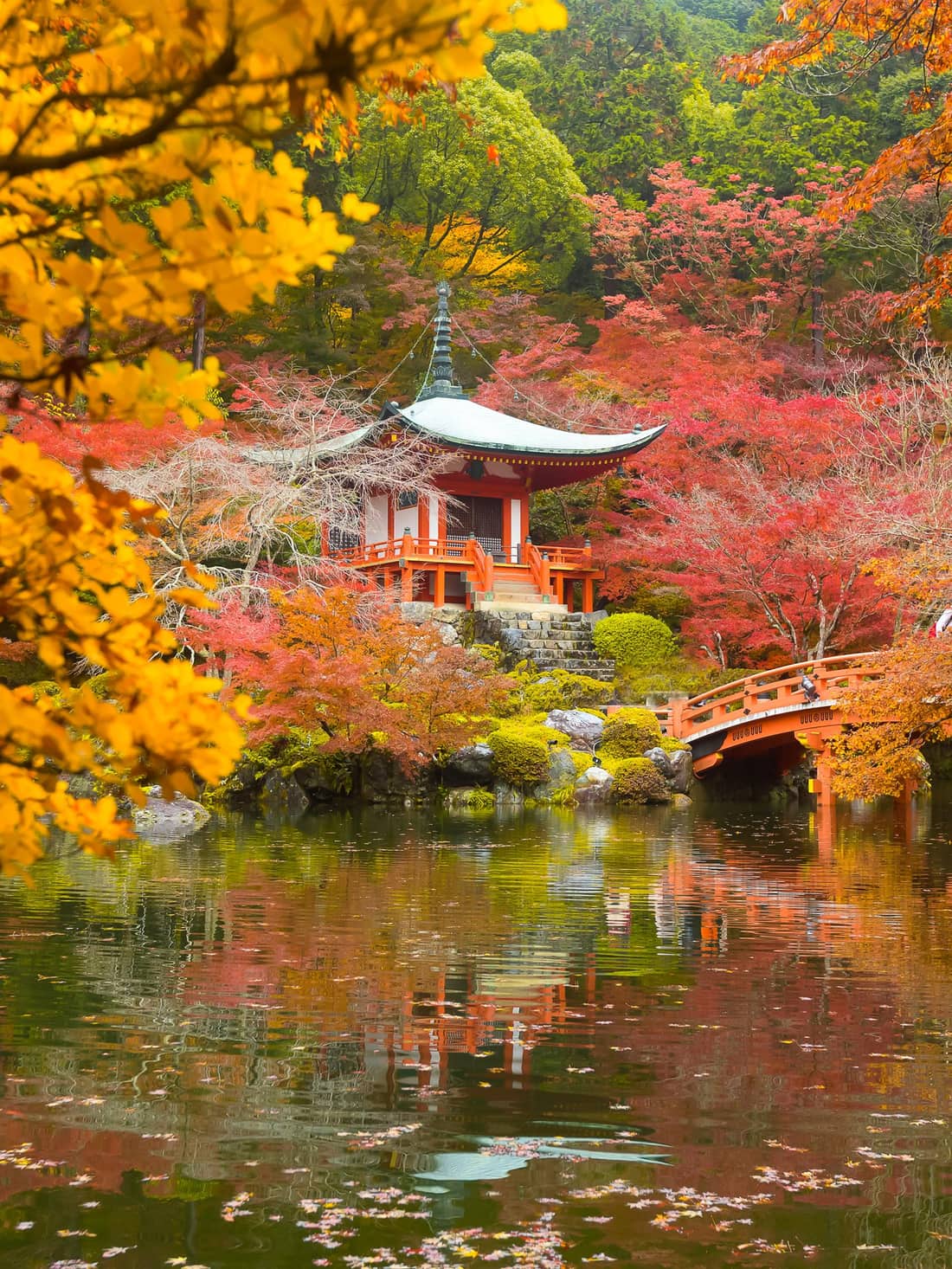
Tsuta-numa, in the beech forest of Aomori
- Prefecture
- Aomori
- Region
- Tohoku
- Journeys
- The Custom Tour of Japan
overview
Beech forest, a lake in a crater, and the far north of the main island.
Aomori is a prefecture of forest and water. The Hakkoda mountains rise at its centre, their beech woods running down to the Oirase gorge and the caldera of Lake Towada; in the west, the Shirakami-Sanchi range keeps one of the last great virgin beech forests of East Asia, inscribed as a World Natural Heritage Site in 1993; and the two peninsulas of Tsugaru and Shimokita reach north towards Hokkaido around Mutsu Bay. Its winters are deep and snowy, and its onsen, set in the forest, are among the most atmospheric in Japan.
The north was settled early. Outside Aomori city, the Jomon settlement of Sannai-Maruyama was a town of some five thousand years ago, and it belongs with sites across the north to the Jomon Prehistoric Sites in Northern Japan, inscribed as a World Heritage Site in 2021. In the west, Hirosaki was the castle town of the Tsugaru lords, and its keep of 1810 still stands above the moats of a great park.
Aomori also grows more than half of Japan's apples, catches scallops in Mutsu Bay and some of the most prized tuna in the country off the cape at Oma, and keeps a strong culture of its own: the driving music of the Tsugaru shamisen, the kogin embroidery of the farm women, and the Nebuta festival, whose enormous illuminated floats of painted paper are paraded through Aomori city each summer.
Our tours stay overnightOur tours visit for the dayOn a Custom Tour of Japan
see and do
What to see in Aomori
Oirase Gorge
A stream of fourteen kilometres flowing out of Lake Towada through beech forest, moss and waterfalls, with a level path along its banks and a road beside it, so that any stretch can be walked and the remainder driven.
Lake Towada
A caldera lake on the border with Akita, more than three hundred metres deep, ringed by forest. Boats cross from Yasumiya to the Nenokuchi end, and at the shore stands the Maidens statue by the sculptor Takamura Kotaro.
Hirosaki Castle and Park
The castle of the Tsugaru lords, its keep of 1810 one of the twelve original castle keeps in Japan, standing in a park of moats, gates and some 2,600 cherry trees. The town around it keeps samurai houses and Western buildings of the Meiji era.
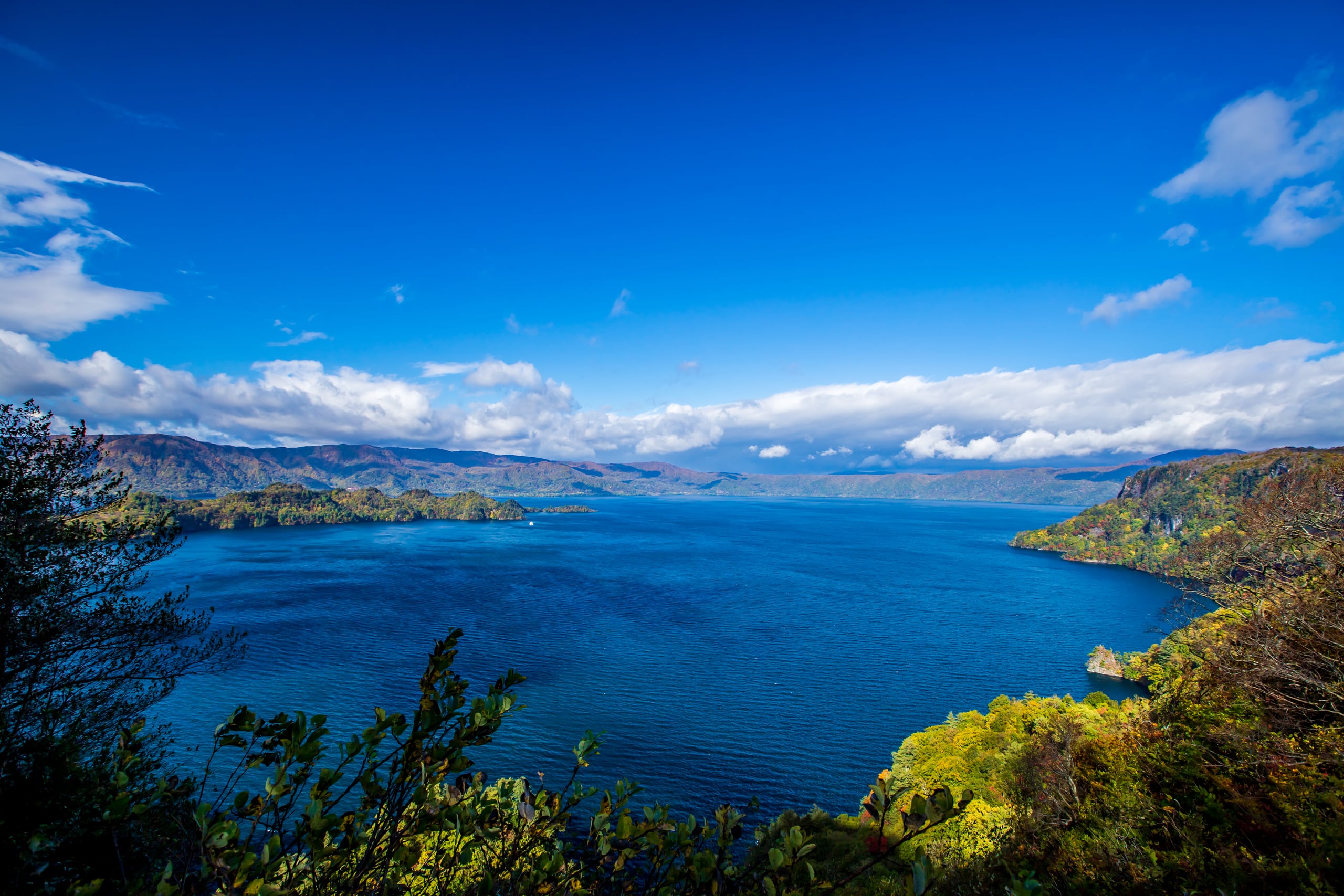
Lake Towada from above Sannai-Maruyama
One of the largest Jomon settlements ever found, with the great timber posts of a six-pillar structure and longhouses raised again on the site, and a museum of the pottery and figures dug from it.
The Hakkoda mountains
A volcanic range above Aomori city, reached by a ropeway that rises through beech and fir to the moorland at the top, and home to old onsen in the forest.
Shirakami-Sanchi and Juniko
The great beech forest on the Akita border, a World Natural Heritage Site, and at its edge the Juniko, a scatter of small lakes among the trees, among them the Aoike, a pond of an astonishing blue.
Nebuta Museum Wa Rasse
A museum on the waterfront of Aomori city where full-size floats from the Nebuta festival are kept and lit, with the music and the craft of the makers explained.
Aomori Museum of Art
A white building by the architect Jun Aoki beside the Sannai-Maruyama site, with Marc Chagall's backdrops for the ballet Aleko and the giant dog Aomori-ken by Yoshitomo Nara, who was born in the prefecture.
Towada Art Center
A contemporary art museum by Ryue Nishizawa on the main avenue of Towada city, its galleries a scatter of white boxes with single large works, with sculptures out on the street.

experiences
The best of Aomori
Oirase on foot, with a car alongside
A naturalist walks the most beautiful stretches of the gorge with you, past the waterfalls and the moss-covered rocks, while a car waits at each bend for the next stretch.
A night in a forest onsen
An evening at a wooden onsen inn deep in the beech forest of Hakkoda or Towada, with water rising through the floorboards of the onsen and a dinner of mountain vegetables, river fish and Aomori apples.
Tsugaru shamisen
An evening of the Tsugaru shamisen, the fast, percussive music of the far north, played close at hand in a small room in Aomori or Hirosaki.
The seafood of Mutsu Bay
Scallops from the bay, sea urchin, and tuna from the cold straits off Oma, eaten at the counter of a sushi master who knows the boats that brought them in.
plan your visit
Aomori on a journey through Japan
- How long to stay
- Three nights are a good beginning: two in the forest near Oirase and Lake Towada and one in Hirosaki or Aomori city, with a fourth for Shirakami-Sanchi.
- Getting there
- By the Tohoku Shinkansen from Tokyo to Shin-Aomori, about three hours on the fastest trains, or to Hachinohe, from which Oirase is about an hour by car. From Hakodate the Hokkaido Shinkansen crosses beneath the Tsugaru Strait to Shin-Aomori in about an hour, and Hirosaki is about thirty minutes by train from Shin-Aomori.
- Pairs well with
- Aomori links Tohoku with Hokkaido: from Oirase and Hirosaki the train runs beneath the strait to Hakodate, or south through Akita and Lake Tazawa towards Iwate and Hiraizumi.Oirase and TowadaHirosakiHakodateLake TazawaAkitaIwate
journeys
Aomori on a private journey
We bring guests to Aomori on the Custom Tour of Japan, created around your party alone, on your dates, with your own Tour Director.
questions
Aomori: questions answered
What is Aomori famous for?
Aomori is famous for its apples, its beech forests, the Oirase gorge and Lake Towada, Hirosaki Castle, and the Nebuta festival with its great illuminated paper floats.
How do you get from Tokyo to Aomori?
By the Tohoku Shinkansen from Tokyo to Shin-Aomori, about three hours on the fastest trains. There are also flights from Haneda to Aomori Airport of about an hour and a quarter.
How many days do you need in Aomori?
Three nights for Oirase, Lake Towada and Hirosaki, and four if you would add the Shirakami-Sanchi forest or the Shimokita peninsula.
Where is the Oirase Gorge?
In the south of Aomori Prefecture, flowing north out of Lake Towada for about fourteen kilometres through the beech forest of the Towada-Hachimantai National Park.
Can you travel from Aomori to Hokkaido by train?
Yes. The Hokkaido Shinkansen runs from Shin-Aomori through the Seikan Tunnel beneath the Tsugaru Strait to Shin-Hakodate-Hokuto in about an hour.
Is Hirosaki Castle original?
Yes. Its keep, built in 1810, is one of only twelve castle keeps in Japan that survive from the age of the samurai, and the gates and turrets around it are original too.
Can Aomori be part of a private tour of Japan?
Yes. The Custom Tour of Japan is created around your party alone, on your dates, with your own Tour Director, and it can go anywhere in the country, Aomori included. If you would rather travel independently, the Expert Japan Itinerary plans every day for you.
tohoku
More in Tohoku
Every place in Tohoku
Aomori, planned for you.
Tell us when you would like to travel and what draws you to Aomori, and we will answer with a Custom Tour of Japan created around your party alone, or, if you would rather travel independently, an Expert Japan Itinerary that plans every day for you.