






tohokuyamagata
Dewa Sanzan
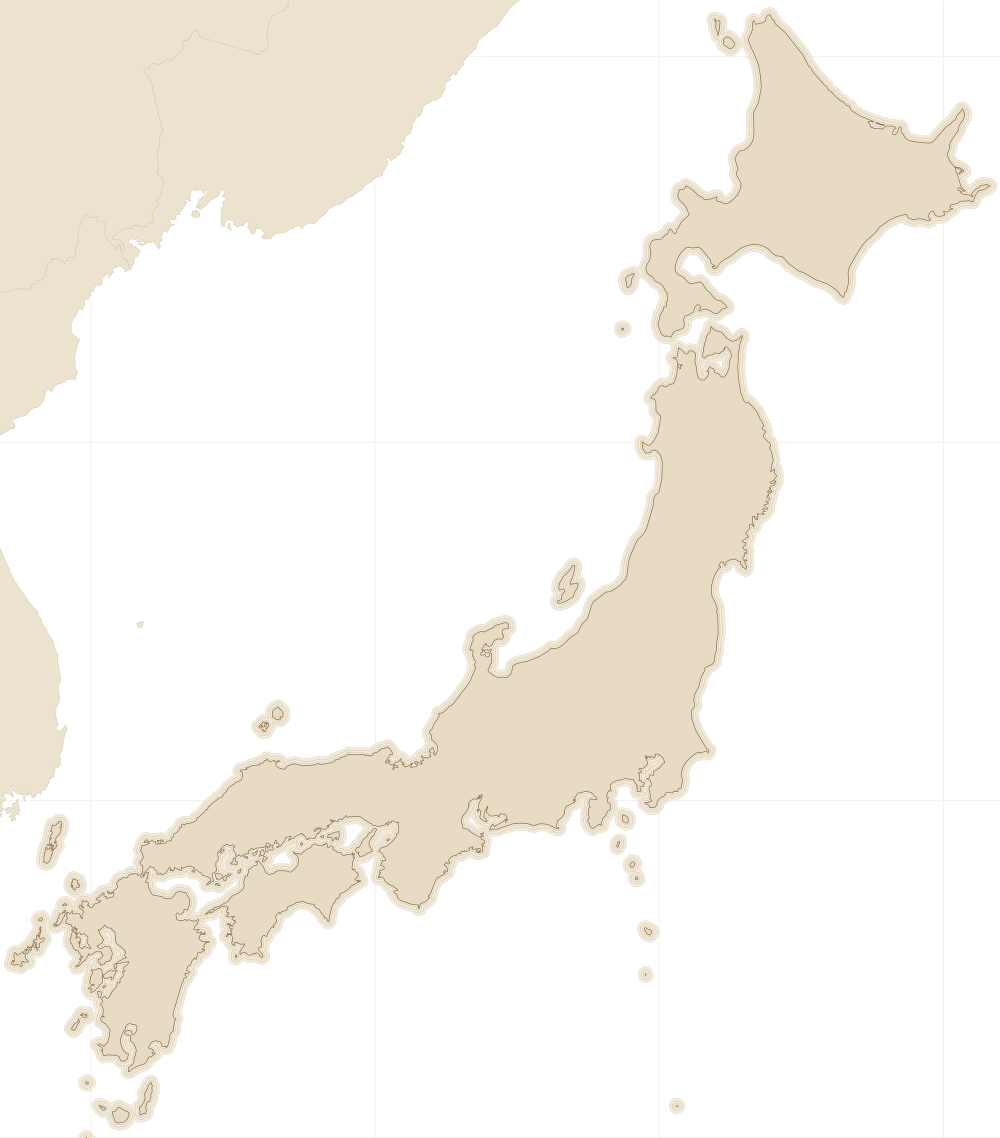
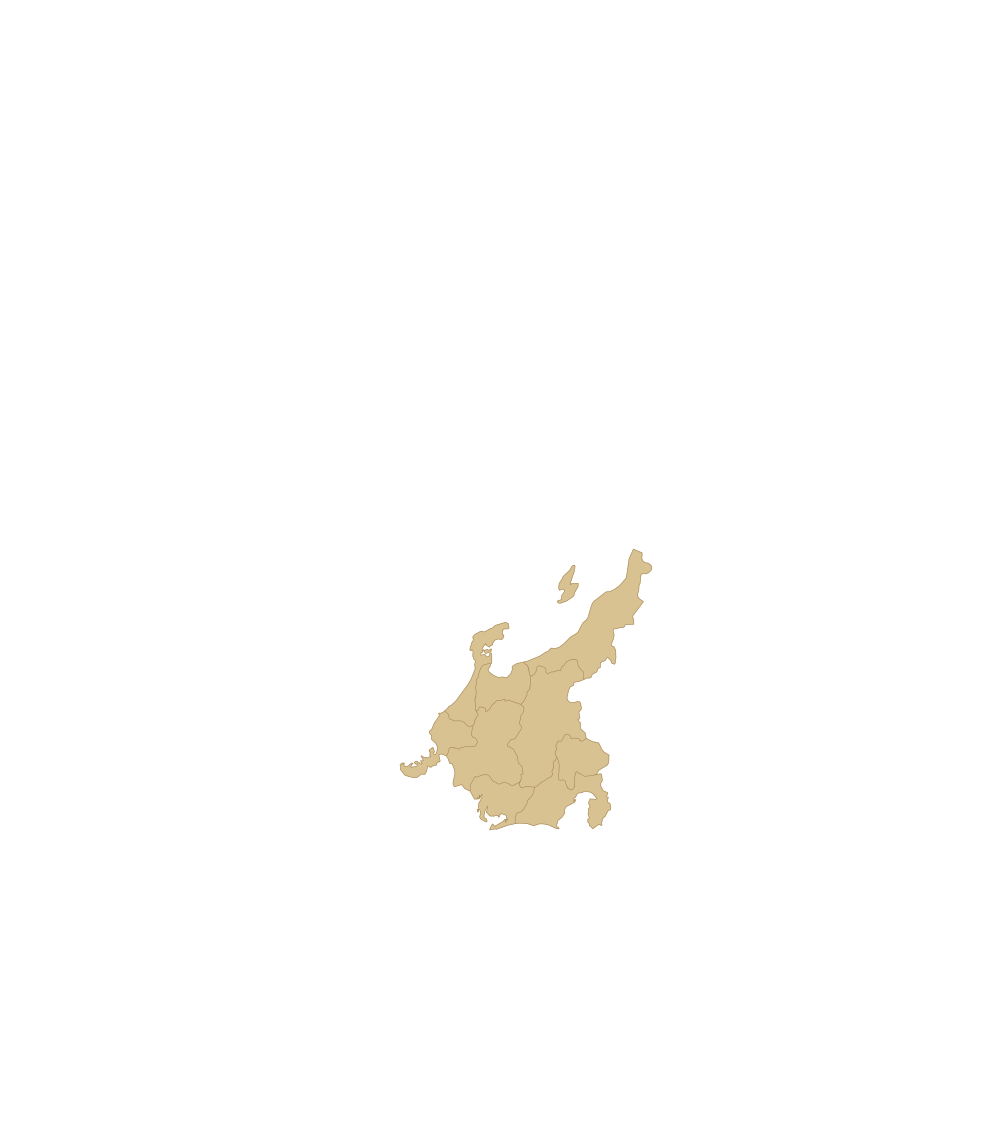
Dewa Sanzan are three sacred mountains, Haguro, Gassan and Yudono, in the Shonai region of Yamagata Prefecture, in the Tohoku region, a centre of the mountain faith of Shugendo for some fourteen centuries and about an hour's flight or four hours by train from Tokyo.
- Prefecture
- Yamagata
- Region
- Tohoku
- Journeys
- The Custom Tour of Japan
overview
Three mountains, one pilgrimage, and the cedar forest that leads into it.
Dewa Sanzan, the three mountains of Dewa, the old name of this province, have been places of worship since the end of the sixth century. Tradition says that Prince Hachiko, a son of the Emperor Sushun, came here in 593 and founded worship on Mount Haguro, and over the following centuries the mountains became one of the great centres of Shugendo, the faith that joins Buddhism, Shinto and the older worship of mountains. Its practitioners, the yamabushi, still train here in their checked robes, sounding the conch shell horn on the mountain paths.
The three mountains are walked as a single pilgrimage of rebirth. Haguro, the lowest at 414 metres, stands for the present life; Gassan, the mountain of the moon and the highest at 1,984 metres, for death and the past; and Yudono, at 1,504 metres, for rebirth into the future. Gassan and Yudono lie deep under snow for much of the year, so Haguro keeps a hall where the gods of all three are worshipped together, and it is on Haguro that most travellers meet Dewa Sanzan.
What they find is one of the most beautiful sacred places in Japan. A stone stair of 2,446 steps rises for about two kilometres through a forest of cedars, many of them several hundred years old, past a five-storey pagoda standing alone among the trees. At the foot of the mountain, the village of Toge has been a town of shukubo, the lodgings that receive pilgrims, for centuries, and their kitchens still serve the shojin ryori of the mountains, a Buddhist vegetarian cuisine made from wild plants, mushrooms and bamboo shoots gathered on the slopes.
Basho came here too, in 1689, and wrote of the moon over Gassan and of a hot spring he was forbidden to describe. For the traveller who has seen Kyoto and Nikko, Dewa Sanzan shows a different, older Japan of mountains and ascetics, and the Shonai plain below, with the castle town of Tsuruoka and the port of Sakata, has one of the most admired food traditions in the country.
see and do
What to see at Dewa Sanzan
Zuishinmon and the cedar avenue
The great red gate at the foot of Mount Haguro marks the boundary of the sacred mountain. Beyond it the stone stair begins, descending first to a stream and a waterfall before rising through the cedars.
The Five-storey Pagoda of Haguro
A pagoda of unpainted wood some 29 metres tall, standing alone in the cedar forest, built in the fourteenth century and designated a National Treasure. It is among the oldest pagodas in the Tohoku region.
Jiji-sugi, the grandfather cedar
A cedar beside the pagoda thought to be about a thousand years old, its trunk more than ten metres round, and a natural monument of Japan.
The 2,446 steps
The stair to the summit of Haguro, laid in the seventeenth century and lined by cedars of great age, with a teahouse halfway that looks out over the Shonai plain.
Sanshin Gosaiden
The main shrine hall on the summit of Haguro, where the deities of all three mountains are enshrined together. Its thatched roof, about two metres thick, is one of the largest of its kind in Japan, and the pond before it, the Kagami-ike, gave up hundreds of bronze mirrors offered by pilgrims over the centuries.
Ideha Museum
A museum on the summit of Haguro explaining the history and practice of Shugendo, with treasures from the mountains and some of the mirrors recovered from the pond.
Gassan
The highest of the three, a long gentle mountain of alpine meadow whose summit shrine is open only in the summer months, when the snow has gone.
Yudonosan Shrine
The most secret of the three, where the object of worship is a great rock of reddish stone over which hot spring water flows. Pilgrims remove their shoes to walk upon it, photographs are forbidden, and tradition asks that those who come do not speak of what they have seen.
Tsuruoka
The old castle town of the Sakai lords below the mountains, with the Chido Museum's collection of samurai houses and Meiji buildings, and a food culture recognised by UNESCO as a Creative City of Gastronomy.
Sakata and the Sankyo Soko
The old rice port at the mouth of the Mogami River, where a row of wooden rice warehouses of 1893 stands behind a line of tall zelkova trees, and the house and garden of the Homma family, once the largest landowners in Japan.
experiences
The best of Dewa Sanzan
The stair with a yamabushi
A yamabushi of Mount Haguro, in his robes, walks with you through the cedars and explains the faith of the mountains, sounding the conch shell horn at the gate. A car takes you to the summit first, so the stair is walked downhill at an easy pace through the forest.
A night in a shukubo
An evening in one of the pilgrims' lodgings of Toge, with tatami rooms, a quiet garden and a dinner of shojin ryori, the vegetarian cooking of the mountains, served in small lacquered dishes as it has been for generations.
Shojin ryori, explained
A meal of the mountain cuisine with its maker at the table, describing each wild plant, mushroom and root, where it was gathered and how it was prepared, so that the meal becomes a lesson in the landscape.
The food of Shonai
Tsuruoka's kitchens cook with heirloom vegetables grown nowhere else, rice from the Shonai plain and fish from the Sea of Japan, and a dinner in the town is among the reasons gastronomes make the journey north.
Down the Mogami River
A flat-bottomed boat, steered by a boatman who sings the river songs, carries you through the Mogami gorge, the river Basho wrote of gathering the summer rains.
plan your visit
Dewa Sanzan on a journey through Japan
- How long to stay
- Two nights let Dewa Sanzan settle: one in a shukubo at the foot of Mount Haguro or in Tsuruoka, and a day for the mountain, the town and the Shonai plain.
- Getting there
- By air from Haneda to Shonai Airport in about an hour, then about forty minutes by car to Mount Haguro. By rail, the Joetsu Shinkansen to Niigata and the Inaho limited express along the Sea of Japan bring you to Tsuruoka in about four hours from Tokyo; from Yamagata a private car crosses the mountains in about two hours.
- Pairs well with
- Dewa Sanzan is the western end of a crossing of Yamagata: from Sendai and Yamadera across to Ginzan Onsen, then down the Mogami River to the Shonai plain and the sacred mountains.YamagataYamaderaGinzan OnsenSendaiAkita
journeys
Dewa Sanzan on a private journey
We bring guests to Dewa Sanzan on the Custom Tour of Japan, created around your party alone, on your dates, with your own Tour Director.
questions
Dewa Sanzan: questions answered
What are the three mountains of Dewa Sanzan?
Mount Haguro, 414 metres, Gassan, 1,984 metres, and Mount Yudono, 1,504 metres, in Yamagata Prefecture. Together they form a pilgrimage of rebirth, standing for the present, the past and the future.
How many steps are there on Mount Haguro?
There are 2,446 stone steps from the Zuishinmon gate to the summit, about two kilometres through cedar forest. Many visitors take a car to the top and walk down, which is the easier way.
How do you get to Dewa Sanzan from Tokyo?
Fly from Haneda to Shonai Airport in about an hour and drive forty minutes to Mount Haguro, or take the train by way of Niigata to Tsuruoka in about four hours.
Can you stay overnight at Dewa Sanzan?
Yes. The village of Toge at the foot of Mount Haguro has some thirty shukubo, pilgrims' lodgings kept by priestly families, where guests sleep on tatami and dine on shojin ryori, the vegetarian cuisine of the mountains.
What is a yamabushi?
A yamabushi is a practitioner of Shugendo, the Japanese faith of the mountains that joins Buddhism and Shinto. On Mount Haguro they still train in the forest in checked robes and sound the conch shell horn.
Can you visit Gassan all year?
No. Gassan lies under deep snow for much of the year and its summit shrine opens only in the summer months, which is why the deities of all three mountains are also worshipped together on Mount Haguro, open throughout the year.
Why can't you take photographs at Yudono?
The shrine on Mount Yudono is the most sacred of the three, and its object of worship, a rock bathed in hot spring water, may not be photographed. By old tradition, pilgrims are asked not to speak of what they see there.
Can Dewa Sanzan be part of a private tour of Japan?
Yes. The Custom Tour of Japan is created around your party alone, on your dates, with your own Tour Director, and it can go anywhere in the country, Dewa Sanzan included. If you would rather travel independently, the Expert Japan Itinerary plans every day for you.
tohoku
More in Tohoku
Dewa Sanzan, planned for you.
Tell us when you would like to travel and what draws you to Dewa Sanzan, and we will answer with a Custom Tour of Japan created around your party alone, or, if you would rather travel independently, an Expert Japan Itinerary that plans every day for you.