



tohokuprefecture
Iwate
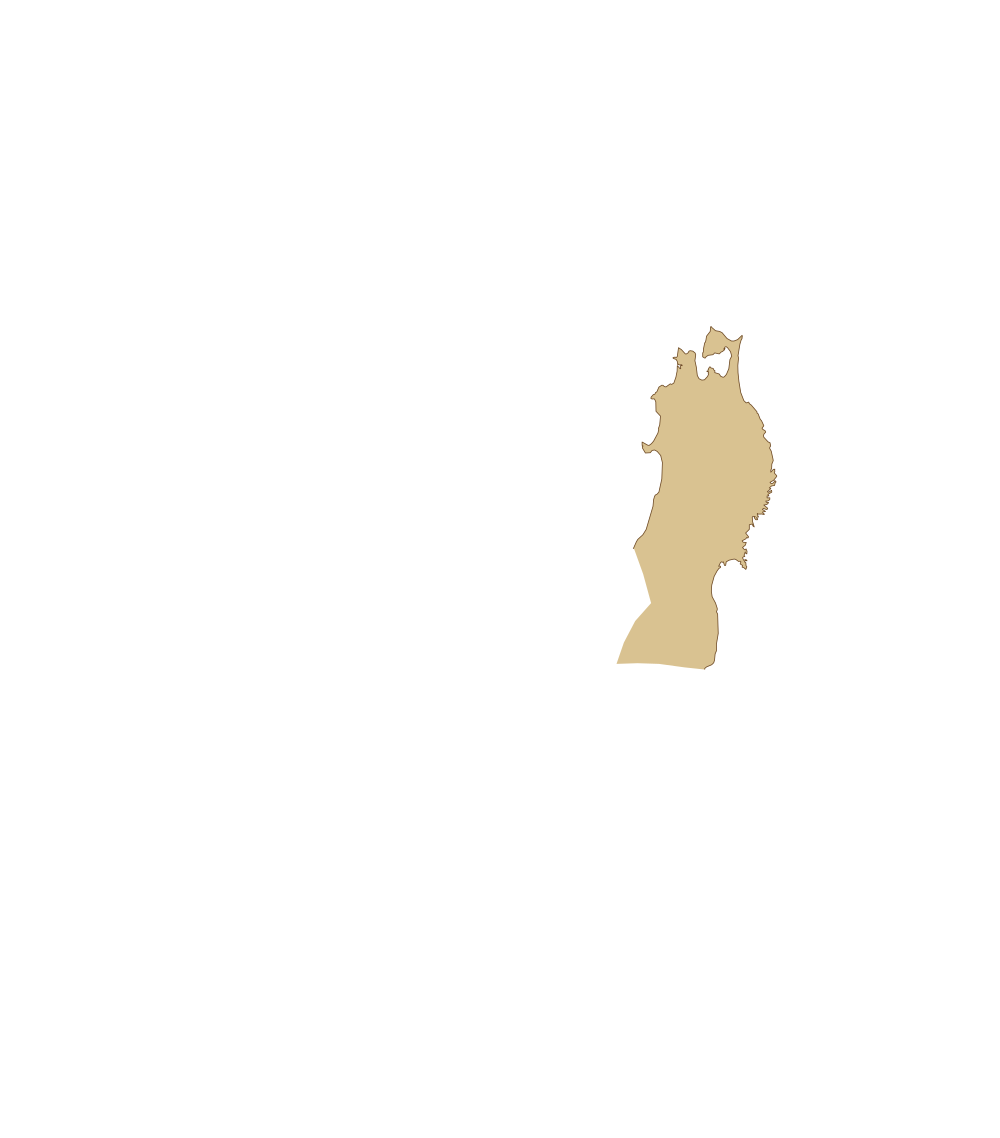
Iwate is the largest prefecture of Honshu, in the Tohoku region, stretching from the Ou mountains to the Pacific coast, with its capital, Morioka, a little over two hours from Tokyo by the Tohoku Shinkansen.
- Prefecture
- Iwate
- Region
- Tohoku
- Journeys
- The Custom Tour of Japan
overview
A golden hall in the hills, a city of ironwork and rivers, and pasture beneath a volcano.
Iwate is a broad, quiet country of mountains, farmland and long rivers, with the cone of Mount Iwate, 2,038 metres, standing above its capital. In the twelfth century, the Northern Fujiwara clan made Hiraizumi, in the south of the prefecture, a capital to rival Kyoto, built on the gold of these hills, and their Buddhist temples and Pure Land gardens are now a World Heritage Site. When the Fujiwara fell in 1189, the north went quiet for centuries, and much of what they built was lost, but the Konjikido, their golden hall, survives intact.
Morioka, the castle town of the Nanbu lords, stands where three rivers meet, a gracious city of stone walls, red brick and bridges. It is the home of Nanbu tekki, the cast iron kettles made in the city and in Oshu since the seventeenth century, and of three noodle dishes the Japanese travel north to eat. Around it, the plain rises to Koiwai Farm, founded in 1891 on the slopes of Mount Iwate, and the onsen of Hanamaki and Hachimantai.
Iwate is a literary prefecture too. The poet and storyteller Miyazawa Kenji was born in Hanamaki, the poet Ishikawa Takuboku grew up near Morioka, and in 1910 the scholar Kunio Yanagita published Tono Monogatari, the legends of the valley of Tono, which founded the study of Japanese folklore. Joboji, in the north, produces most of the lacquer sap grown in Japan, used to restore the great temples of Kyoto and Nikko.
see and do
What to see in Iwate
Chuson-ji and the Konjikido
The temple of the Northern Fujiwara in Hiraizumi, set among cedars on a hill, and within it the Konjikido, a small hall of 1124 covered inside and out in gold leaf and inlaid with mother of pearl, where the clan's leaders lie.
Motsu-ji
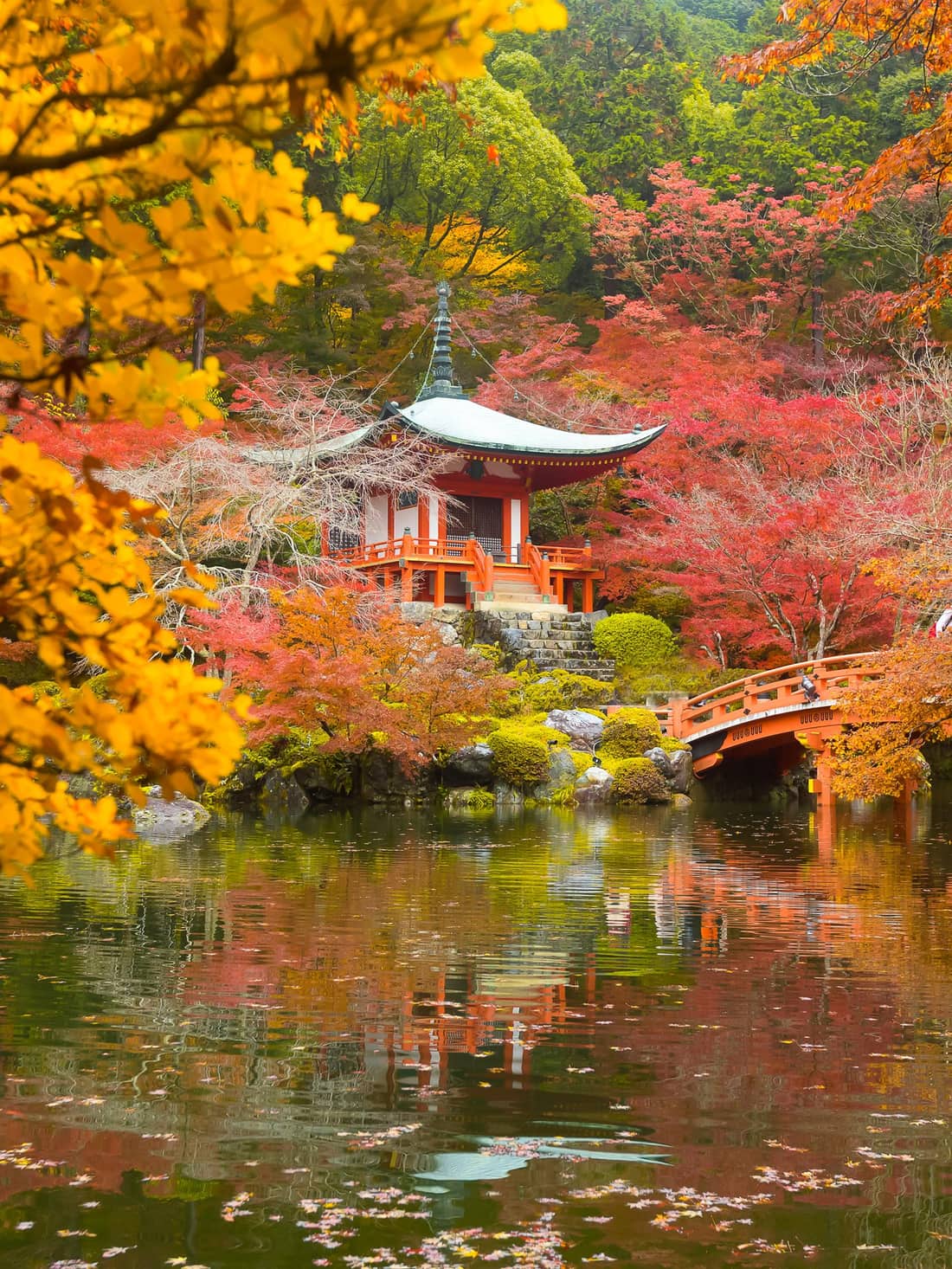
A temple of Hiraizumi with one of the most complete Pure Land gardens in Japan, a great pond with a stony shoreline and islands, laid out in the twelfth century to evoke the paradise of the Amida Buddha.
Geibikei Gorge
A gorge of sheer cliffs on the Satetsu River near Ichinoseki, travelled in a flat-bottomed boat poled by a boatman who sings the old songs of the river on the way.
Morioka
The castle town of the Nanbu lords, with the stone walls of its castle in Iwate Park, red-brick banks of the Meiji era along the river, and the Ishiwari-zakura, a cherry tree that has split a granite boulder as it grew.
Nanbu ironware workshops
The foundries of Morioka and Mizusawa where cast iron kettles are still made by hand in sand moulds, each one patterned with fine raised dots or the motifs of the season.
Koiwai Farm
A farm of some three thousand hectares on the lower slopes of Mount Iwate, founded in 1891, with old wooden barns, pasture and lines of trees, and its own dairy.
Tono
The valley of the folk tales, with L-shaped magariya farmhouses where people and horses lived under one roof, the Tono Furusato Village, and the stream where the kappa of legend is said to live.
Hanamaki
The home town of Miyazawa Kenji, with a museum to his poetry and stories, and a ring of onsen villages in the hills around it.
Jodogahama
A cove on the Sanriku coast near Miyako, where pale rocks of rhyolite rise from clear water beneath pine trees, named by a priest who thought it resembled the shore of paradise.
experiences
The best of Iwate
The gold of Hiraizumi
A day in Hiraizumi with a specialist in Buddhist art, from the Konjikido to the garden of Motsu-ji, explaining how a northern clan built a Pure Land in the hills.
An ironmaker's workshop
A visit to a Nanbu ironware foundry in Morioka, watching a kettle cast and finished by a craftsman whose family has worked the iron for generations, and taking tea from water boiled in one.
A boat through Geibikei
The flat-bottomed boat through the gorge, steered by a singing boatman between cliffs fifty metres high, with nothing to do but watch the stone and the water go by.
The noodles of Morioka
The three noodles of the city in a single evening: wanko soba, served in endless small bowls by a server who keeps refilling yours; reimen, cold and clear; and jajamen, with a dark miso sauce.
plan your visit
Iwate on a journey through Japan
- How long to stay
- Two or three nights: one for Hiraizumi and Geibikei, and one or two in Morioka or near Mount Iwate, with a fourth for Tono or the coast.
- Getting there
- By the Tohoku Shinkansen from Tokyo to Morioka in a little over two hours, and to Ichinoseki, ten minutes from Hiraizumi, in a little over two hours on the faster trains. Morioka is the junction for the Akita Shinkansen, so Kakunodate and Lake Tazawa are under an hour away.
- Pairs well with
- Iwate lies at the crossroads of the north: Hiraizumi pairs with Matsushima and Sendai to the south, and from Morioka the line runs west to Lake Tazawa and Kakunodate or north to Aomori.HiraizumiLake TazawaKakunodateMatsushimaSendaiAomori
where to stay
Luxury hotels and ryokan in Iwate
Morioka has city hotels close to the castle park and the rivers, and the onsen villages of Hanamaki and Tsunagi, within half an hour, have ryokan with open-air onsen. Hiraizumi itself is a small town, and most guests visit it from Ichinoseki, from an onsen in the hills or on the way north from Matsushima and Sendai.
A quiet place to stay stands on the pastures of Koiwai Farm beneath Mount Iwate, among old trees and farmland with the mountain filling the horizon.
journeys
Iwate on a private journey
We bring guests to Iwate on the Custom Tour of Japan, created around your party alone, on your dates, with your own Tour Director.
questions
Iwate: questions answered
What is Iwate famous for?
Iwate is famous for Hiraizumi and its golden hall, the Nanbu ironware of Morioka, the noodles of Morioka, the folk tales of Tono, and Mount Iwate.
How do you get from Tokyo to Morioka?
By the Tohoku Shinkansen, a little over two hours from Tokyo Station on the fastest trains. Hiraizumi is reached from Ichinoseki, a stop to the south.
Is Hiraizumi a World Heritage Site?
Yes. Its temples, gardens and archaeological sites, among them Chuson-ji and Motsu-ji, were inscribed in 2011 as Temples, Gardens and Archaeological Sites Representing the Buddhist Pure Land.
How many days do you need in Iwate?
Two or three nights cover Hiraizumi, Morioka and Mount Iwate, and a fourth adds Tono or the Sanriku coast.
What is Nanbu tekki?
Nanbu tekki is the cast iron ware of Iwate, above all the tetsubin kettle, made by hand in Morioka and Oshu since the seventeenth century and prized for the soft taste it gives water for tea.
Can Iwate be part of a private tour of Japan?
Yes. The Custom Tour of Japan is created around your party alone, on your dates, with your own Tour Director, and it can go anywhere in the country, Iwate included. If you would rather travel independently, the Expert Japan Itinerary plans every day for you.
tohoku
More in Tohoku
Iwate, planned for you.
Tell us when you would like to travel and what draws you to Iwate, and we will answer with a Custom Tour of Japan created around your party alone, or, if you would rather travel independently, an Expert Japan Itinerary that plans every day for you.