



chubuaichi
Nagoya
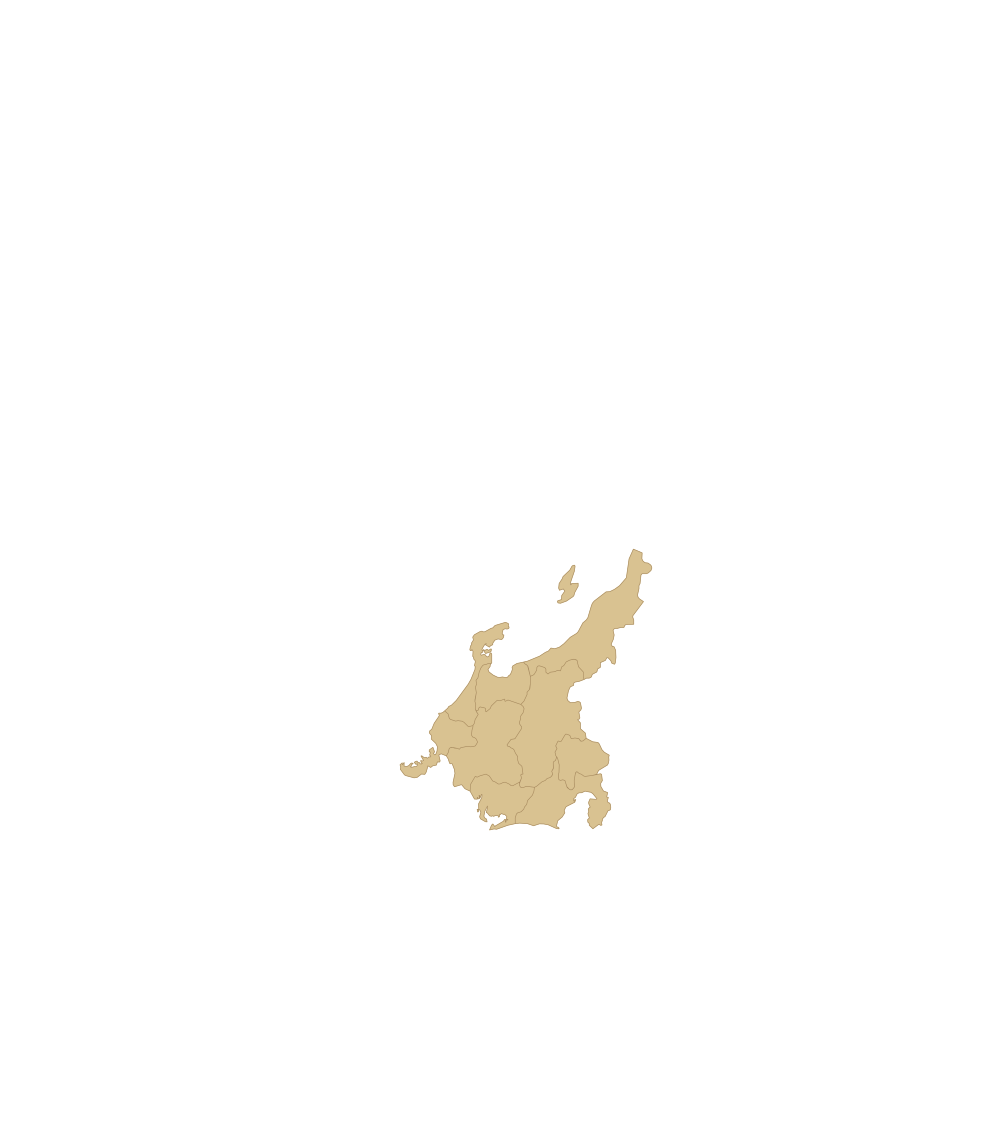
Nagoya is the fourth-largest city in Japan and the capital of Aichi Prefecture, in the Chubu region, on the Tokaido Shinkansen halfway between Tokyo and Kyoto, and the seat of the senior branch of the Tokugawa family.
- Prefecture
- Aichi
- Region
- Chubu
- Journeys
- The Custom Tour of Japan
overview
The city the Tokugawa built for their own, with the crafts and kilns of central Japan around it.
Nagoya was made by the three men who unified Japan. Oda Nobunaga, Toyotomi Hideyoshi and Tokugawa Ieyasu were all born in what is now Aichi Prefecture, and in 1610 Ieyasu ordered a great castle built here for his ninth son, Yoshinao, founder of the Owari Tokugawa, the senior of the three branch houses of the shogun's family. The whole town of Kiyosu was moved to the new castle, and Nagoya grew into the capital of a domain that guarded the Tokaido road between Edo and Kyoto.
The city was heavily bombed in 1945 and rebuilt on wide modern avenues, and it is today the centre of Japanese manufacturing, the home of Toyota and of the ceramics and machine industries of central Japan. It is not a city of old streets like Kyoto. What it has instead are great collections and great institutions: the Honmaru Palace of the castle, rebuilt in cypress to the original plans; Atsuta Shrine, one of the most sacred in the country; and the Tokugawa Art Museum, with the treasures of the Owari lords.
Around Nagoya lies some of the most rewarding country in Japan for a traveller who loves craft. Seto and Tokoname are among the oldest pottery towns in the country, Arimatsu still dyes cloth by the shibori methods of the Edo period, and at Inuyama an original castle keep stands above the Kiso River, where cormorant fishing is watched from boats. Nagoya is also the gateway to Ise, Takayama and the old post towns of the Kiso Valley, and it has a cooking all its own.
see and do
What to see in Nagoya
Nagoya Castle and the Honmaru Palace
The castle of the Owari Tokugawa, built from 1610, whose keep is crowned with golden shachihoko, the tiger-headed fish that guard against fire. The Honmaru Palace, burned in 1945, was rebuilt in Japanese cypress to the original plans and opened in full in 2018, its rooms painted with tigers, pines and scenes of the seasons on screens of gold.
Atsuta Shrine
One of the most revered shrines in Japan, founded by tradition about nineteen centuries ago, in a forest of camphor trees in the south of the city. It keeps Kusanagi no Tsurugi, the sacred sword that is one of the three imperial regalia, never shown.
Tokugawa Art Museum
The collection of the Owari Tokugawa lords, more than ten thousand pieces of armour, swords, Noh costume, tea utensils and lacquer, among them the twelfth-century illustrated handscrolls of The Tale of Genji, a National Treasure shown only rarely.
Tokugawaen
The strolling garden of the former Owari Tokugawa residence beside the museum, with a pond, a waterfall, a stream and a tea house, arranged as a landscape in miniature.
Shirotori Garden
A garden near Atsuta Shrine laid out as the landscape of the Kiso River from the mountains to the sea, with a tea house of cypress where a bowl of matcha is served looking over the pond.
Toyota Commemorative Museum of Industry and Technology
The story of Toyota from the looms of Sakichi Toyoda to the motor car, in the red-brick textile mill where the company began, with the looms and machines shown working.
Osu Kannon
A temple of the Shingon sect, moved here by Tokugawa Ieyasu in 1612, and keeper of the oldest surviving manuscript of the Kojiki, with a covered market of old shops and food stalls around it.
Inuyama Castle
One of only twelve castle keeps in Japan to survive from before the Meiji era, and one of five designated National Treasures, on a bluff above the Kiso River half an hour north of Nagoya, with a castle town of old merchant houses below.
Meiji Mura
An open-air museum near Inuyama of buildings saved from the Meiji era, among them the lobby Frank Lloyd Wright designed for a great hotel of Tokyo, moved here and rebuilt in 1976.
Arimatsu
A town on the old Tokaido road in the south of the city where cotton has been tie-dyed in the shibori method since the early seventeenth century, with the tiled and plastered houses of its merchants still standing along the street.
Tokoname and Seto
Two of the oldest pottery towns in Japan: Tokoname, one of the six ancient kilns, with a footpath past brick chimneys and walls of old pipes, and Seto, whose name became the Japanese word for ceramics.
Cormorant fishing on the Nagara River
At Gifu, twenty minutes from Nagoya, a tradition of some 1,300 years: masters in straw skirts, appointed by the Imperial Household Agency, fish by firelight from wooden boats with trained cormorants, watched from a boat that drifts beside them.
experiences
The best of Nagoya
The palace with a curator's eye
The Honmaru Palace and the Tokugawa Art Museum with a specialist in the arts of the shogunate: the painted rooms, the swords and armour, the tea wares of the Owari lords.
A morning at the kiln
A visit to a potter's workshop in Seto or Tokoname, from the clay to the kiln, and a cup or a teapot to throw or to choose.
Shibori in Arimatsu
An hour with a shibori craftsman in a merchant house of Arimatsu, binding and dyeing a length of cotton by a method unchanged for four centuries.
Cormorants by firelight
An evening on the Nagara River at Gifu or the Kiso River at Inuyama, watching the cormorant masters from a private boat, with dinner on board.
Nagoya cooking
Hitsumabushi, grilled eel over rice eaten three ways, the last with dashi poured over it; miso katsu and the dark red miso of Aichi; Nagoya Cochin chicken; and kaiseki at a Michelin-starred table.
plan your visit
Nagoya on a journey through Japan
- How long to stay
- One or two nights in Nagoya is right for the castle, Atsuta and the museums, and a third adds Inuyama, the pottery towns or an evening on the river.
- Getting there
- By the Tokaido Shinkansen from Tokyo in about an hour and forty minutes, from Kyoto in about thirty-five minutes and from Osaka in about fifty. Chubu Centrair International Airport is about thirty minutes from the city by express train.
- Pairs well with
- Nagoya is where journeys turn inland: to the Grand Shrine of Ise by express train, to Takayama and Shirakawa-go through the mountains, and to the old post towns of the Kiso Valley, with Kyoto and Tokyo on the Shinkansen either side.KyotoIse-ShimaTakayamaKiso ValleyShirakawa-goTokyo
journeys
Nagoya on a private journey
We bring guests to Nagoya on the Custom Tour of Japan, created around your party alone, on your dates, with your own Tour Director.
questions
Nagoya: questions answered
Is Nagoya worth visiting?
Yes, for a night or two. The castle palace, Atsuta Shrine and the Tokugawa Art Museum are of the first rank, the pottery towns and Inuyama are close, and it is the gateway to Ise, Takayama and the Kiso Valley.
How far is Nagoya from Tokyo?
About an hour and forty minutes by the Tokaido Shinkansen, and about thirty-five minutes from Kyoto in the other direction.
What is Nagoya famous for?
Nagoya Castle and its golden shachihoko, Atsuta Shrine and its sacred sword, Toyota and the industries of central Japan, and its cooking: hitsumabushi, miso katsu and Nagoya Cochin chicken.
How many days do you need in Nagoya?
One or two days. One covers the castle and Atsuta Shrine; two adds the Tokugawa Art Museum, a garden and a day out to Inuyama or the pottery towns.
Can you go from Nagoya to Takayama?
Yes. The Hida limited express runs from Nagoya through the mountains to Takayama in about two and a half hours, along the gorge of the Hida River.
Where should you stay in Nagoya?
Above Nagoya Station, where the Shinkansen and the trains to Ise, Takayama and the airport all leave, or in Sakae for the shops and restaurants of the centre. For a ryokan, Inuyama and Gifu are within forty minutes.
What food is Nagoya known for?
Hitsumabushi, eel over rice eaten in three ways; miso katsu, pork cutlet with a sauce of dark red miso; kishimen, flat wheat noodles; tebasaki chicken wings; and Nagoya Cochin, a breed of chicken prized across Japan.
How do you get from Nagoya to Ise?
By the Kintetsu limited express from Nagoya, about an hour and twenty minutes to Ise, or about an hour and a half by car.
Can Nagoya be part of a private tour of Japan?
Yes. The Custom Tour of Japan is created around your party alone, on your dates, with your own Tour Director, and it can go anywhere in the country, Nagoya included. If you would rather travel independently, the Expert Japan Itinerary plans every day for you.
chubu
More in Chubu
Nagoya, planned for you.
Tell us when you would like to travel and what draws you to Nagoya, and we will answer with a Custom Tour of Japan created around your party alone, or, if you would rather travel independently, an Expert Japan Itinerary that plans every day for you.