
kansaikyoto
Uji
Uji is a riverside town in Kyoto Prefecture, in the Kansai region, about twenty minutes south of Kyoto by train, famous for the Phoenix Hall of Byodo-in and for growing the most prized green tea in Japan.
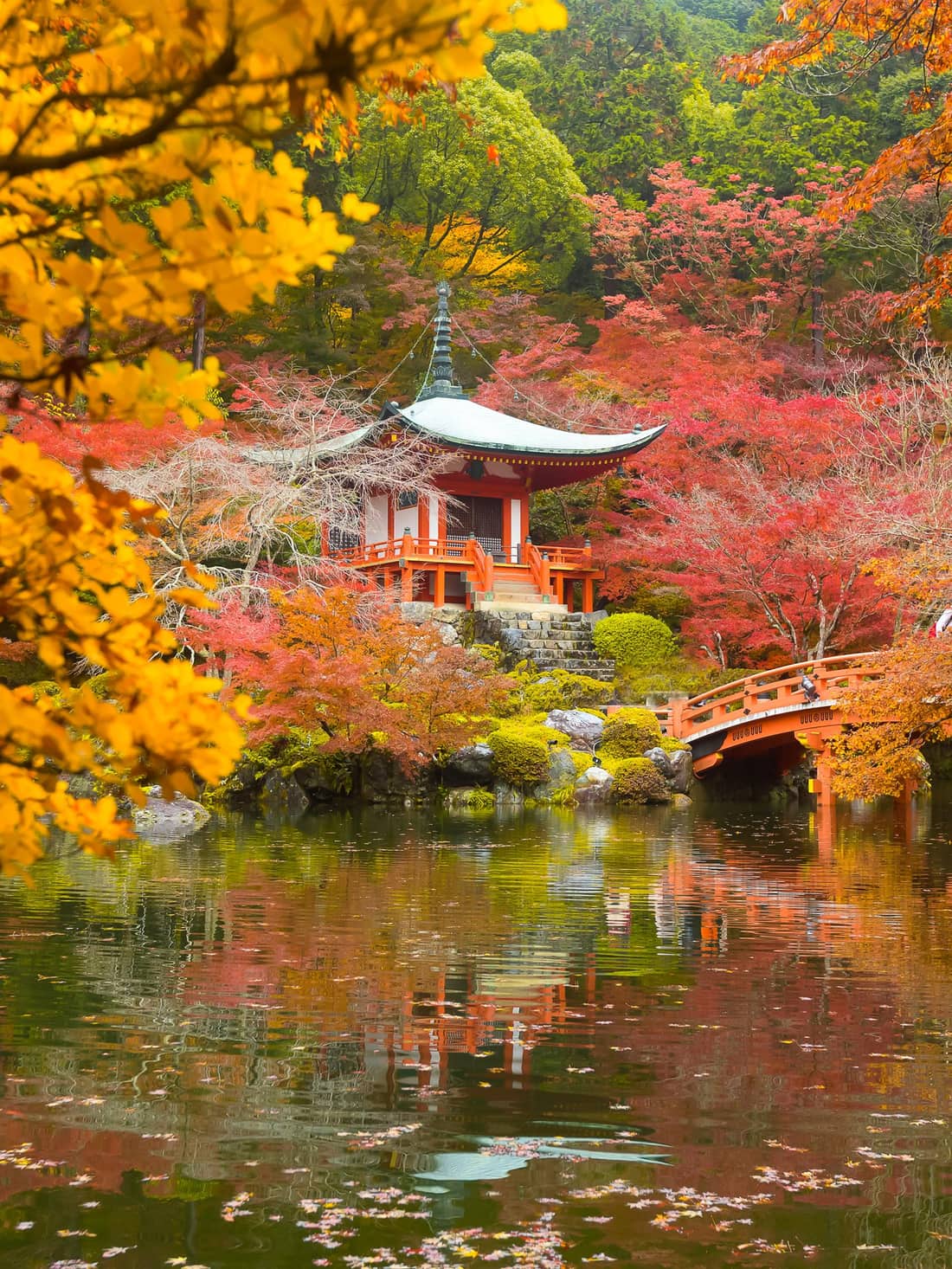
The Phoenix Hall of Byodo-in, Uji
- Prefecture
- Kyoto
- Region
- Kansai
- Journeys
- The Custom Tour of Japan
overview
A river town of tea, and a hall built to look like paradise.
Uji sits where the Uji River leaves the hills and runs out onto the plain between Kyoto and Nara. In the Heian period it was the country retreat of the court nobility, who built villas along its banks, and in 1052 the regent Fujiwara no Yorimichi turned his father's villa into the temple of Byodo-in. Its Phoenix Hall, finished the next year, was built to show the Pure Land of Amida Buddha on earth, and it still stands, reflected in its pond, on the back of every ten-yen coin.
Uji is also the setting of the last ten chapters of The Tale of Genji, written by Murasaki Shikibu in the early eleventh century, and the bridge where the story's lovers met has crossed the river, in one form or another, since the seventh century. Byodo-in and the shrine of Ujigami Jinja are part of the World Heritage Site of the Historic Monuments of Ancient Kyoto.
Above all, Uji is tea. Tea was grown here from the thirteenth century, and under the Ashikaga shoguns its gardens became the most esteemed in the country. The growers of Uji developed the practice of shading the bushes before the harvest that gives matcha and gyokuro their deep colour and sweetness, and the street that leads to Byodo-in is still lined with tea merchants, some of them in the same families for centuries. For a guest staying in Kyoto, Uji is one of the most rewarding half days in the region.
Our tours stay overnightOur tours visit for the dayOn a Custom Tour of Japan
see and do
What to see in Uji
Byodo-in and the Phoenix Hall
The temple founded in 1052, whose Phoenix Hall of 1053 spreads its wings over a pond, two bronze phoenixes on its roof. Inside sits a gilded Amida by the sculptor Jocho, the only work of his whose attribution is beyond doubt, surrounded by bodhisattvas playing music on clouds.
Hoshokan Museum
The museum of Byodo-in, set low into the ground so as not to break the view, with the original bronze phoenixes, the temple bell and twenty-six of the fifty-two carved bodhisattvas on clouds from the walls of the hall.
Ujigami Jinja
A small shrine across the river whose main hall, dated to the eleventh century, is regarded as the oldest shrine building standing in Japan. Its spring, Kirihara-mizu, is the last of the seven famous springs of Uji still flowing.
Uji Bridge
One of the three ancient bridges of Japan, first built by tradition in 646 and rebuilt many times since, with a statue of Murasaki Shikibu at its western end.
Byodo-in Omotesando
The short street that leads to Byodo-in, lined with tea merchants roasting hojicha in the doorways, where matcha, gyokuro and sencha can be tasted and bought from the people who blend them.
The Tale of Genji Museum
A museum devoted to The Tale of Genji and its Uji chapters, with reconstructions of a Heian carriage and court dress that make the world of the novel easy to picture.
Koshoji and the Kotozaka
A Soto Zen temple whose approach, the Kotozaka, climbs gently beside a stream beneath an avenue of maples to a gate in the Chinese style.
Mimuroto-ji
A temple in the eastern hills of Uji, its gardens planted with azaleas, hydrangeas and lotus around a main hall of the early nineteenth century.
Manpuku-ji
The head temple of the Obaku school of Zen, founded in 1661 by the Chinese monk Ingen, built entirely in the style of a Ming dynasty monastery, and known for fucha ryori, the vegetarian cuisine of Chinese Zen served at a shared table.
experiences
The best of Uji
Tea with a master
A tea ceremony in Uji, where the matcha is made from leaves grown a few kilometres away, with a tea master explaining the grades, the whisking and the movements of the host.
A tea farm and its maker
A visit to a tea garden in the hills around Uji to see the bushes shaded under straw and cloth, followed by a tasting of gyokuro, the sweetest of Japanese teas, brewed cool and drunk a few drops at a time.
Grinding matcha by hand
An hour at a stone mill turning tencha leaf into matcha, slowly enough that the powder stays cool, and then whisking a bowl of what you have ground.
The Phoenix Hall with a specialist
Byodo-in in the company of a historian of Heian art, who explains how every detail of the hall and its garden was arranged to show the paradise of Amida.
plan your visit
Uji on a journey through Japan
- How long to stay
- A half day from Kyoto covers Byodo-in, the tea street and the bridge; a full day adds a tea ceremony, Manpuku-ji or Koshoji and a lunch of tea cuisine.
- Getting there
- By the JR Nara line from Kyoto Station in about twenty minutes, or by private car in about thirty. Uji lies on the road between Kyoto and Nara, and the two make a natural pairing in a single day by car.
journeys
Uji on a private journey
We bring guests to Uji on the Custom Tour of Japan, created around your party alone, on your dates, with your own Tour Director.
questions
Uji: questions answered
Is Uji worth visiting from Kyoto?
Yes. In half a day you can see Byodo-in and its Phoenix Hall, one of the great buildings of Japan, and taste the best green tea in the country where it is grown, all twenty minutes from Kyoto.
How do you get from Kyoto to Uji?
By the JR Nara line from Kyoto Station in about twenty minutes, or by private car in about thirty. The Keihan line also runs to Uji from the Gion area with one change.
Why is Uji famous for matcha?
Tea has been grown around Uji since the thirteenth century, and its growers developed the shading of the bushes before harvest that gives matcha its colour and sweetness. Uji tea has been the most prized in Japan ever since.
What is the Phoenix Hall in Uji?
It is the main hall of Byodo-in, built in 1053 to show the Pure Land of Amida Buddha, its wings spread over a pond. It appears on the ten-yen coin and is part of a World Heritage Site.
Can you combine Uji and Nara in one day?
Yes. Uji lies between Kyoto and Nara, so by private car the morning can be given to Byodo-in and the afternoon to Todai-ji and the deer park.
How long do you need in Uji?
Half a day is enough for Byodo-in, the tea street and the bridge. A full day allows a tea ceremony and a visit to Manpuku-ji or Koshoji.
Can Uji be part of a private tour of Japan?
Yes. The Custom Tour of Japan is created around your party alone, on your dates, with your own Tour Director, and it can go anywhere in the country, Uji included. If you would rather travel independently, the Expert Japan Itinerary plans every day for you.
kansai
More in Kansai
Uji, planned for you.
Tell us when you would like to travel and what draws you to Uji, and we will answer with a Custom Tour of Japan created around your party alone, or, if you would rather travel independently, an Expert Japan Itinerary that plans every day for you.