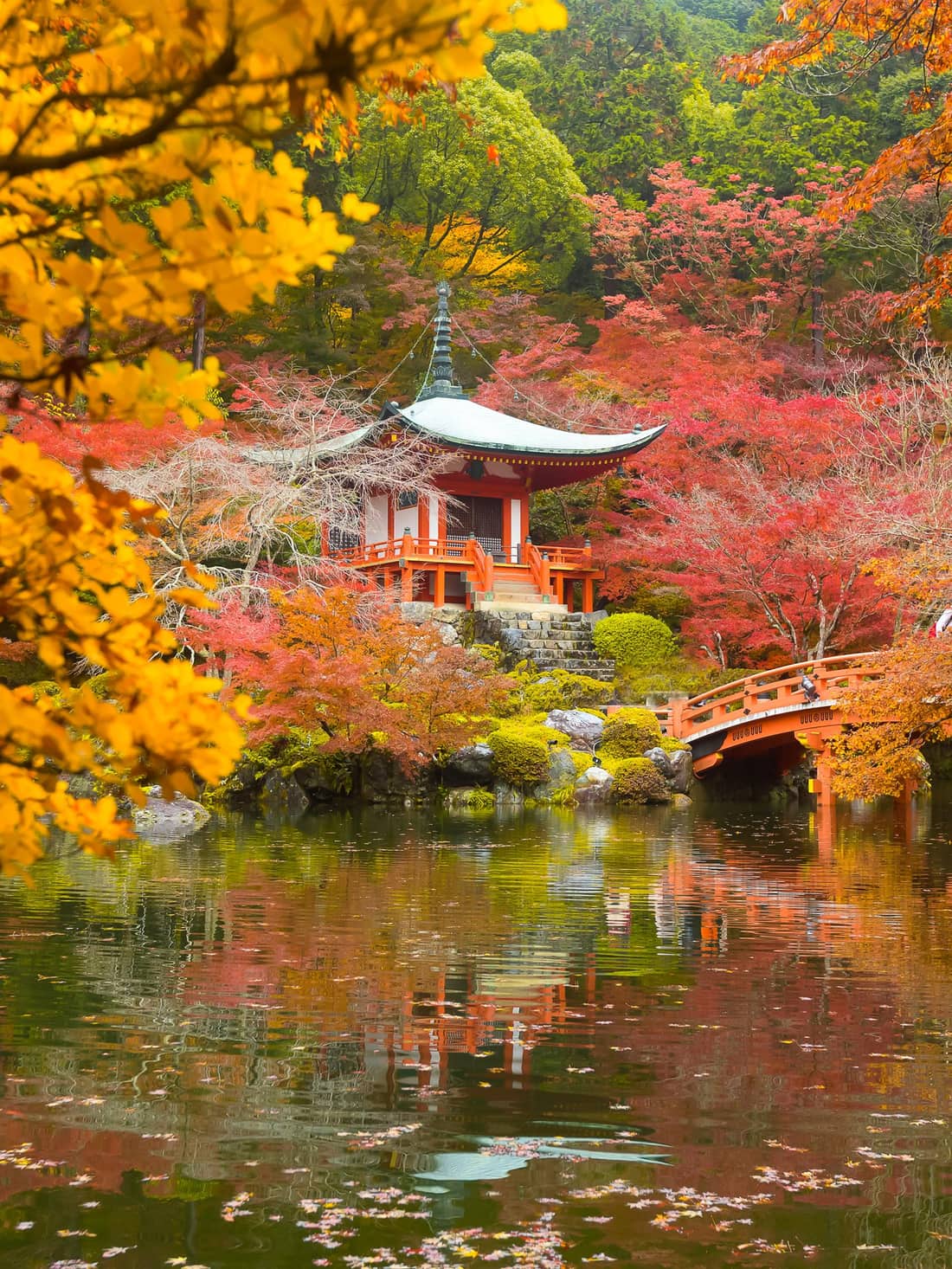

kansaiwakayama
Koyasan
Koyasan is a temple town on a forested plateau some 800 metres up in the mountains of Wakayama Prefecture, in the Kansai region, founded in 816 by the monk Kukai as the seat of Shingon Buddhism.
The path through Okunoin, Koyasan
- Prefecture
- Wakayama
- Region
- Kansai
- Journeys
- The Custom Tour of Japan
overview
A town of temples in the mountains, and a path of lanterns among the cedars.
Kukai, known after his death as Kobo Daishi, brought the teachings of esoteric Buddhism home from China in 806 and asked the emperor for a quiet place in the mountains to found a monastery. He was granted the high basin of Mount Koya, ringed by eight peaks that the monks liken to the petals of a lotus. More than twelve centuries later, the plateau is home to over a hundred temples, a university of Buddhist studies and a small town of some three thousand people, many of them monks.
Koyasan is one of the great pilgrimage places of Japan. Its heart is Okunoin, where Kobo Daishi is believed to remain in eternal meditation, and where samurai lords, emperors, poets and ordinary families have raised memorials beside him for a thousand years. The cemetery that leads there runs for two kilometres beneath cedars many centuries old, and it is among the most moving places in the country.
In 2004 Koyasan was inscribed as part of the Sacred Sites and Pilgrimage Routes in the Kii Mountain Range, a World Heritage Site it shares with the Kumano Kodo and Yoshino. Around fifty of its temples receive guests for the night as shukubo, temple lodgings, with tatami rooms opening on to gardens and the vegetarian cuisine of the monks at the table. A night here brings the evening walk through Okunoin and the temple's own service in the morning, and it is the way to know Koyasan.
Our tours stay overnightOur tours visit for the dayOn a Custom Tour of Japan
see and do
What to see on Koyasan
Okunoin
The cemetery and mausoleum of Kobo Daishi, approached by a stone path of two kilometres through more than two hundred thousand graves and memorials, moss-covered and lit by stone lanterns beneath cedars as tall as a church. The lanterns are lit along the path in the evening.
The Torodo, the Lantern Hall
The hall before Kobo Daishi's mausoleum, hung with thousands of lanterns given by the faithful, two of which are said to have been kept burning for close to a thousand years. Monks carry meals to the mausoleum twice each day.
The Danjo Garan
The first precinct Kukai laid out on the mountain: a sacred compound of halls and pagodas, among them the Kondo, the main hall, and the West Pagoda, one of the oldest buildings on the plateau.
The Konpon Daito
The great vermilion pagoda of the Danjo Garan, some 48 metres high, rebuilt in 1937, its interior painted with the Buddhas of the Shingon mandala arranged around a seated Dainichi Nyorai.
Kongobu-ji
The head temple of Koyasan Shingon Buddhism, with sliding doors painted by artists of the Kano school and Banryutei, the largest rock garden in Japan, where 140 granite stones from Shikoku are set as a pair of dragons in a sea of white sand.
The Daimon
The great gate at the western entrance to the plateau, 25 metres high and rebuilt in 1705, from which the view runs out over range after range of forested mountains towards the sea.
Reihokan Museum
The treasury of the mountain, with Buddhist paintings, sculpture and sutras gathered over twelve centuries, many of them National Treasures and Important Cultural Properties, shown in rotation.
The Tokugawa Mausoleum
Two ornate halls built in 1643 by the third shogun, Tokugawa Iemitsu, for his grandfather Ieyasu and his father Hidetada, lacquered and carved in the manner of Nikko.
Nyonin-do
The last of the halls where women pilgrims once prayed, outside the boundary they were not allowed to cross until 1872, a reminder of how long the mountain kept to its own rules.
experiences
The best of Koyasan
A night in a temple lodging
A room of tatami and sliding screens in a shukubo, its garden lit at dusk, with dinner of shojin ryori served in your room: sesame tofu, wild mountain vegetables, simmered koya-dofu and miso soup, each dish made without meat or fish and with great care.
Okunoin after dark
A walk along the cemetery path in the evening with a monk who can tell you whose memorials you are passing, warlords and poets among them, as the lanterns come on beneath the cedars.
The fire ritual
The goma, the fire ceremony of Shingon Buddhism, performed in the temple's hall with drums, chanting and offerings of wooden prayer sticks, which guests of the temple may attend.
Meditation and sutra copying
An hour of ajikan, the meditation of Shingon, or of shakyo, copying a sutra in ink with a brush, guided by a monk and explained in English.
plan your visit
Koyasan on a journey through Japan
- How long to stay
- One night is the classic temple stay, enough for Okunoin in the evening and the morning service; a second night lets the town be seen at an easy pace.
- Getting there
- From Osaka, the Nankai line from Namba climbs to Gokurakubashi in about ninety minutes, and a cable car carries you up to the plateau; the whole journey takes a little under two hours. By private car it is about two hours from Osaka or Kansai International Airport, and about two and a half from Kyoto.
- Pairs well with
- Koyasan sits between Osaka and the Kumano shrines, so it makes a natural night on the way south from Kyoto or Osaka into the Kii Peninsula, and Yoshino and Nara lie a drive to the east.KyotoOsakaKumano KodoYoshinoNara
journeys
Koyasan on a private journey
We bring guests to Koyasan on the Custom Tour of Japan, created around your party alone, on your dates, with your own Tour Director.
questions
Koyasan: questions answered
Can you stay overnight in a temple on Koyasan?
Yes. Around fifty of the temples on Koyasan receive guests as shukubo, with tatami rooms, the monks' vegetarian cuisine at dinner and breakfast, and the temple's service in the morning, which guests may attend.
How do you get to Koyasan from Osaka?
By the Nankai line from Namba to Gokurakubashi and then the cable car, a little under two hours in all, or by private car in about two hours.
How many days do you need in Koyasan?
One night is enough for Okunoin in the evening and the morning service, and two nights allow the Danjo Garan, Kongobu-ji and the museum at an easy pace.
What is Okunoin?
Okunoin is the cemetery and mausoleum of Kobo Daishi, the founder of Shingon Buddhism, reached by a two-kilometre path past more than two hundred thousand graves and memorials beneath old cedars.
What is shojin ryori?
Shojin ryori is the vegetarian cuisine of Buddhist temples, made without meat, fish, onion or garlic. On Koyasan it is known for its sesame tofu and koya-dofu, a freeze-dried tofu first made on the mountain.
Is Koyasan a World Heritage Site?
Yes. Koyasan was inscribed in 2004 as part of the Sacred Sites and Pilgrimage Routes in the Kii Mountain Range, together with the Kumano shrines and Yoshino.
Can Koyasan be part of a private tour of Japan?
Yes. The Custom Tour of Japan is created around your party alone, on your dates, with your own Tour Director, and it can go anywhere in the country, Koyasan included. If you would rather travel independently, the Expert Japan Itinerary plans every day for you.
kansai
More in Kansai
Koyasan, planned for you.
Tell us when you would like to travel and what draws you to Koyasan, and we will answer with a Custom Tour of Japan created around your party alone, or, if you would rather travel independently, an Expert Japan Itinerary that plans every day for you.