



kansaihyogo
Kobe
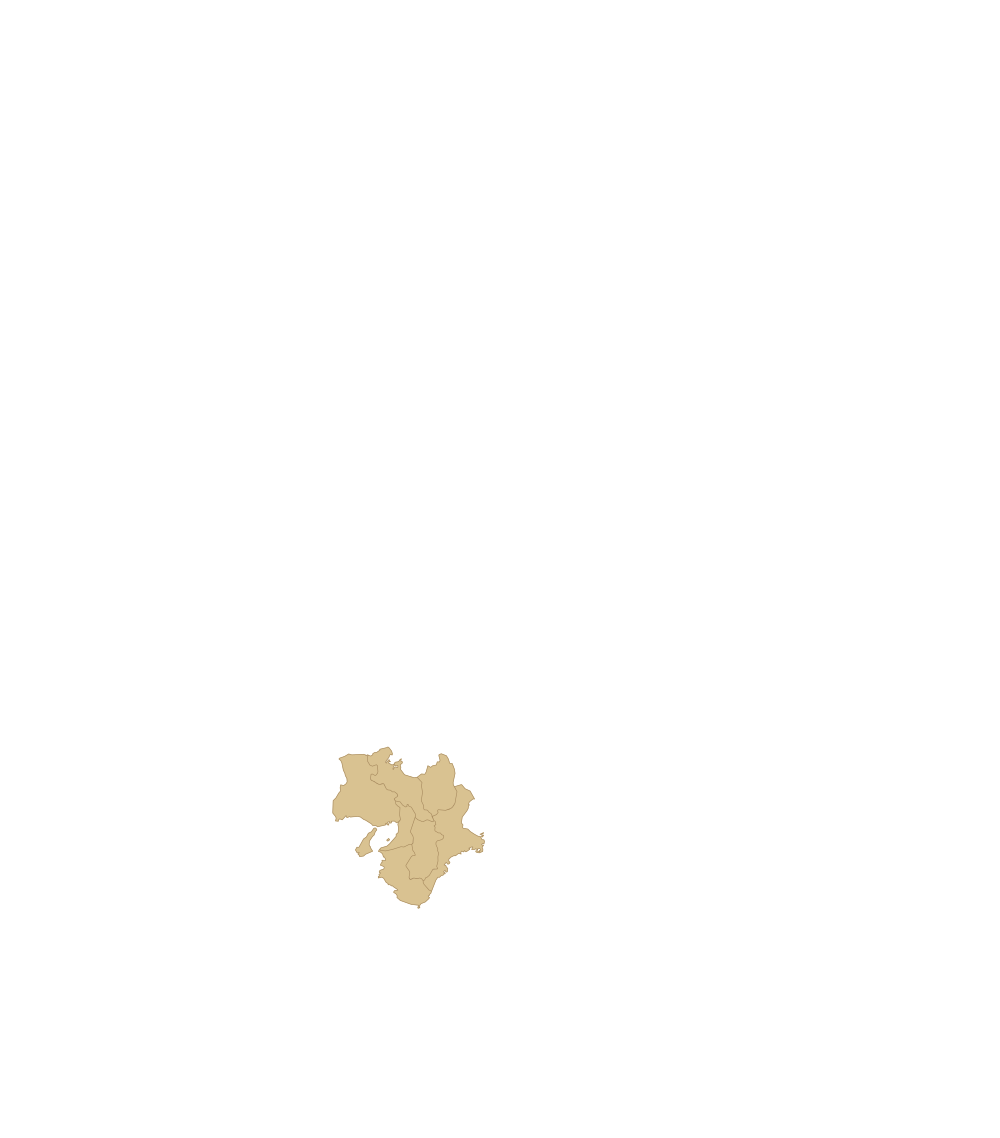
Kobe is a port city on Osaka Bay, the capital of Hyogo Prefecture in the Kansai region, set between the sea and the Rokko mountains about twenty minutes from Osaka, known for its beef, its sake and its harbour.
- Prefecture
- Hyogo
- Region
- Kansai
- Journeys
- The Custom Tour of Japan
overview
A port city between the mountains and the sea, open to the world since 1868.
Kobe grew around a sheltered harbour that has served shipping for more than a thousand years, but the modern city begins in 1868, when the port was opened to foreign trade. Merchants from Britain, Germany, America and China built a settlement of stone offices by the water and, on the slopes above, wooden houses with verandas, bay windows and weathervanes. Kobe became the city through which much of the West came into Japan: its first golf course was laid out on Mount Rokko in 1903, and jazz, bread, coffee and Western cakes all took early root here.
The city's name comes from the households, kanbe, that once supported Ikuta Shrine, and its character from its setting. Kobe is a long, narrow city, never more than a few kilometres deep, pressed between the sea and the Rokko range, which rises behind it to 931 metres. Within half an hour of the harbour you can be on a mountain ridge, in a sake brewery or at the hot springs of Arima. The same openness to trade made Kobe a centre of the pearl business, and the pearl sorters of the old settlement still match and drill a great share of the Akoya pearls of Japan. Its harbour front, its museums and its quiet residential hills are among the most pleasant urban landscapes in Japan.
Kobe is also a place to eat and drink superbly. The five brewing districts of Nada, along the shore to the east, make more sake than any other part of Japan, from Yamada Nishiki rice grown in Hyogo and the hard, mineral water of Miyamizu. Kobe beef, from Tajima cattle raised in the prefecture and certified animal by animal, is served across the city at teppanyaki counters where the chef cooks in front of you.
see and do
What to see in Kobe
Kitano-cho
The hillside quarter where foreign merchants built their homes in the late nineteenth and early twentieth centuries. A number of the foreign houses are open, among them the Weathercock House of 1909, built for a German trader, with its brick walls and the cockerel on its spire.
The Nada sake breweries
The five brewing districts along the eastern shore, where some of the largest and oldest sake brewers in Japan still work. The Hakutsuru and Kiku-Masamune brewery museums show the old methods in timber brewhouses and pour their sake to taste.
Mount Rokko
The 931-metre mountain behind the city, reached by cable car and by road, with gardens, a music box museum and views over the whole of Osaka Bay from Kansai International Airport to Akashi.
Ikuta Shrine
One of the oldest shrines in Japan, founded by tradition in 201, in the centre of the city behind a vermilion gate, with a grove of camphor trees behind its main hall.
The Former Foreign Settlement
The grid of streets by the harbour where the trading firms stood, now lined with stone buildings of the early twentieth century, fashion labels and cafes, with Kobe City Museum in the former Yokohama Specie Bank of 1935.
Nankinmachi
Kobe's Chinatown, founded by Chinese merchants after the port opened, a few streets of red gates and food stalls a short walk from the settlement.
Meriken Park and the harbour
The waterfront park beside the red lattice of Kobe Port Tower, 108 metres high, with a section of the quay left as it was after 1995 as a memorial, and the harbour busy with ships beyond.
Hyogo Prefectural Museum of Art
A museum of concrete and glass on the waterfront by Tadao Ando, opened in 2002, with a collection of Japanese and Western modern art and terraces that step down to the sea.
Sorakuen Garden
A strolling garden of the Meiji era in the centre of the city, once the grounds of a former mayor's residence, with a pond, old camphor trees and an ornate houseboat of the Edo period kept on dry land.
Nunobiki Herb Gardens
Terraced gardens of herbs and flowers on the slopes above Shin-Kobe Station, reached by ropeway, passing the Nunobiki Falls, a series of waterfalls celebrated in poetry for a thousand years.
Hakutsuru Fine Art Museum
A museum in the residential hills of Mikage, founded in 1934 by a family of sake brewers, its Chinese bronzes, ceramics and lacquer shown in a building in the Japanese manner with a garden of its own.
Akashi Kaikyo Bridge
The suspension bridge to Awaji Island, opened in 1998, whose central span of 1,991 metres was the longest in the world until 2022. A glass-floored promenade inside the structure looks down on the strait.
experiences
The best of Kobe
Kobe beef at the teppan
Dinner at a teppanyaki counter where the chef sears certified Kobe beef on the steel in front of you, with garlic, the vegetables of Hyogo and a glass of Nada sake.
A sake brewer's afternoon
A private visit to a Nada brewery with someone who can explain the polishing of the rice, the koji and the long, cold fermentation, then a tasting of the brewery's sake beside the old cedar vats.
The foreign houses of Kitano
A walk through the hillside streets of Kitano with a guide to the families who built the houses and the trading city they came to, ending with coffee in one of the old residences.
An onsen night at Arima
Thirty minutes from the centre of Kobe, over the mountain, Arima Onsen offers a night at a ryokan with the iron-red water of its gold spring, an easy addition to a stay in the city.
The bay by boat
A private cruise around the harbour, past the port tower, the shipyards and the waterfront museums, with the Rokko range behind the city as the lights come on.
plan your visit
Kobe on a journey through Japan
- How long to stay
- Two nights give Kobe its harbour, Kitano, the sake breweries and an evening of Kobe beef; add a night at Arima Onsen, over the mountain, for the full pleasure of the area.
- Getting there
- By the Shinkansen from Tokyo to Shin-Kobe in about two and three quarter hours, from Kyoto in about thirty minutes and from Shin-Osaka in about fifteen. By train from central Osaka to Sannomiya takes about twenty minutes, and Kansai International Airport is about an hour and a quarter away by private car.
- Pairs well with
- Kobe sits between Osaka and Himeji on the Shinkansen, with Arima Onsen just over the mountain, so it fits easily into a journey west from Kyoto towards Okayama and Hiroshima.OsakaArima OnsenHimejiKyotoKinosaki OnsenOkayama
journeys
Kobe on a private journey
We bring guests to Kobe on the Custom Tour of Japan, created around your party alone, on your dates, with your own Tour Director.
questions
Kobe: questions answered
Is Kobe worth visiting?
Yes. It offers the best place in Japan to eat Kobe beef, the largest sake brewing district in the country, a handsome harbour and the hot springs of Arima thirty minutes away, all twenty minutes from Osaka.
What is Kobe famous for?
Kobe beef, the sake of the Nada breweries, its harbour and the foreign merchants' houses of Kitano. It is also a centre of the pearl trade, where a great share of Japan's Akoya pearls are sorted, drilled and matched.
How many days do you need in Kobe?
One full day covers the harbour, Kitano and a sake brewery; two nights allow Mount Rokko and a long dinner of Kobe beef, and a third at Arima Onsen adds an onsen ryokan.
How do you get from Osaka to Kobe?
By JR special rapid from Osaka Station to Sannomiya in about twenty minutes, by Shinkansen from Shin-Osaka to Shin-Kobe in about fifteen, or by private car in about forty.
What is Kobe beef?
Kobe beef is beef from Tajima cattle born and raised in Hyogo Prefecture that meets strict standards of marbling and quality, certified with a numbered seal. It is one of the most prized wagyu in Japan.
Can you visit sake breweries in Kobe?
Yes. The Nada district along Kobe's eastern shore has many breweries, and several, including Hakutsuru and Kiku-Masamune, have museums with tastings; private visits can be arranged at others.
How far is Arima Onsen from Kobe?
About thirty minutes by private car from central Kobe, through the Rokko mountains, or a little longer by train. It is close enough for an afternoon at the onsen or a night at a ryokan.
Can Kobe be part of a private tour of Japan?
Yes. The Custom Tour of Japan is created around your party alone, on your dates, with your own Tour Director, and it can go anywhere in the country, Kobe included. If you would rather travel independently, the Expert Japan Itinerary plans every day for you.
kansai
More in Kansai
Kobe, planned for you.
Tell us when you would like to travel and what draws you to Kobe, and we will answer with a Custom Tour of Japan created around your party alone, or, if you would rather travel independently, an Expert Japan Itinerary that plans every day for you.