
chugokuokayama
Kurashiki
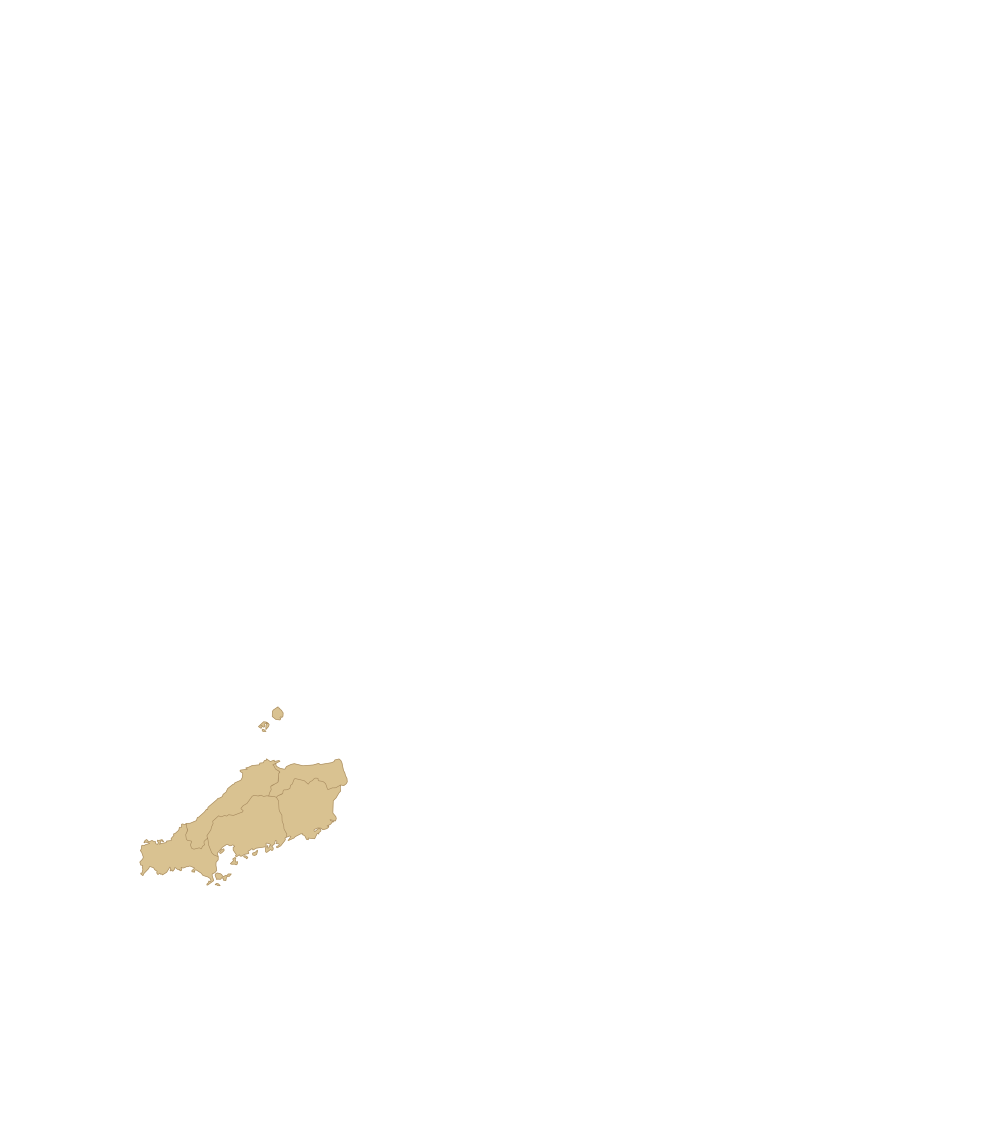
Kurashiki is an old merchant town in Okayama Prefecture, in the Chugoku region, fifteen minutes by train from Okayama on the Shinkansen line, known for the willow-lined canal and white-walled storehouses of its Bikan Historical Quarter.
- Prefecture
- Okayama
- Region
- Chugoku
- Journeys
- The Custom Tour of Japan
overview
A canal under the willows, white storehouses along its banks, and a great collection of Western art in their midst.
Kurashiki grew rich in the Edo period as a port for the rice and cotton of the Okayama plain. The shogunate took the town under its direct rule in 1642, and its merchants built storehouses along a canal that carried goods down to the Inland Sea. The name itself means a village of storehouses. Those kura still stand, their walls of white plaster set with a lattice of black tiles in the pattern called namako-kabe, their reflections in the still water of the canal beneath the willows.
In the Meiji era the town turned to cotton spinning, and in 1889 the Kurashiki Spinning Company built its red-brick mill on the site of the old magistrate's office. Its president, Ohara Magosaburo, became one of the great patrons of modern Japan, and in 1930 he opened the Ohara Museum of Art, the first museum of Western art in the country, with paintings bought in Europe by his friend the painter Kojima Torajiro. The Ohara family's care for the town, and the folk craft movement that found a home here, have kept the old quarter whole.
Kurashiki today is a place to walk slowly. The Bikan Historical Quarter is small, a few streets on either side of the canal, and its storehouses contain museums, galleries, craft shops and tea rooms. In the evening, when the lanterns along the canal are lit and the visitors have gone back to Okayama, it is very peaceful.
see and do
What to see in Kurashiki
The Kurashiki canal
The heart of the Bikan Historical Quarter: a stone-banked canal lined with willows and the white walls of old storehouses, crossed by arched stone bridges. Flat boats, steered by a boatman, carry a few passengers along it at walking pace.
The Ohara Museum of Art
Japan's first museum of Western art, opened in 1930 behind a façade in the manner of a Greek temple, with El Greco's Annunciation, Monet's water lilies, Gauguin, Modigliani and Matisse. Its annexes contain modern Japanese painting, the folk craft of Hamada Shoji, Bernard Leach and Munakata Shiko, and Asian antiquities.
Ivy Square
The red-brick spinning mill of 1889, its walls now covered in ivy, converted in the 1970s into a courtyard of museums, shops and a hotel. The Kurabo Memorial Hall tells the story of the cotton that made the town.
The Ohashi House
The house of a family of salt and rice merchants, built in 1796, with the long latticed front, gated entrance and series of rooms and courtyards of a wealthy townhouse of the Edo period.
The Kurashiki Museum of Folkcraft
Four rice storehouses joined in 1948 to display a collection of everyday craft from Japan and the world: baskets, ceramics, textiles and lacquer, chosen by the founders of the folk craft movement for their plain beauty.
Achi Shrine
A shrine on Tsurugata hill above the old quarter, reached by stone steps, with an ancient wisteria trellis in its grounds and a view over the tiled roofs of the town.
The Japanese Rural Toy Museum
A storehouse museum with some five thousand traditional toys from every prefecture of Japan, kites, spinning tops and dolls among them, and a shop of folk toys still made today.
Kojima
A district of Kurashiki on the coast, half an hour south, where Japanese denim was first made in the 1960s. Its Jeans Street has dozens of shops and workshops dyeing with indigo and weaving on old shuttle looms.
The Ohara family house
The great house of the Ohara family on the canal, built in the late eighteenth century and later opened to visitors, with its formal rooms, its garden and its record of the patronage that shaped modern Kurashiki.
experiences
The best of Kurashiki
The canal by evening
A walk along the canal after the day visitors have gone, when the lanterns are lit, the white walls glow and the willows hang over the dark water.
The Ohara with a guide
A morning at the Ohara Museum of Art with a guide to the collection, from El Greco to the potters of the folk craft movement, and the story of the family who gathered it.
A boat on the canal
A short passage along the canal in a flat boat steered by a boatman, gliding beneath the willows at the height of the water.
Indigo and denim
An afternoon in the workshops of Kojima, where craftspeople dye cotton in indigo and weave denim on shuttle looms, with the chance to have a pair of jeans made to measure.
plan your visit
Kurashiki on a journey through Japan
- How long to stay
- Kurashiki is a half day or a full day from Okayama; a night in the old quarter lets you see the canal in the evening and in the quiet of the morning.
- Getting there
- By the San'yo line from Okayama in about fifteen minutes. Okayama is reached by Shinkansen from Shin-Osaka in about forty-five minutes, from Kyoto in about an hour and from Tokyo in about three hours twenty; a car from Okayama takes about thirty minutes.
journeys
Kurashiki on a private journey
We bring guests to Kurashiki on the Custom Tour of Japan, created around your party alone, on your dates, with your own Tour Director.
questions
Kurashiki: questions answered
Is Kurashiki worth visiting?
Yes. The canal and storehouses of the Bikan Historical Quarter are among the loveliest old townscapes in Japan, and the Ohara Museum of Art is a remarkable collection of Western and Japanese art.
How do you get to Kurashiki?
By train from Okayama, on the Shinkansen line, in about fifteen minutes. Okayama is about forty-five minutes from Shin-Osaka and an hour from Kyoto.
How long do you need in Kurashiki?
Half a day sees the canal and the Ohara Museum; a full day or a night allows the folk craft museum, the merchant houses and the canal by evening.
What is the Bikan Historical Quarter?
The preserved merchant quarter of Kurashiki, a few streets of white-walled storehouses and townhouses of the Edo period along a willow-lined canal, protected as a historic district.
Can you visit Kurashiki and Okayama in one day?
Yes. They are fifteen minutes apart, and a day can include Korakuen and Okayama Castle in the morning and the Bikan quarter in the afternoon.
Can Kurashiki be part of a private tour of Japan?
Yes. The Custom Tour of Japan is created around your party alone, on your dates, with your own Tour Director, and it can go anywhere in the country, Kurashiki included. If you would rather travel independently, the Expert Japan Itinerary plans every day for you.
chugoku
More in Chugoku
Kurashiki, planned for you.
Tell us when you would like to travel and what draws you to Kurashiki, and we will answer with a Custom Tour of Japan created around your party alone, or, if you would rather travel independently, an Expert Japan Itinerary that plans every day for you.