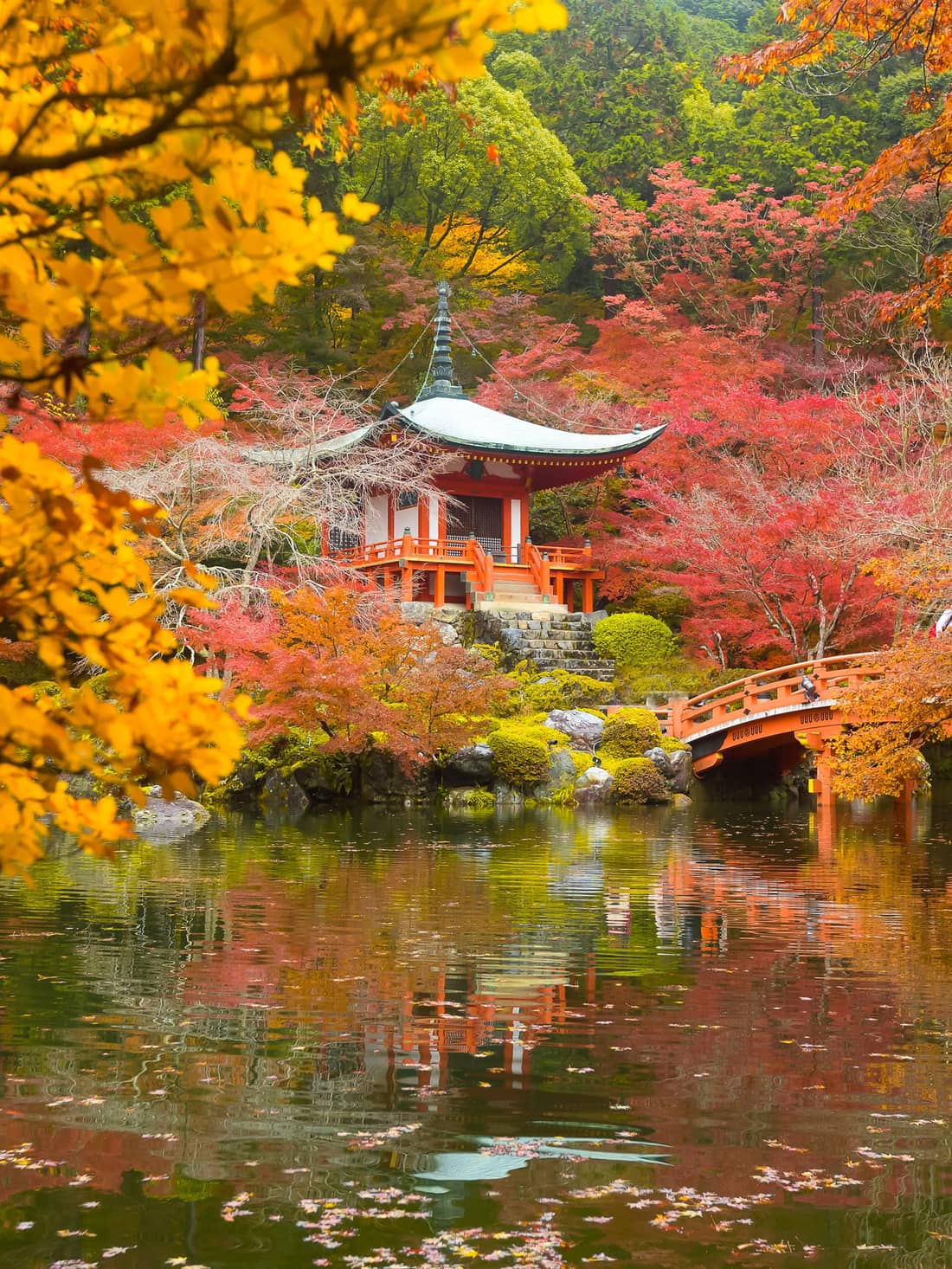

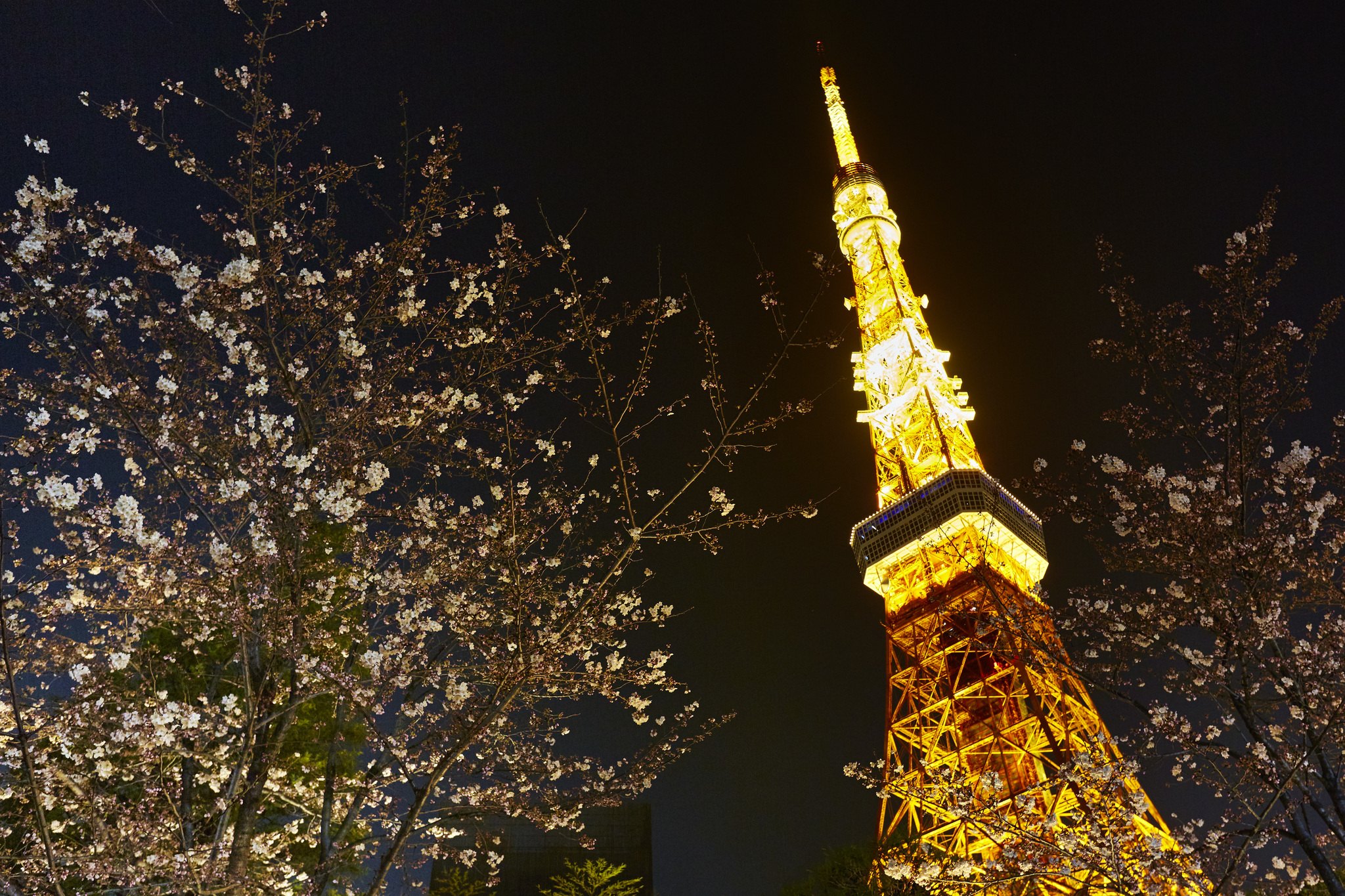
Japan in March moves from plum to cherry in the space of a month. The plum gardens are full in the first weeks, at Kitano Tenmangu in Kyoto and at Kairaku-en in Mito, and by the last week the first cherry trees are opening in Tokyo and Kyoto, with the whole country watching them.
Kairaku-en is the grander of the two plum gardens: some three thousand trees of about a hundred kinds, planted in the 1840s by the lord of Mito on a rise above Lake Senba, with a three-storey pavilion, the Kobuntei, from which to look down on them. At Kitano Tenmangu the plum belongs to the shrine's deity, the ninth-century scholar Sugawara no Michizane, who loved the tree, and some fifteen hundred of them flower around the precinct.
nara
The fire rite at Todai-ji in March
For the first fourteen nights of March, the monks of Todai-ji in Nara perform Shuni-e, a rite of repentance kept every year without a break since 752. Its best-known moment comes in the evening. Great pine torches are carried up the covered stairway of the Nigatsu-do hall and swung out over the balcony, showering sparks on the people below, who stand in the cold to catch them, because the embers are said to keep a person well for the year.
On the night of 12 March the torches are at their largest, the kago-taimatsu, basket torches so heavy that each takes the whole strength of a single bearer, and eleven of them are brought up in turn. That night, in the small hours, the rite reaches Omizutori, the drawing of sacred water from the Wakasa well beneath the hall, and the whole fortnight takes its popular name from it.
3 march
Hinamatsuri, the doll festival on 3 March
On 3 March, Hinamatsuri, households with daughters set out tiers of dolls dressed as the Heian court, the emperor and empress at the top, and the lobbies of many ryokan do the same through the first days of the month. At Shimogamo Shrine in Kyoto the day keeps an older form of the custom, nagashi-bina: small paper dolls in round straw boats are set on the stream in the shrine's forest and floated away, carrying ill fortune with them.
the table
What to eat in Japan in March
The spring kitchen begins in March. Hotaru-ika, the firefly squid of Toyama Bay, come into season, tiny and sweet, eaten boiled with a little vinegared miso. The mountain vegetables arrive, fiddlehead ferns and the bitter butterbur shoots called fuki no to, cooked as tempura so the bitterness comes through the batter. Nanohana, the flowering tops of the rape plant, are dressed with mustard, and sakura-dai, the sea bream of spring, is sliced as sashimi, pink at the skin.
In Fukuoka the stalls along the Muromi river serve shirouo, the ice goby, a small clear fish that runs up the river from the sea in early spring. It is eaten alive, odorigui, the dancing meal, tipped from a small bowl with a dash of vinegar and soy.
kyoto
Graduations and the Kitano Odori
At the end of the month the universities stage their graduations, and young women graduating wear hakama over a long-sleeved kimono, the dress of a Meiji-era schoolgirl, on campuses across the country. In Kyoto the spring dance season opens in the same days: the geiko and maiko of Kamishichiken, the oldest of the city's geisha districts, begin the Kitano Odori at their own theatre beside Kitano Tenmangu from the last days of March.
The opening of the cherry trees is a matter of public record. The Japan Meteorological Agency keeps a sample Somei Yoshino tree in each city, Tokyo's in the grounds of Yasukuni Shrine, and declares the blossom open on the day five or six flowers have opened on it. The news is read on the evening bulletins.
the weather
Japan's weather in March
The afternoons warm faster than the mornings, and a light coat is right until April. The Meteorological Agency's normals for 1991 to 2020 have March days in Tokyo reaching 14.2°C (58°F) and nights at 5°C (41°F), with 116 millimetres of rain over about six days. Kyoto is almost the same by day, 14.1°C (57°F), and a little colder at night, 4.3°C (40°F). Sapporo is still in winter, at 4.5°C and -2.4°C (40°F and 28°F), with snow on the ground.
The spring equinox, around 20 March, is a national holiday, and the week around it, higan, is when families visit their ancestors' graves. March is also the end of the Japanese financial year, and the school spring break begins in the last days of the month.
Read the Cherry Blossom Forecast 2027 →
the journey
A cherry blossom tour of Japan from 30 March
The Classic Cherry Blossom Tour of Japan begins on 30 March 2027 and runs for twelve days, to 10 April, from Tokyo to Osaka. It opens in Tokyo, where the cherry trees arch over the moat at Chidorigafuchi in a tunnel seven hundred metres long, with a welcome kaiseki in Nihonbashi served beneath a Noh stage, Noh and Kyogen performed between the courses. From there it travels to Mount Fuji, to three nights in Kyoto, with a hanami picnic from a Michelin-starred kitchen in the park of the Imperial Palace and an evening with the geiko and maiko of Gion, and on to the onsen town of Kinosaki on the Japan Sea.
In Kyoto, dinner one evening is kaiseki at a restaurant with two Michelin stars, the spring kitchen served course by course. The tour is limited to 8 guests, and its Tour Directors travel every mile of it beside them.