
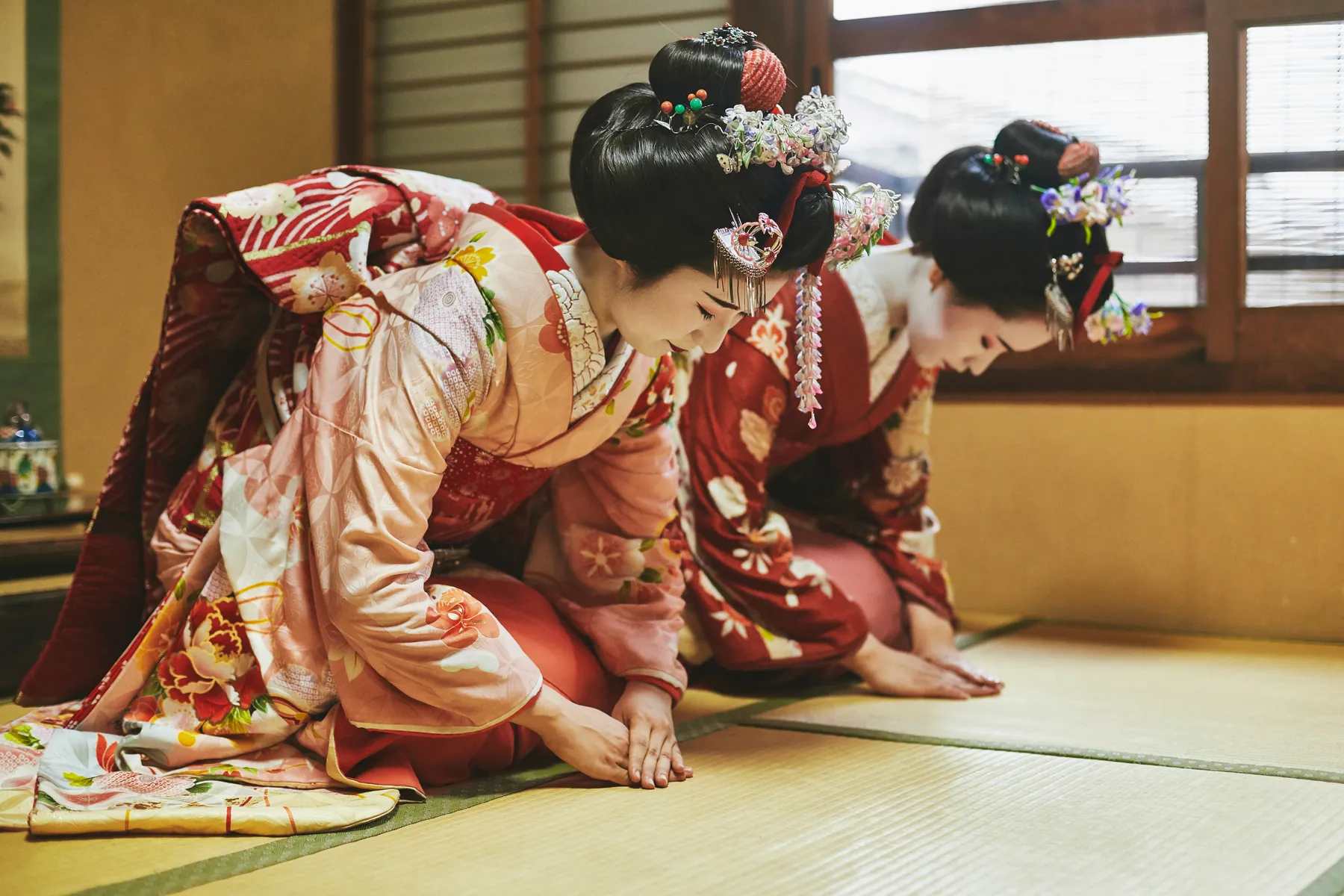
The room is set for two. The shoji open onto a garden where rain has darkened the stones, and two cups of tea wait beside a small sweet in the colour of the month. Beyond the screen the private onsen is filling from the spring, its steam softening the edge of the doorway. The day outside was full, the old lanes of Kyoto, a fast train through bright country, a late arrival under cedar, and this is the first real quiet of the journey.
A Japan honeymoon works because the country offers contrast at every scale: a city of thirty-seven million and a ryokan of ten rooms, a shinkansen at three hundred kilometres an hour and a moss garden swept by hand, a sushi counter of eight seats and a mountain onsen (hot spring) open to the sky. The strongest routes set those contrasts one against the other, a full day followed by a slow one, so that the whole journey moves at the pace of two people.
the route
How to plan a Japan honeymoon: the shape of the route
A honeymoon route begins with tempo, and only then with places. Tokyo and Kyoto belong in most first journeys, a ryokan belongs at the centre of every one, and the remaining nights go to whatever the couple loves most: art, the coast, the mountains or the table. Twelve to fourteen nights carry the classic shape with ease. Three or four go to Tokyo, three to Kyoto and two to a ryokan with its own onsen, and the remainder to an island, a coast or the north, with a last night in the city before the flight home.
Tokyo makes the natural opening after a long flight, a city that asks nothing of a couple except an appetite. It gives design, food, galleries and the particular pleasure of being anonymous together in one of the largest cities on earth: a garden walk after breakfast, a counter of eight seats at dinner, a bar on a high floor with the city lit to the horizon.
Where in Tokyo matters as much as the decision to begin there. Marunouchi and Ginza suit a couple who want polish and easy movement from the first night, with the Imperial Palace gardens a short walk away. Aoyama and Akasaka are quieter and more contemporary. Shibuya and Ebisu give the energy of the city as Tokyo itself lives in it. The district decides which Tokyo greets the couple each morning and which one receives them again at night.
Kyoto changes the register entirely. The walking is through lanes of wooden machiya and temple precincts, the meals are long, and the rooms are made to be returned to in the late afternoon, with the garden in its last light before dinner. A honeymoon in Kyoto deserves at least one day with a single plan in it: a temple garden in the morning, a long lunch, and the hours after it given to the lanes of Higashiyama and the stepping stones across the Kamo River.
the ryokan
The ryokan at the centre of a honeymoon
A ryokan with its own onsen belongs at the emotional centre of the route, and it need not be in Kyoto at all. The strongest stand in the mountains, beside a lake beneath Mount Fuji, on the Izu coast or in the hot-spring country of Kyushu. What matters is the order a good ryokan gives the day: arrival, tea, the onsen, dinner, sleep, the onsen again in the morning light, breakfast. For two people newly married, that order carries unusual weight.
A private onsen in the room, fed from a true hot spring, gives the ritual back to the couple alone. It is theirs at any hour, with a garden, a lake or the sea beyond the edge of the tub, and dinner follows in the room in yukata, course by course, with no one else at the table.
One night in a ryokan is too few.
A single night arrives as an event and is over before the couple has settled into it. Two nights let the stay deepen. By the second evening the staff know how the couple take their tea, the kitchen has learned what they loved the night before, and the onsen has become a habit of the day, taken before dinner and again late, once the corridor has gone quiet.
Garden rooms suit a honeymoon for the same reason. After a day among other people, a branch outside the screen, a stone path after rain and the scent of cypress from the onsen give the couple the season in private, and these small things are what a shared memory is built from. The best city hotels do the same in another key, a room on a high floor with the whole of Tokyo laid out below and nothing between the couple and the view.
the season
The best time for a honeymoon in Japan
Every season suits a honeymoon, and each gives the route a different character. Spring brings the cherry blossom, pale light and a symbolism of beginnings that sits well with a wedding; in Japan the blossom opens the school year and the working year, and the whole country reads it as a season of new starts.
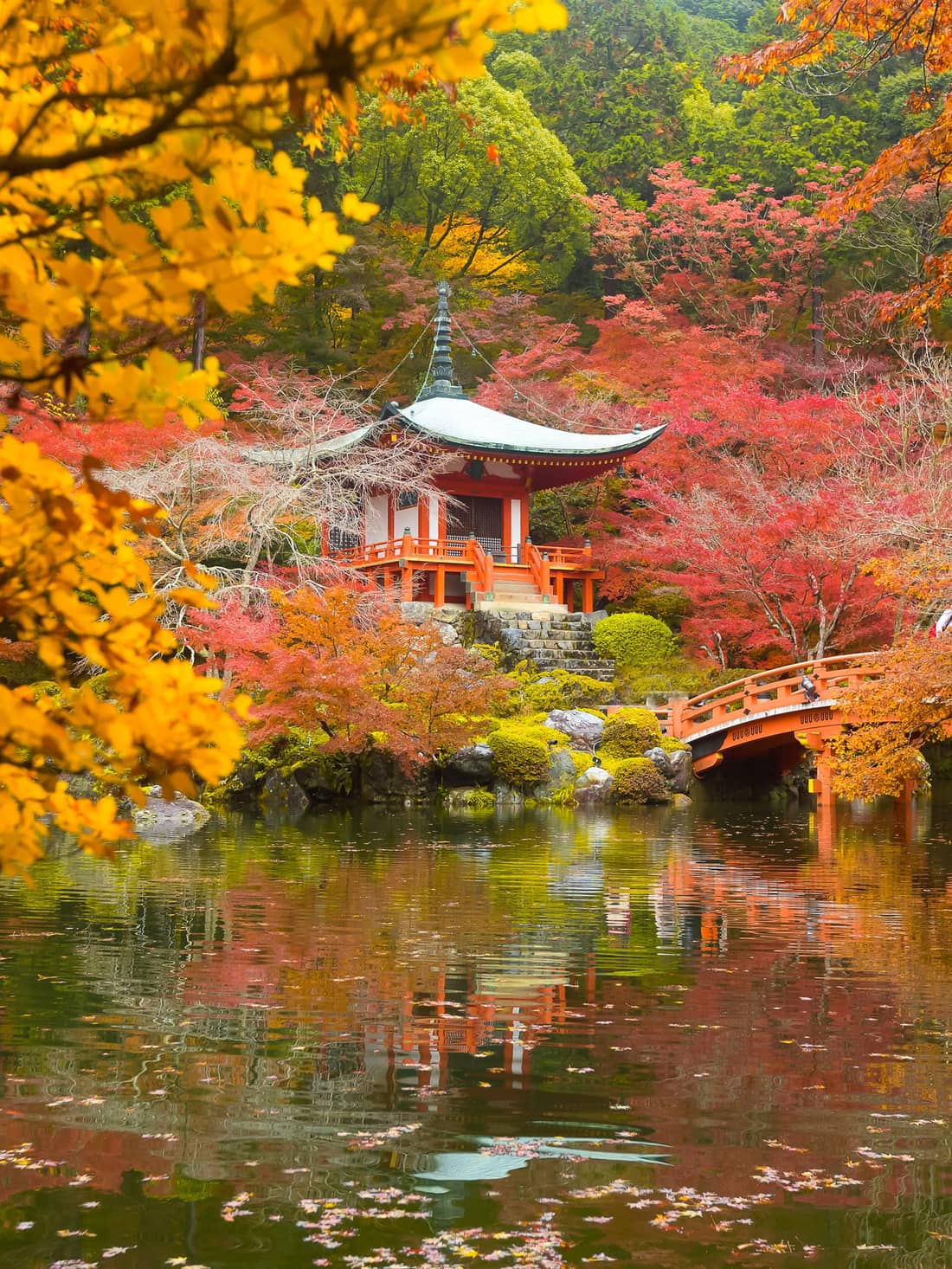
Autumn brings maple colour, clear cool air and the richest food of the year, matsutake, chestnut and the new rice. Winter gives snow, steam rising from an outdoor onsen into cold air, and a stillness made for a couple who want the journey to turn inward. Summer opens the north, Hokkaido's long light and cool evenings, and the lavender of Furano in July.
The setting should match the couple. Some routes belong to Tokyo and Kyoto with one deliberate pause at an onsen. Others cross to the Seto Inland Sea, where the art islands of Naoshima and Teshima take the place of temples, and the Chichu Art Museum, built by Tadao Ando largely underground, shows Monet's water lilies in natural light. Kyushu has the volcanic hot-spring country of Yufuin, beneath the twin peaks of Mount Yufu, and Kurokawa, a village of ryokan along a wooded river valley. Izu, south-west of Tokyo, gives sea and onsen together, within easy reach of the city.
the pace
Food, pace and the empty afternoon
Food on a honeymoon sets the atmosphere of each day. A good route places sushi at a Tokyo counter, a kaiseki in a Kyoto ryotei, the ryokan's own dinner of the season and a few small neighbourhood meals in the same week, and paces them as carefully as the sightseeing. Three formal dinners in a row weigh on a journey. Three casual ones miss the chance for an evening to become an occasion.
A honeymoon also needs real empty space.
A late, slow morning after the flight in, an afternoon with nothing planned, a second pot of tea on the veranda in place of a fourth temple: those hours are where two people talk over what the journey has shown them so far, and they belong in the route as deliberately as any dinner. Travel days count among the pleasures too, a first-class seat on the shinkansen with a bento and Mount Fuji in the window, a private car along the Izu coast with the sea below the road.
The mistake is to design a Japan honeymoon as proof of how much was seen. The stronger route makes choices. It gives up some places to go deeper into others, keeps its mornings slow, and saves its best evening for the ryokan, where the room goes dark, the onsen finishes filling and rain begins again in the garden, the two cups of tea still where they were set down.
the journey
A private honeymoon in Japan, on the Custom Tour
The Custom Tour of Japan is made for a honeymoon. It is a private journey created for one party, on the dates the couple choose, from five nights, and every element of the route above is theirs to set: the Tokyo district, the ryokan with its own onsen at the centre of the journey and the two nights there, the island or the coast, the great dinners and the empty afternoons. A private car and driver wait every day, a helicopter shortens the journey where the hours matter, and a table with three stars or the whole counter can close an evening in Tokyo.
A Tour Director runs every day of it and knows when an evening belongs to two, so the couple's only work is the honeymoon itself.