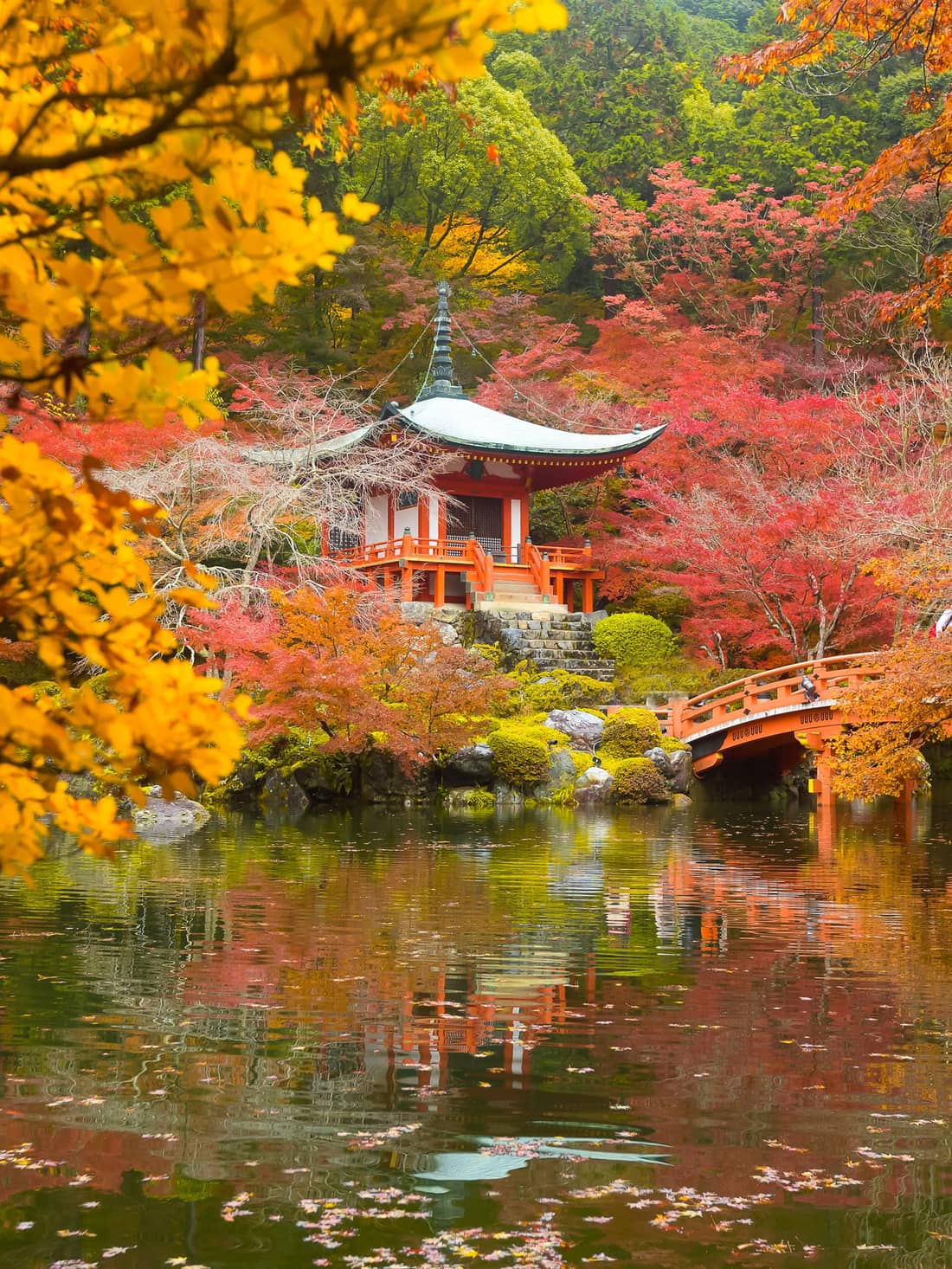

Okinawa Island
Okinawa Island is the main island of Okinawa Prefecture, in the Okinawa region at the subtropical south-western edge of Japan, about two and a half hours by air from Tokyo; for four and a half centuries it was the seat of the Ryukyu Kingdom.
Kouri Island from the Kouri Bridge
- Region
- Okinawa
- Journeys
- The Custom Tour of Japan
overview
The island of the Ryukyu kings: castles of coral stone on the hills, and a warm sea below them.
Okinawa Island runs about a hundred kilometres from the city of Naha in the south to Cape Hedo in the north, a narrow island of limestone hills and coral shores, warm through the year. It is the largest of the Ryukyu Islands, the chain that curves for more than a thousand kilometres between Kyushu and Taiwan, and home to most of the prefecture's people. The west coast faces the East China Sea and its sunsets; the east coast faces the Pacific.
From 1429, when the three rival principalities of the island were united under the first Sho king, until 1879, when Japan annexed it, Okinawa was the centre of an independent kingdom that grew prosperous carrying goods between China, Japan, Korea and the ports of South-East Asia. That history gave the island a culture of its own, in places closer to Fuzhou than to Kyoto. Its castles, the gusuku, are built of curving limestone walls that follow the contour of the hill. Its holiest places are the utaki, sacred groves where priestesses once served the kingdom's gods. Its music is played on the sanshin, a three-stringed lute covered in snakeskin, and its spirit is awamori, distilled from rice and aged in clay pots.
The twentieth century was harder. The Battle of Okinawa in 1945 cost more than 200,000 lives, a great many of them islanders, and the island remained under American administration until 1972. The royal sites have since been restored with great care, and in 2000 nine of them were inscribed together as a World Heritage Site, the Gusuku Sites and Related Properties of the Kingdom of Ryukyu. The forested north, Yanbaru, was inscribed in 2021 as part of a World Natural Heritage Site.
Okinawa Island is a different Japan: a slower, warmer island pace, resort hotels on a coral coast an hour from the airport, and a history told nowhere else in the country. It is also the gateway to the outer islands, with the Keramas a short crossing to the west and Miyakojima and Ishigakijima about an hour's flight to the south-west.
Our tours stay overnightOur tours visit for the dayOn a Custom Tour of Japan
see and do
What to see on Okinawa Island
Shuri Castle
The palace of the Ryukyu kings on its hill above Naha, approached through the red Shureimon gate and a series of limestone ramparts. The main hall, lost to fire in 2019, is being rebuilt to its eighteenth-century design, its carpenters and lacquerers working in view of visitors.
Sefa-utaki
The most sacred place of the old kingdom, in the forest above the east coast at Nanjo: a path of prayer sites among the trees that ends at Sangui, where two great leaning rocks form a triangular passage framing Kudaka, the island where the Ryukyu creation story begins.
Nakagusuku Castle
Fifteenth-century walls of finely fitted limestone on a ridge with both coasts in view, among the best preserved of all the gusuku. Officers of Commodore Perry's expedition surveyed it in 1853 and wrote with admiration of its masonry.
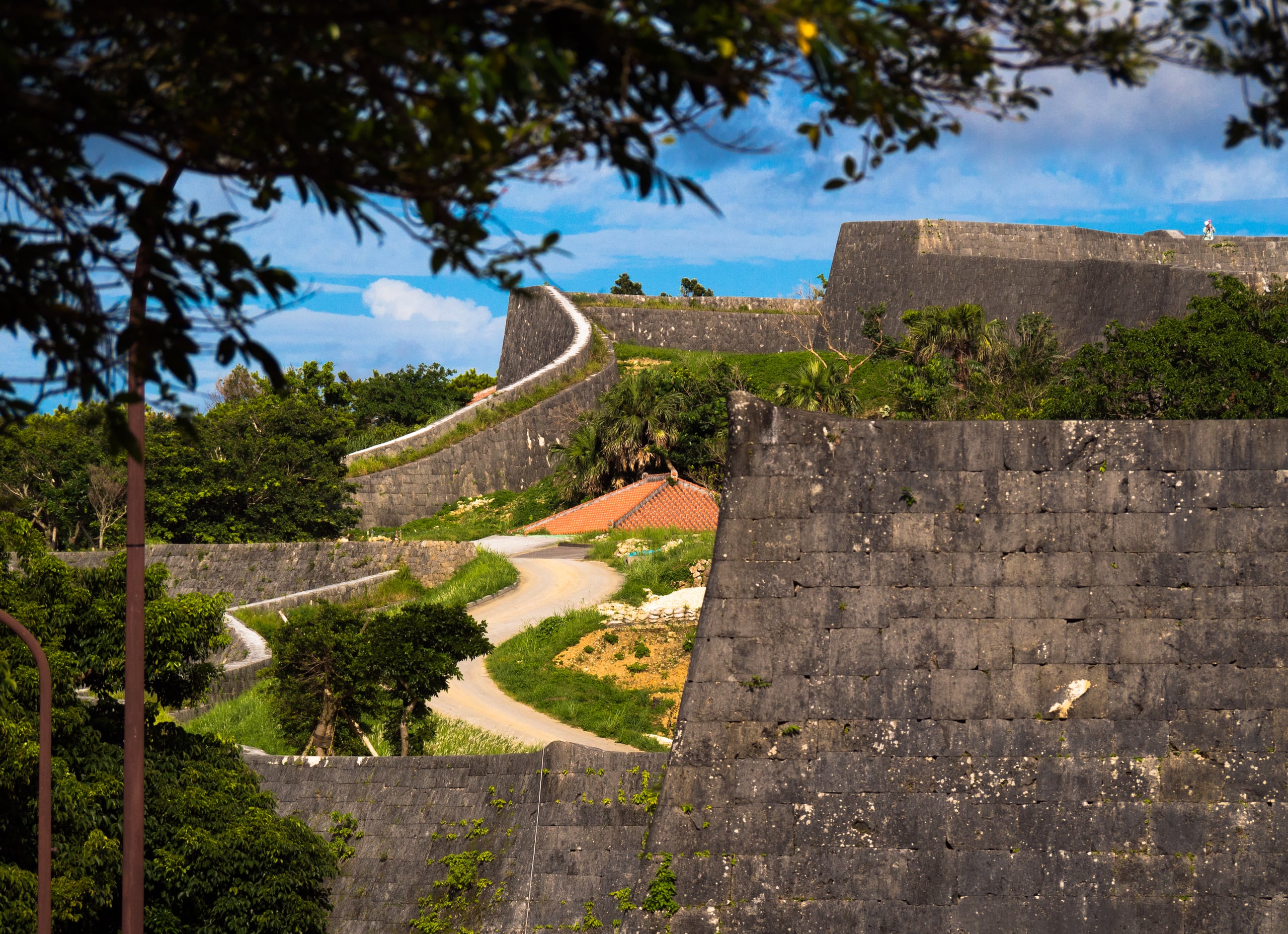
The ramparts of Shuri Castle, Naha Katsuren Castle
A castle stepped up a hill on the Yokatsu Peninsula, its walls rising in tiers to a summit with the Pacific on either side. Its last lord, Amawari, was the great rival of the Shuri court in the fifteenth century.
Nakijin Castle
The stronghold of Hokuzan, the northern kingdom before unification, its walls of some one and a half kilometres winding along a ridge of the Motobu Peninsula above the East China Sea.
Okinawa Churaumi Aquarium
On the Motobu Peninsula, built around the Kuroshio Sea, a tank of 7,500 cubic metres behind one of the largest acrylic panels in the world, where whale sharks and manta rays move slowly through the blue.
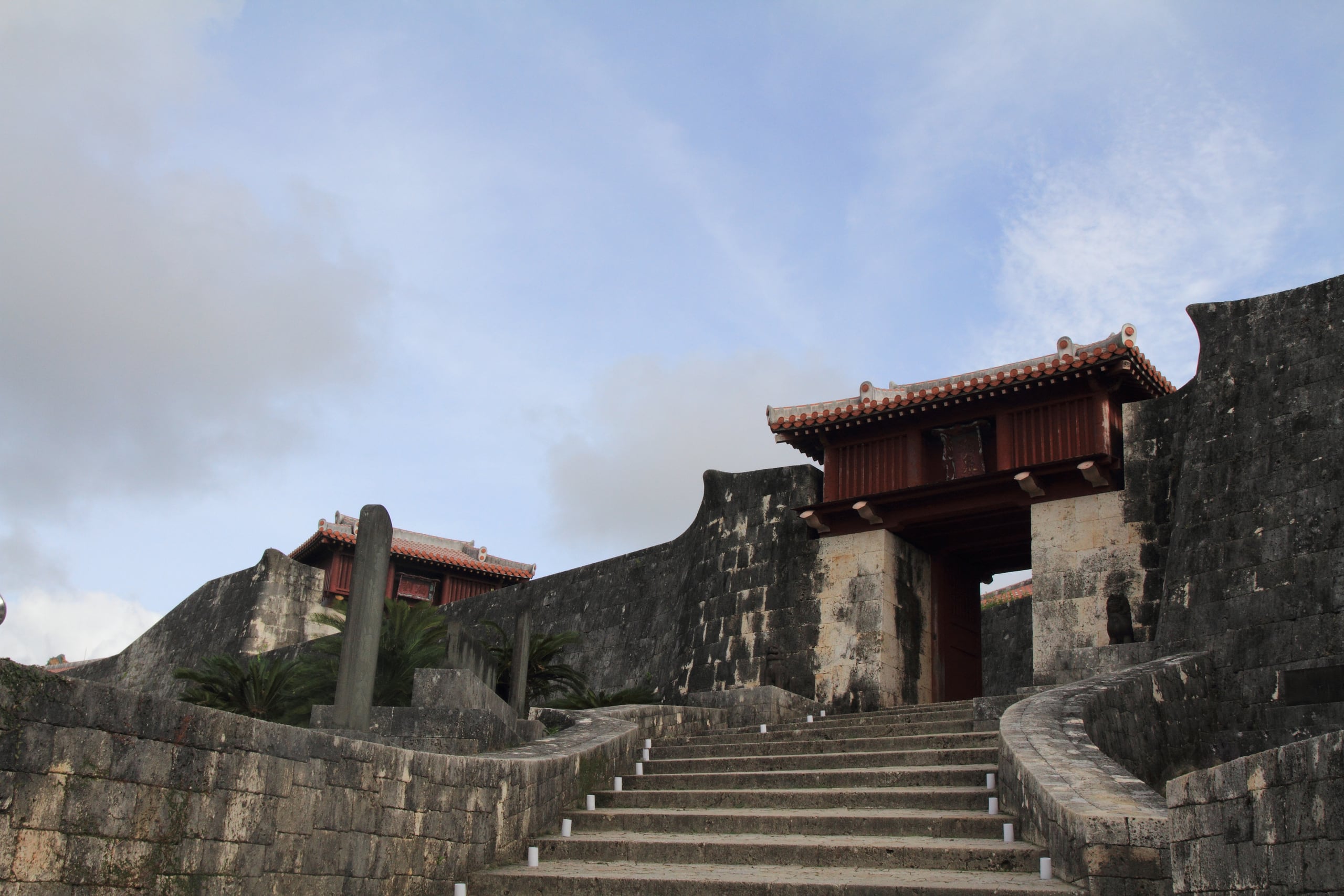
A gate of Shuri Castle The fukugi lanes of Bise
A quiet village near the aquarium whose sand lanes run under a canopy of fukugi trees, planted long ago as windbreaks around the homes, with the sea at the end of every lane.
Kouri Island
Reached from Yagaji by a bridge of almost two kilometres over shallows of pale turquoise, a small island ringed with white sand, and one of the loveliest drives on Okinawa.
Cape Manzamo
A headland of raised coral on the west coast at Onna, its cliff worn by the sea into the shape of an elephant's trunk. A Ryukyu king gave it its name in the eighteenth century, saying its meadow could seat ten thousand people.
Cape Hedo and Yanbaru
The northern tip of the island, where limestone cliffs face the open sea, and behind it the subtropical forest of Yanbaru, a national park and home of the flightless Okinawa rail, found nowhere else.
Okinawa Peace Memorial Park
At Mabuni on the southern cliffs, where the Battle of Okinawa ended in June 1945. The Cornerstone of Peace, rows of granite walls facing the sea, carries the names of more than 240,000 people who died, of every nationality, soldier and civilian alike.
Yachimun no Sato
A village of potters at Yomitan, where climbing kilns step up the hillside and workshops sell yachimun, the heavy, generously glazed stoneware of Okinawa, made by hand for the table.


experiences
The best of Okinawa Island
The kingdom with a historian
A day among the gusuku with a guide who knows the history of the kingdom, from Shuri and the royal mausoleum to the walls of Nakagusuku and Katsuren: the story of a small island state that stood its ground between great powers for four centuries.
Royal cuisine and old awamori
Ryukyu court cuisine, the dishes once prepared for envoys of the Chinese emperor, served in red lacquer to the sound of the sanshin, with a tasting of kusu, awamori aged for years in clay pots.
The reef from a boat
The coral seen through the floor of a glass-bottomed boat off the west coast, or a private boat with its own captain out to the Kerama Islands for the day, over water the islanders call Kerama blue.
Dance and karate
An evening of classical Ryukyu dance, the slow, exact court dances once performed for visiting envoys, or a morning at a dojo watching a master teach karate, the martial art that began on this island.
In the workshops
An hour with a bingata dyer, whose stencilled cottons in yellow, red and indigo once clothed the court, or with a glassblower turning recycled glass into the bubbled Ryukyu glass of the island.
plan your visit
Okinawa Island on a journey through Japan
- How long to stay
- Four nights lets Okinawa Island be seen at an easy pace: one or two in Naha for Shuri and the south, and the others on the west coast for the sea and the north. A week leaves room for one of the outer islands as well.
- Getting there
- By air to Naha: about two and a half hours from Tokyo, a little over two hours from Osaka and under two from Fukuoka. From Naha Airport a private car reaches the resorts of the Onna coast in about an hour and the Motobu Peninsula in about two.
- Pairs well with
- Naha is the natural first stop, the Kerama Islands make a day by sea, and Miyakojima or Ishigakijima carry the journey on to the south-west, a warm close to a journey begun in Tokyo or Kyoto.NahaKerama IslandsMiyakojimaIshigakijimaTaketomiKyotoTokyo
where to stay
Luxury hotels and ryokan on Okinawa Island
Okinawa's resort hotels are on the west coast, facing the East China Sea and its sunsets. The Onna coast, about an hour north of the airport, has the most, set along coves of white sand with the reef close offshore and the headland of Manzamo between them. Further north, around Nago and the Motobu Peninsula, the resorts are fewer and quieter, close to the aquarium, the fukugi lanes of Bise and the bridge to Kouri. On the Onna coast a resort runs along a long shore of its own; on Nago Bay, a thalassotherapy resort keeps to the Busena headland and a resort among the fairways looks over the sea from the hill at Kise; and at Yomitan, nearer the airport, a resort runs along low coral cliffs behind a wall built like a gusuku.
In the south, a night or two in Naha puts Shuri, the castles of the east coast and the peace park within easy reach, and a city hotel there makes a convenient beginning, or a last night before the flight home.
journeys
Okinawa Island on a private journey
We bring guests to Okinawa Island on the Custom Tour of Japan, created around your party alone, on your dates, with your own Tour Director.
questions
Okinawa Island: questions answered
How many days do you need in Okinawa?
Four nights on Okinawa Island is enough to see Shuri, the castles, the north and the coast at an easy pace. A week allows a stay on one of the outer islands as well, such as Miyakojima or Ishigakijima.
How do you get to Okinawa from Tokyo?
By air: flights from Haneda and Narita reach Naha in about two and a half hours. There is no train, since the island lies some 1,500 kilometres south-west of Tokyo.
What is Okinawa famous for?
Its coral sea and white beaches, and the castles and culture of the Ryukyu Kingdom, which ruled the islands until 1879. Its cuisine, music and crafts are its own, distinct from those of mainland Japan.
Where is the best place to stay in Okinawa?
The west coast, on the Onna coast or further north around Nago and Motobu, for beach resorts with the reef offshore. Naha is the place for the city, Shuri and the south.
What was the Ryukyu Kingdom?
The independent kingdom that ruled Okinawa and the surrounding islands from 1429 to 1879, with its capital at Shuri. It prospered on trade with China, Japan and South-East Asia before it was annexed by Japan.
Is Okinawa different from mainland Japan?
Yes. Okinawa was an independent kingdom until 1879, and its architecture, music, food and language still differ from the main islands. Its climate is subtropical, warm through the year.
Can you see whale sharks in Okinawa?
Yes, at the Okinawa Churaumi Aquarium on the Motobu Peninsula, about two hours north of Naha, where they swim in one of the largest aquarium tanks in the world.
Can Okinawa Island be part of a private tour of Japan?
Yes. The Custom Tour of Japan is created around your party alone, on your dates, with your own Tour Director, and it can go anywhere in the country, Okinawa Island included. If you would rather travel independently, the Expert Japan Itinerary plans every day for you.
okinawa
More in Okinawa
Okinawa Island, planned for you.
Tell us when you would like to travel and what draws you to Okinawa Island, and we will answer with a Custom Tour of Japan created around your party alone, or, if you would rather travel independently, an Expert Japan Itinerary that plans every day for you.