







kyushusaga
Arita
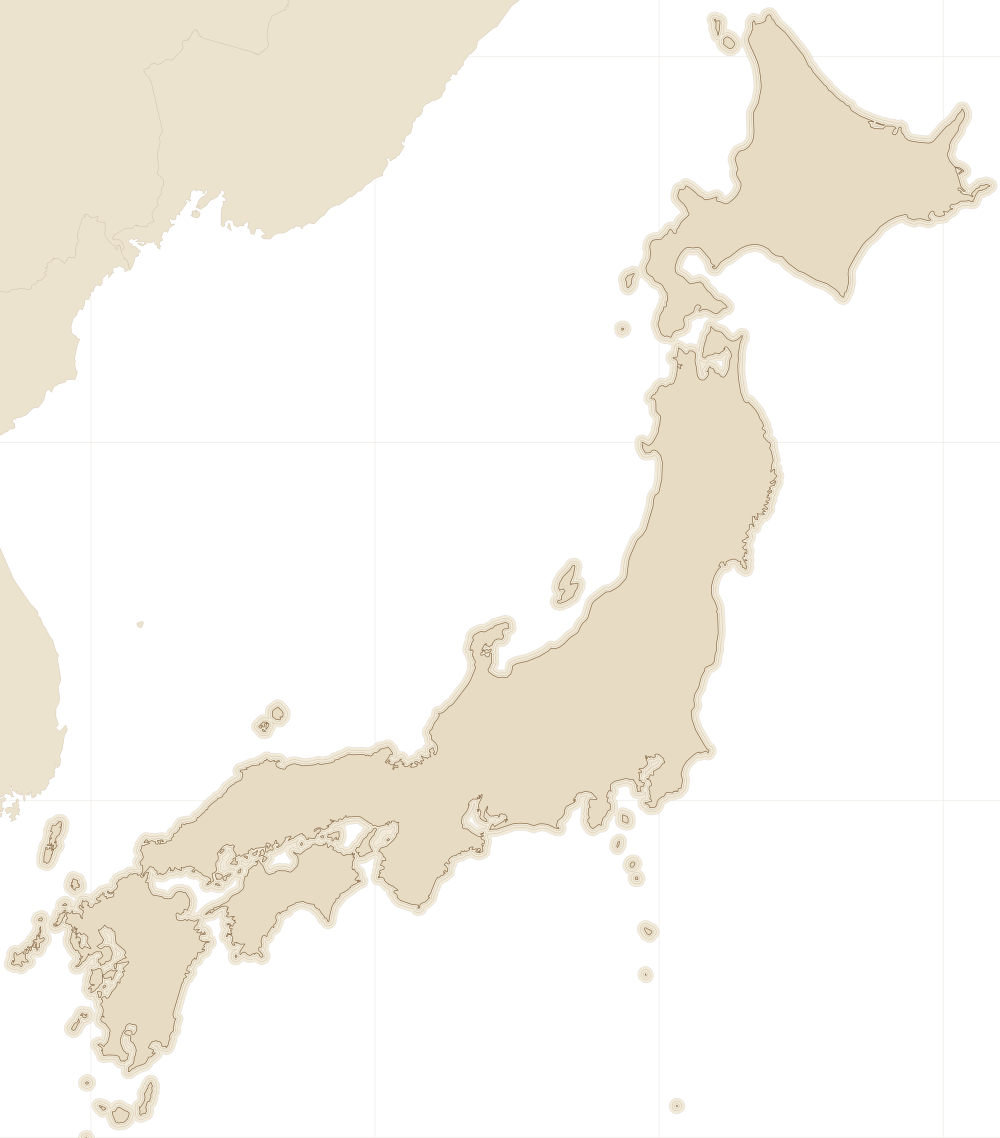
Arita is a small town in Saga Prefecture, in the Kyushu region, where Japanese porcelain was first made in 1616 and where kilns and workshops still line its narrow valley.
- Prefecture
- Saga
- Region
- Kyushu
- Journeys
- The Custom Tour of Japan
overview
A valley town of kilns, where the first white porcelain of Japan was fired four centuries ago.
In 1616, the Korean potter Yi Sam-pyeong, brought to Japan after Toyotomi Hideyoshi's invasions of Korea, found a deposit of porcelain stone at Izumiyama on the edge of Arita. It was the first such source in Japan, and within a generation the valley was full of kilns firing white porcelain painted in cobalt blue. The lords of the Nabeshima domain protected the industry closely, and its techniques were guarded as state secrets.
From the 1650s the Dutch East India Company shipped Arita porcelain to Europe from Dejima, when war in China had interrupted the trade in Chinese porcelain. Because it left Japan through the nearby port of Imari, Europe called it Imari ware, and it filled the palaces of kings and princes: the Kakiemon style, with its sparse designs in red, green and blue on milk-white porcelain, was copied at Meissen and Chantilly.
Four centuries later Arita is still a town of potters, more than a hundred kilns and workshops in a narrow valley. Its old quarter of Uchiyama, with merchant houses and lanes walled with old kiln bricks, is a protected historic district, and the families who have made porcelain here for generations work beside young makers designing for the tables of the world's restaurants.
see and do
What to see in Arita
Izumiyama Porcelain Stone Quarry
The hill where porcelain stone was first found in 1616, quarried for so long that its original summit has been cut away into a wide white cliff, now a national historic site.
Tozan Shrine
The shrine of Arita's porcelain, honouring Yi Sam-pyeong and the Nabeshima lord, on a hillside above the railway line. Its torii of 1888 is made of porcelain, glazed white and painted in blue.
Uchiyama district
The old centre of the town, a street of merchant houses and porcelain shops of the Meiji era and earlier, protected as an Important Preservation District for Groups of Traditional Buildings.
The Tonbai walls
Back lanes of Uchiyama lined with walls built from the old bricks of climbing kilns, broken saggars and shards, set in red clay, a quiet record of centuries of firing.
Kyushu Ceramic Museum
The Saga prefectural museum of ceramics, with a collection that runs from the earliest Arita wares to the export porcelain that went to Europe, including much that returned to Japan from European collections.
Kakiemon kiln
The workshop of the Kakiemon family in Nangawara, west of the town, where the milk-white porcelain and red overglaze of the Kakiemon style are still made and shown in its gallery.
Okawachiyama
A secluded valley in the city of Imari, about twenty minutes from Arita, where the Nabeshima lords kept their official kilns, making porcelain for the shogun and the court. Some thirty kilns stand there today below steep crags, along stone streets and a bridge decorated with porcelain.
Imari
The old port on the coast from which Arita porcelain left for Nagasaki and the world, with a ceramic merchants' museum in an old trading house.
experiences
The best of Arita
In the potter's workshop
An hour with a master of Arita porcelain, from the throwing of the white clay to the painting of cobalt under the glaze and the colours over it, explained by the hands that make it.
A collector's morning
The galleries of Uchiyama and the Kyushu Ceramic Museum with a specialist in Arita and Imari, to learn to read a piece by its colour, its painting and its age.
The kilns of Okawachiyama
A walk through the stone streets of the Nabeshima village of kilns, between workshops and their galleries, where the domain's techniques were once a secret.
Porcelain at the table
A kaiseki dinner served on Arita porcelain, ideally at an onsen ryokan in Takeo or Ureshino, where the dishes are as much a part of the meal as the food.
plan your visit
Arita on a journey through Japan
- How long to stay
- A full day is enough for Arita and Okawachiyama, often taken on the way between Fukuoka and Nagasaki, with a night at an onsen ryokan in Takeo or Ureshino nearby.
- Getting there
- By the limited express from Hakata to Arita in about an hour and twenty minutes, or by car from Fukuoka in about an hour and a half. Takeo-Onsen, on the Nishi-Kyushu Shinkansen, is about fifteen minutes away by train, and Nagasaki about an hour and a quarter by car.
journeys
Arita on a private journey
We bring guests to Arita on the Custom Tour of Japan, created around your party alone, on your dates, with your own Tour Director.
questions
Arita: questions answered
What is Arita porcelain?
The first porcelain made in Japan, fired in Arita in Saga Prefecture since 1616, known for its fine white body painted in cobalt blue and coloured enamels. In Europe it was called Imari ware, after the port it was shipped from.
What is the difference between Arita and Imari ware?
They are largely the same porcelain: Arita is where it was made, Imari the port it was shipped from. Today Imari also refers to the Nabeshima kilns of Okawachiyama, in the city of Imari.
How do you get to Arita from Fukuoka?
By the limited express from Hakata Station, about an hour and twenty minutes, or by car in about an hour and a half.
Is Arita worth visiting?
Yes, for anyone who loves ceramics. The kilns, the old streets of Uchiyama, the Kyushu Ceramic Museum and the nearby village of Okawachiyama make a remarkable day.
Where should you stay near Arita?
At an onsen ryokan in Takeo, fifteen minutes away, or Ureshino, about half an hour away, both in Saga Prefecture. Many guests also see Arita on the way between Fukuoka and Nagasaki and stay in either city.
Where can you buy Arita porcelain?
From the galleries and kiln shops of Uchiyama and Okawachiyama, many of which sell directly from the families and workshops that make it.
Can Arita be part of a private tour of Japan?
Yes. The Custom Tour of Japan is created around your party alone, on your dates, with your own Tour Director, and it can go anywhere in the country, Arita included. If you would rather travel independently, the Expert Japan Itinerary plans every day for you.
kyushu
More in Kyushu
Arita, planned for you.
Tell us when you would like to travel and what draws you to Arita, and we will answer with a Custom Tour of Japan created around your party alone, or, if you would rather travel independently, an Expert Japan Itinerary that plans every day for you.