
A geisha, called geiko in Kyoto once she is fully trained, is a professional entertainer skilled in traditional dance, music and conversation, engaged for a private evening in a teahouse. Kyoto keeps five neighbourhoods, hanamachi, where that training still happens, and the oldest of them is not the one most visitors have heard of. East of Kitano Tenmangū shrine a row of teahouses opens onto a street barely wide enough for two people to pass. This is Kamishichiken, Kyoto's oldest geisha district, older by more than a century than Gion, the lanes east of the Kamo River that most visitors assume came first.
Kyoto keeps five hanamachi, literally flower towns, the old term for a geisha district: Gion Kōbu, Gion Higashi, Pontochō, Miyagawachō and Kamishichiken. Each trains its own geiko and maiko, stages its own annual public dance, and answers to its own registry of teahouses. None is a branch of another.
the seven teahouses
Kamishichiken, Kyoto's oldest geisha district
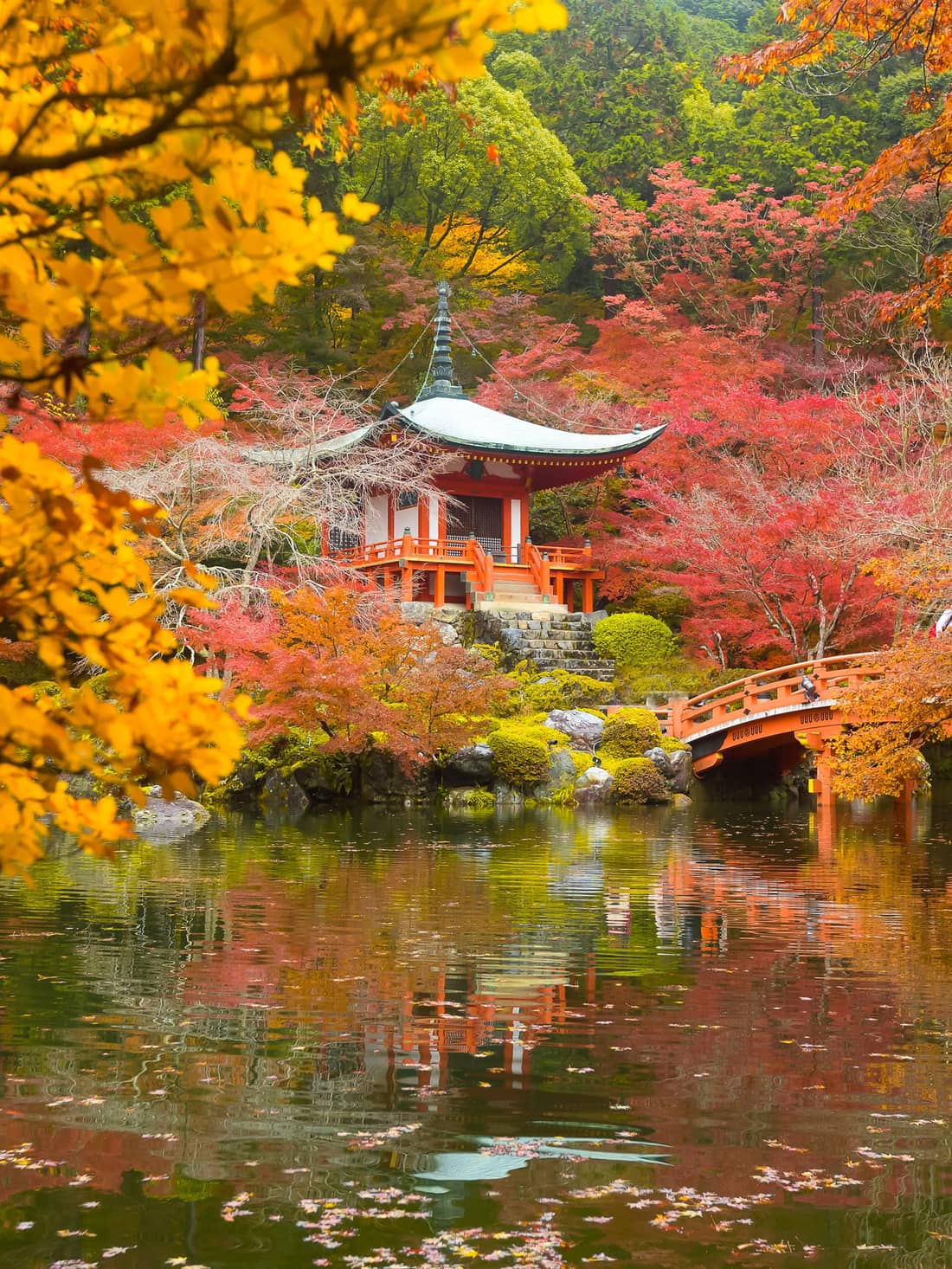
In the fifteenth century fighting in the capital destroyed Kitano Tenmangū, the shrine built for Sugawara no Michizane, the Heian-era scholar later venerated as the god of learning. When it was rebuilt, seven teahouses went up beside it, made from the timber and materials the rebuilding had left over, as a resting place for worshippers on their way to and from the shrine. Kamishichiken, the seven upper teahouses, is simply what they were called.
Their fortune was made in 1587, when Toyotomi Hideyoshi held his Great Kitano Tea Gathering in the shrine grounds. The teahouses served him their dango, he praised them, and their name travelled; the district's crest, a ring of dango, recalls the day still. By the Edo period the resting place had become a true hanamachi, with teahouses for private gatherings and the trained women who made those gatherings worth attending. Today some twenty-five maiko and geiko work between its teahouses, and an ochaya here, as in every district, receives only guests it already knows, or guests introduced by someone it trusts.
The training is long and staged. A young woman entering the profession begins as shikomi, a live-in apprentice confined to domestic work, cleaning, cooking, running errands for the okiya, before she is allowed near a lesson in dance or shamisen. A year or so in, she becomes minarai, permitted the white makeup and the elaborate kimono but not yet a guest of her own, sitting quietly at the edge of the room to absorb what she cannot yet be taught directly. Misedashi, her formal debut as a maiko, follows a set ceremony and a round of calls on the district's own businesses, asking their goodwill by name. Four or five years as a maiko lead to erikae, changing of the collar, the single day she puts on a wig for the first time and steps into full status as a geiko.
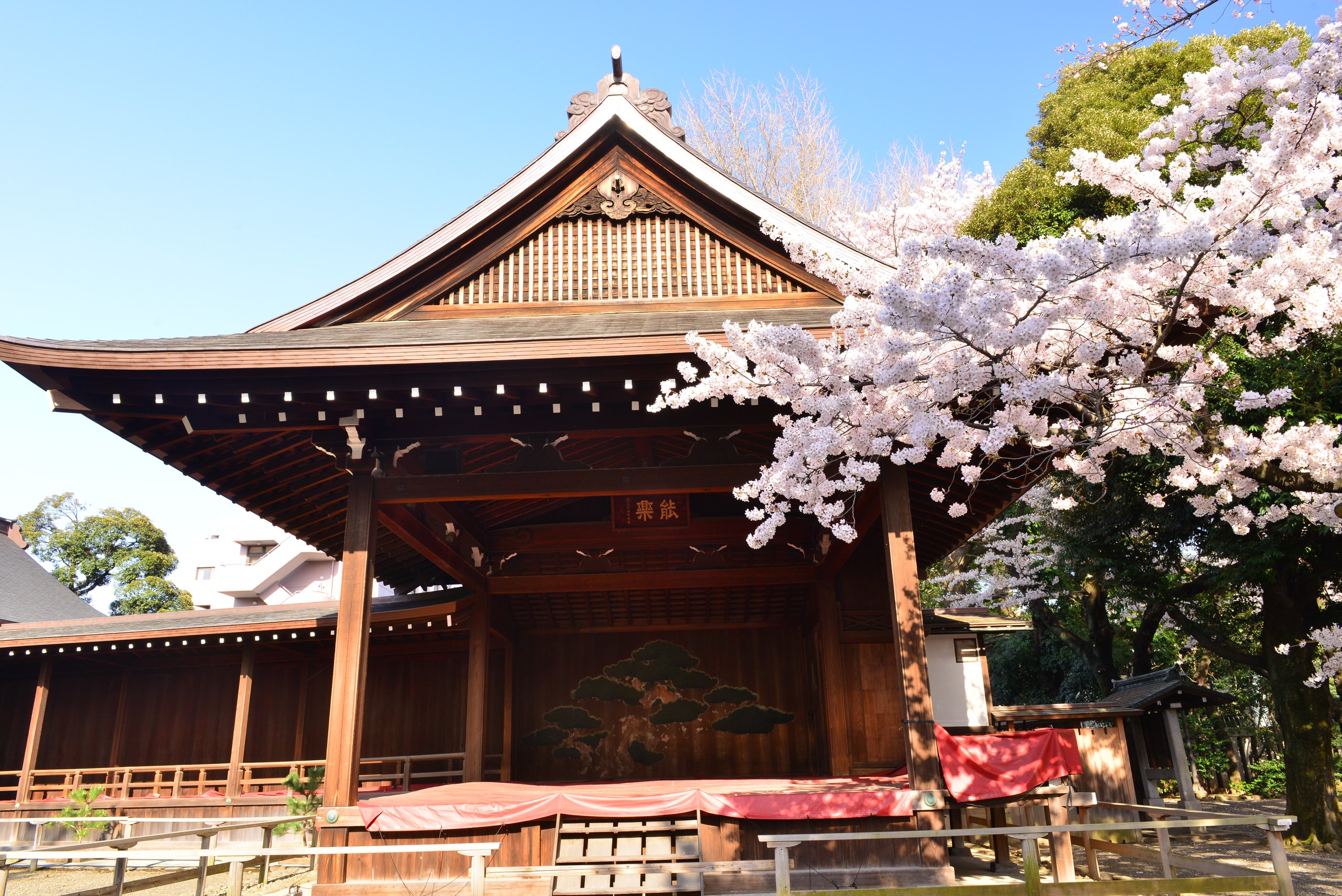
Kamishichiken stages its own dance each spring, the Kitano Odori, at a theatre built for the purpose beside the shrine, and a second recital in autumn, the Kotobukikai. Both are public and both sell tickets. They are the public stage for an art that an ochaya otherwise keeps for its guests.

four more doors
Gion, Pontochō and Miyagawachō: the other four districts
Gion Kōbu, the district most visitors mean when they say Gion, sits between the Kamo River and Yasaka Shrine, its main strip of teahouses running along Hanamikōji. It is Kyoto's largest hanamachi and stages the best known of the five recitals, the Miyako Odori, every April. Gion Higashi, a smaller and quieter district just to its east, is the one hanamachi that dances in autumn, with the Gion Odori each November.
Pontochō runs as a single narrow lane between Kiyamachi Street and the Kamo riverbank, its teahouses backing onto a row of restaurants that open their kawadoko, wooden platforms built out over the water, each summer. Its dance is the Kamogawa Odori, named for the river it faces. Miyagawachō, south along the same riverbank near Kennin-ji temple, is the least visited of the five by outsiders and stages the Kyō Odori. Each district keeps its own crest, its own style of kimono and hair ornament, and its own graduates, and a maiko trained in Kamishichiken does not simply move to Gion.
Every maiko and geiko lives at an okiya, the household that raises and trains her, distinct from the ochaya where she works an evening's engagement. The two are often a few doors apart on the same lane, and the walk between them in full kimono is the glimpse of a hanamachi most visitors see: a woman in formal dress crossing from one address to another, on her way to an engagement arranged long before she left the okiya.
maiko and geiko
Maiko and geiko: how to tell them apart
The difference shows from the length of a lane away. A maiko wears her own hair, dressed by a specialist every few days into the shape of her rank, and sleeps on a raised wooden pillow to keep it. Her collar is red, embroidered more heavily in her first years and paling towards white as she approaches the change. Her obi, the darari, hangs almost to her ankles at the back, and she walks on okobo, tall lacquered clogs that set the small, deliberate step of the apprentice.
A geiko wears a wig, a white collar and a shorter obi tied in the plain otaiko knot, with ordinary zori on her feet. Everything about her is quieter, because a geiko is engaged for her conversation and her art.
The hair ornaments of a maiko, the hana-kanzashi, follow the months. Plum in February, cherry in April, trailing wisteria in May, maple leaves in November; and in December a pair of tiny blank name boards, after the ones raised outside the Minamiza for the kabuki season, which a maiko may ask a favourite actor to sign.
by introduction
Why an ochaya evening needs an introduction
Kyoto calls the rule ichigen-san okotowari, no first-time customers: an ochaya will not seat a guest it does not already know, and admits a newcomer only on the word of a patron it trusts. The conversation, the seasonal choice of kimono, the shamisen and the dance are prepared for one gathering, and the privacy that lets the art flourish is the same privacy that keeps the casual visitor outside. Every one of the five districts has kept this reserve since long before Kyoto had international visitors to consider.
What is open to everyone is the annual stage. Buy a ticket to the Miyako Odori, the Kamogawa Odori, the Kyō Odori, the Gion Odori or Kamishichiken's own Kitano Odori and Kotobukikai, and the dance, the music and the formal training of a full hanamachi season are on public display, performed for exactly that purpose. Kitano Tenmangū adds one further public window each year: on the third of February, Setsubun, the shrine stages a kyōgen exorcism play on an open-air stage, and the geiko and maiko of Kamishichiken perform a dance before the crowd that gathers to watch beans thrown for good luck.
A maiko or geiko glimpsed walking between engagements is on her way to work, and Kyoto's own courtesy applies: notice her, and let her pass. A ticket to the dances, and a little knowledge of the crests, places each dancer in her district and her okiya, and shows far more of the art than any lane at dusk.
the calendar
Where to see geisha in Kyoto, season by season
The calendar of the five districts is public. Spring is the season of the great dances: Kamishichiken's Kitano Odori from late March into early April, the Miyako Odori of Gion Kobu through the whole of April, Miyagawacho's Kyo Odori in April in the years it is staged, and Pontocho's Kamogawa Odori through most of May. Gion Higashi keeps its Gion Odori for the first ten days of November, when the city is turning to the maples.
Summer brings two of the loveliest windows. From the first of July into early September the garden of the Kamishichiken theatre becomes a beer garden in the evenings, and geiko and maiko of the district, in matching yukata, come to the tables, sometimes leaving a guest with a small paper name card, a sensha-fuda, kept as a charm. On the first of August, Hassaku, the geiko and maiko of every district walk to their teachers and the teahouses in black formal kimono to give thanks for the year's patronage, the heat of the afternoon making the formality all the more striking.
Kyoto in blossom, in maple and in private →
Luxury Kyoto tours for 2027, with their dates and prices →
Read Gion's Visitor Rules, for the manners a guest needs →
the private evening
A private geiko evening on a tour of Japan
The private evening is where the art is meant to be met. On The Classic Cherry Blossom Tour of Japan, from 30 March to 10 April 2027, a private room in a Gion teahouse is set for the group on the eighth evening, through Luxury Japan Travel's own introduction. Geiko and maiko dance, pour the sake and lead the old drinking games of the ozashiki, and then they sit beside the guests and talk, which is what the guests remember longest.
It comes in the middle of three nights in Kyoto in blossom, after a hanami picnic in the park of the Imperial Palace, on a journey from Tokyo to Osaka limited to 8 guests, with its Tour Directors in the room to explain each game and each dance as it unfolds.
questions
Questions
What is a geisha?
A professional entertainer, trained for years in dance, music and conversation, and engaged for private evenings in a teahouse. In Kyoto a fully trained geisha is called a geiko; an apprentice is a maiko. Both belong to one of the city's five hanamachi, never to Kyoto's geisha world in general.
Where are the geisha districts in Kyoto?
Kyoto keeps five geisha districts: Kamishichiken, Gion Kōbu, Gion Higashi, Pontochō and Miyagawachō. Kamishichiken is the oldest, by more than a century; Gion Kōbu is the largest and best known.
Which geisha district in Kyoto is best to visit?
Gion Kōbu, along Hanamikōji and the Shirakawa canal, for its scale and the Miyako Odori. Kamishichiken, beside Kitano Tenmangū, for its age and its quiet, with eleven teahouses on a street barely wide enough for two.
What is the difference between a maiko and a geiko?
A maiko is the apprentice: her own hair, a red collar, a long hanging obi and tall okobo clogs. A geiko is fully trained, after four or five years as a maiko, and wears a wig, a white collar and a shorter obi.
What is a genuine Kyoto geisha experience for a visitor?
A ticket to one of the five annual public dances, or an introduction into a private ochaya evening through someone the ochaya already trusts. A geiko in the street is on her way to work and is never photographed at close range; the manners for Gion's own lanes are set out in Gion's Visitor Rules.
When are the geisha dances in Kyoto?
In spring: the Kitano Odori from late March into early April, the Miyako Odori through April, the Kyo Odori in April in the years it is staged, and the Kamogawa Odori in May. The Gion Odori takes place in the first ten days of November.
Is Gion closed to tourists?
No. Gion's public streets, Hanamikōji and the Shirakawa canal remain open to every visitor. From 2024 a short run of private lanes behind the teahouses is closed, with a fine of 10,000 yen for entering.