kantokanagawa
Yokohama
Yokohama is Japan's second largest city and the capital of Kanagawa prefecture, a port on Tokyo Bay in the Kanto region, half an hour south of central Tokyo, which opened to foreign trade in 1859.
- Prefecture
- Kanagawa
- Region
- Kanto
- Journeys
- The Custom Tour of Japan
overview
The harbour where modern Japan first met the world, still turned to the sea.
In 1853 the American ships of Commodore Perry anchored off this coast, and in 1859 a small fishing village called Yokohama became one of the first ports opened to foreign trade. Merchants arrived from Britain, America, France and China, and in a few decades the village grew into a great city, the place where Japan first met the industrial West. Silk left for Europe from its wharves; the first railway in Japan ran from here to Tokyo in 1872; beer, ice cream and gas lamps all made their Japanese debut on its streets.
That cosmopolitan past is still legible. The foreign merchants built their houses on the Bluff, the hill above the harbour, and several survive as museums among gardens and the Foreign General Cemetery. Below lies the largest Chinatown in Japan. Along the waterfront, the redbrick warehouses of the Meiji era have become galleries and shops, and an ocean liner of 1930 is moored at Yamashita Park.
Modern Yokohama is spacious and graceful, with wide waterfront promenades and the towers of Minato Mirai, a district built on reclaimed docklands. It is a city to visit for a day from Tokyo or as a calm first night on the way west, with one of the most beautiful gardens in eastern Japan, Sankeien, on its southern edge.
Yokohama is also a city of the table. The ships brought Western bread, beer and beef to Japan through its port, and its Chinatown has cooked Cantonese food for more than a century and a half. In the evening the harbour is lit, the great wheel at Minato Mirai turns slowly over the water, and dinner in a hotel high above the bay is one of the quieter pleasures of the Tokyo region.
see and do
What to see in Yokohama
Sankeien
A garden of 175,000 square metres created by the silk merchant Hara Sankei and opened in 1906, with historic buildings brought from Kyoto, Kamakura and beyond set around its ponds and wooded hills, among them a three-storey pagoda of the fifteenth century that crowns the hill.
Rinshunkaku and Choshukaku
Two of Sankeien's treasures, in its inner garden: Rinshunkaku, a lakeside villa built for a Tokugawa lord in 1649, and Choshukaku, a tea pavilion attributed to the third shogun, Iemitsu.
Yokohama Chinatown
The largest Chinatown in Japan, with some five hundred shops and kitchens on its grid of streets, entered through ten gates and centred on the brightly painted Kanteibyo temple, dedicated to Guan Yu, a general of ancient China revered as a god of loyalty and commerce. The community has lived here since the port opened, and its families still run many of the kitchens and shops.
The Bluff
The hill of the foreign merchants, with Western houses of the late nineteenth and early twentieth centuries open as museums, a rose garden at the Harbour View Park, and the Foreign General Cemetery.
Yamashita Park and the Hikawa Maru
A seafront park laid out on rubble from the 1923 earthquake, with the Hikawa Maru moored beside it, an ocean liner of 1930 that once sailed to Seattle and is now a museum of its Art Deco interiors.
Osanbashi Pier
The international passenger terminal, completed in 2002, a long undulating deck of timber and grass by Foreign Office Architects, from which the whole harbour and the skyline of Minato Mirai can be seen.
The Red Brick Warehouses
Two customs warehouses of the early twentieth century, restored as shops, galleries and a hall for events, on the waterfront at Shinko.
Minato Mirai and the Landmark Tower
The waterfront district of the new city, built on old docklands, with the Landmark Tower at 296 metres and its Sky Garden on the sixty-ninth floor, the Yokohama Museum of Art by Kenzo Tange, and the Nippon Maru sailing ship in a stone dock of the Meiji era.
The Kirin Brewery, Namamugi
The Yokohama brewery of Kirin, whose story begins with the Spring Valley Brewery of 1870 on the Bluff, one of the first breweries in Japan; its tours end with a tasting.
Yokohama Marine Tower
A slender red lattice tower of 1961 beside Yamashita Park, 106 metres high, which served for decades as a working lighthouse and now has an observation deck over the harbour and the bay bridge.
Soji-ji
One of the two head temples of the Soto school of Zen, moved to Tsurumi in Yokohama in 1911 from the Noto Peninsula, where it had stood since the fourteenth century. Its great halls and long wooden corridors are home to a community of monks in training.
Yokohama Port Museum
A museum of the port beside the Nippon Maru, telling the story of the harbour from Perry's arrival through the age of the great ocean liners, with the four-masted Nippon Maru, a training ship of 1930 that sailed nearly two million kilometres, open to visitors in its dock beside it.
experiences
The best of Yokohama
Sankeien with a garden specialist
An afternoon in Sankeien with a guide who knows its buildings and their stories, with tea in one of its old pavilions and the pagoda reflected in the pond.
The harbour by water
A cruise around the harbour, past Osanbashi, the Red Brick Warehouses and the towers of Minato Mirai, lovely in the evening as the lights come on.
Chinatown at the table
Dinner in Chinatown, where Cantonese and Shanghainese cooking has been refined over a century and a half by families who arrived with the first foreign merchants.
Beer where it began
A tour of the Kirin brewery at Namamugi, ending with a tasting, in the city where the first commercial brewery in Japan was founded by an American brewer on the Bluff in 1870.
The Bluff on foot
A slow walk among the Western houses of the Bluff, from the Harbour View Park to the cemetery, with tea in one of the old villas.
plan your visit
Yokohama on a journey through Japan
- How long to stay
- A day is enough to see Sankeien, the Bluff, Chinatown and the harbour; a night allows the harbour in the evening, and Kamakura is easily added the next day.
- Getting there
- From Tokyo Station, the JR Tokaido Line reaches Yokohama Station in about thirty minutes, and Shin-Yokohama is less than twenty minutes by Shinkansen. Haneda Airport is about thirty minutes away by car.
- Pairs well with
- Yokohama joins with Kamakura for a day or two south of Tokyo, and Shin-Yokohama puts the Shinkansen to Hakone, Kyoto and the west within easy reach.TokyoKamakuraHakoneIzu Peninsula
journeys
Yokohama on a private journey
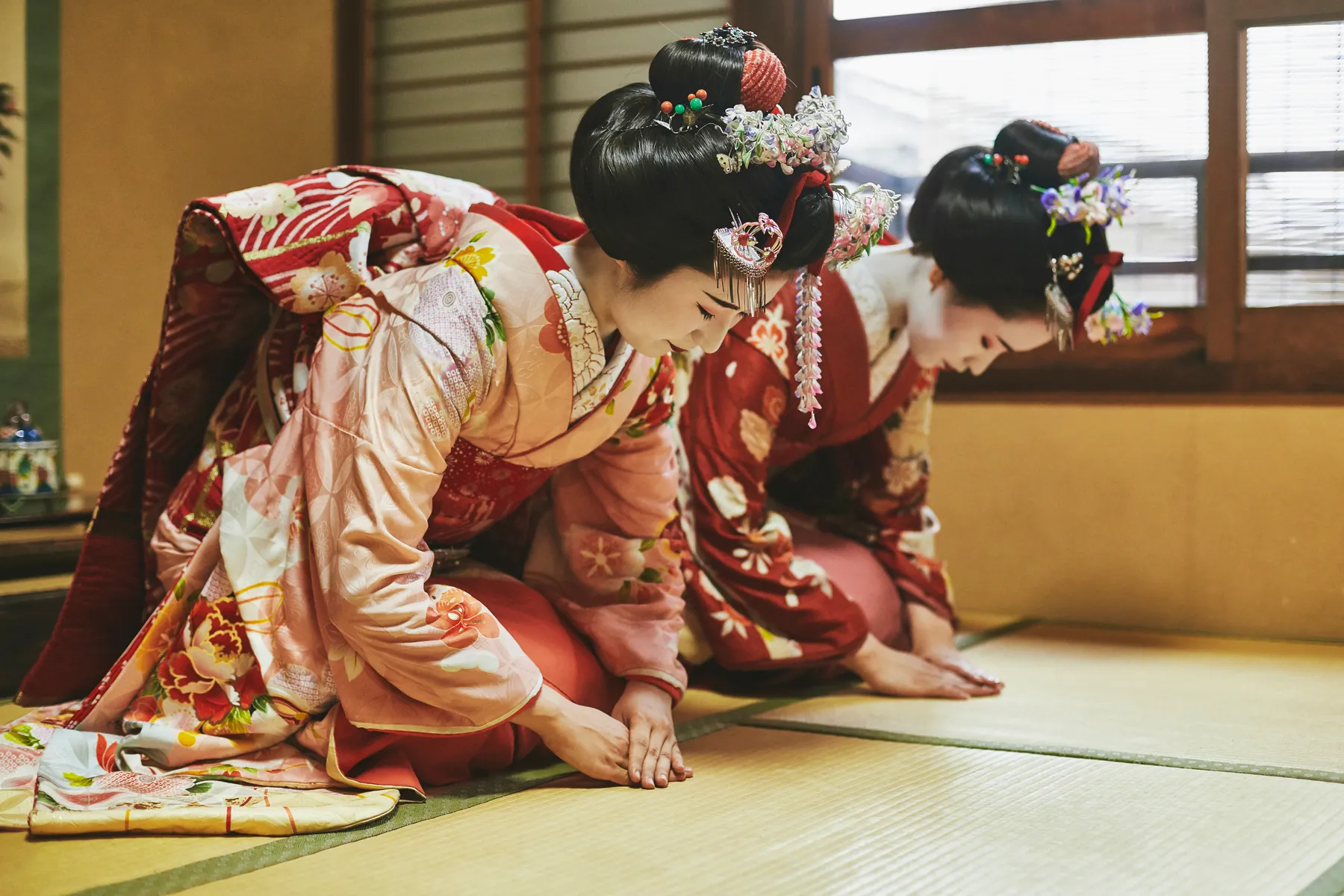
We bring guests to Yokohama on the Custom Tour of Japan, created around your party alone, on your dates, with your own Tour Director.
questions
Yokohama: questions answered
Is Yokohama worth visiting from Tokyo?
Yes, for Sankeien, one of the most beautiful gardens in eastern Japan, the harbour and its history, Chinatown and the Western houses of the Bluff, all half an hour from Tokyo.
How do you get from Tokyo to Yokohama?
By the JR Tokaido Line from Tokyo Station to Yokohama Station in about thirty minutes, or by car in about the same time.
What is Yokohama famous for?
Its port, opened to foreign trade in 1859, the largest Chinatown in Japan, the waterfront of Minato Mirai and the historic garden of Sankeien.
Can you visit Yokohama and Kamakura in one day?
Yes, Kamakura is about twenty-five minutes from Yokohama by train, though each deserves most of a day, so a night in Yokohama makes both easy.
Is Yokohama part of Tokyo?
No. Yokohama is a separate city and the capital of Kanagawa prefecture, though the two run into each other along Tokyo Bay and the centre of Yokohama is only half an hour from Tokyo Station.
How many days do you need in Yokohama?
A day is enough for Sankeien, the Bluff, Chinatown and the waterfront, and a night lets you see the harbour lit in the evening and continue to Kamakura the next morning.
Where should you stay in Yokohama?
At Minato Mirai, on the waterfront, for hotels turned to the harbour, or near Yamashita Park for the older city, Chinatown and the Bluff.
How big is Yokohama Chinatown?
It is the largest in Japan, with some five hundred shops and kitchens within its ten gates.
Can Yokohama be part of a private tour of Japan?
Yes. The Custom Tour of Japan is created around your party alone, on your dates, with your own Tour Director, and it can go anywhere in the country, Yokohama included. If you would rather travel independently, the Expert Japan Itinerary plans every day for you.
kanto
More in Kanto
Yokohama, planned for you.
Tell us when you would like to travel and what draws you to Yokohama, and we will answer with a Custom Tour of Japan created around your party alone, or, if you would rather travel independently, an Expert Japan Itinerary that plans every day for you.