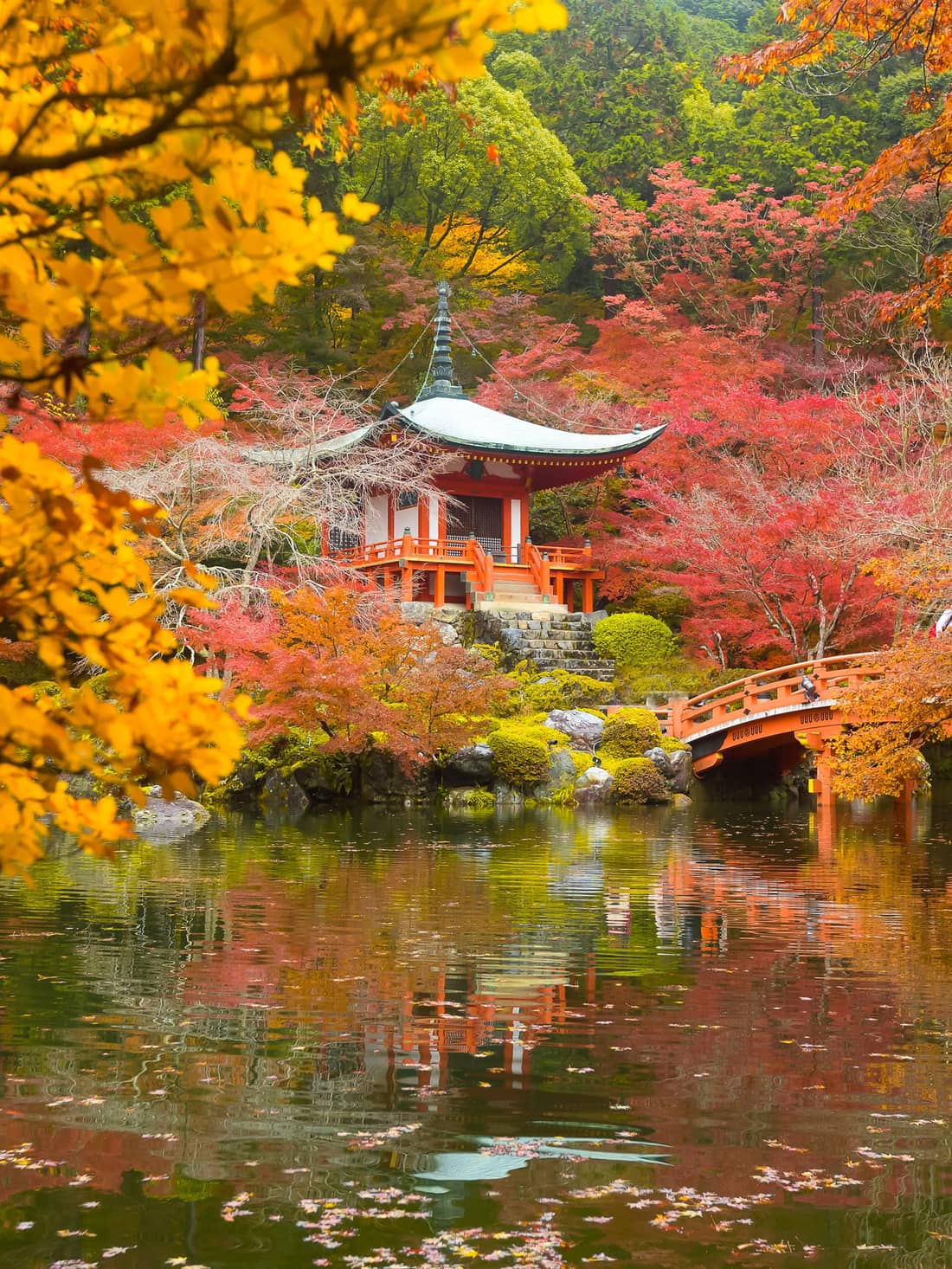

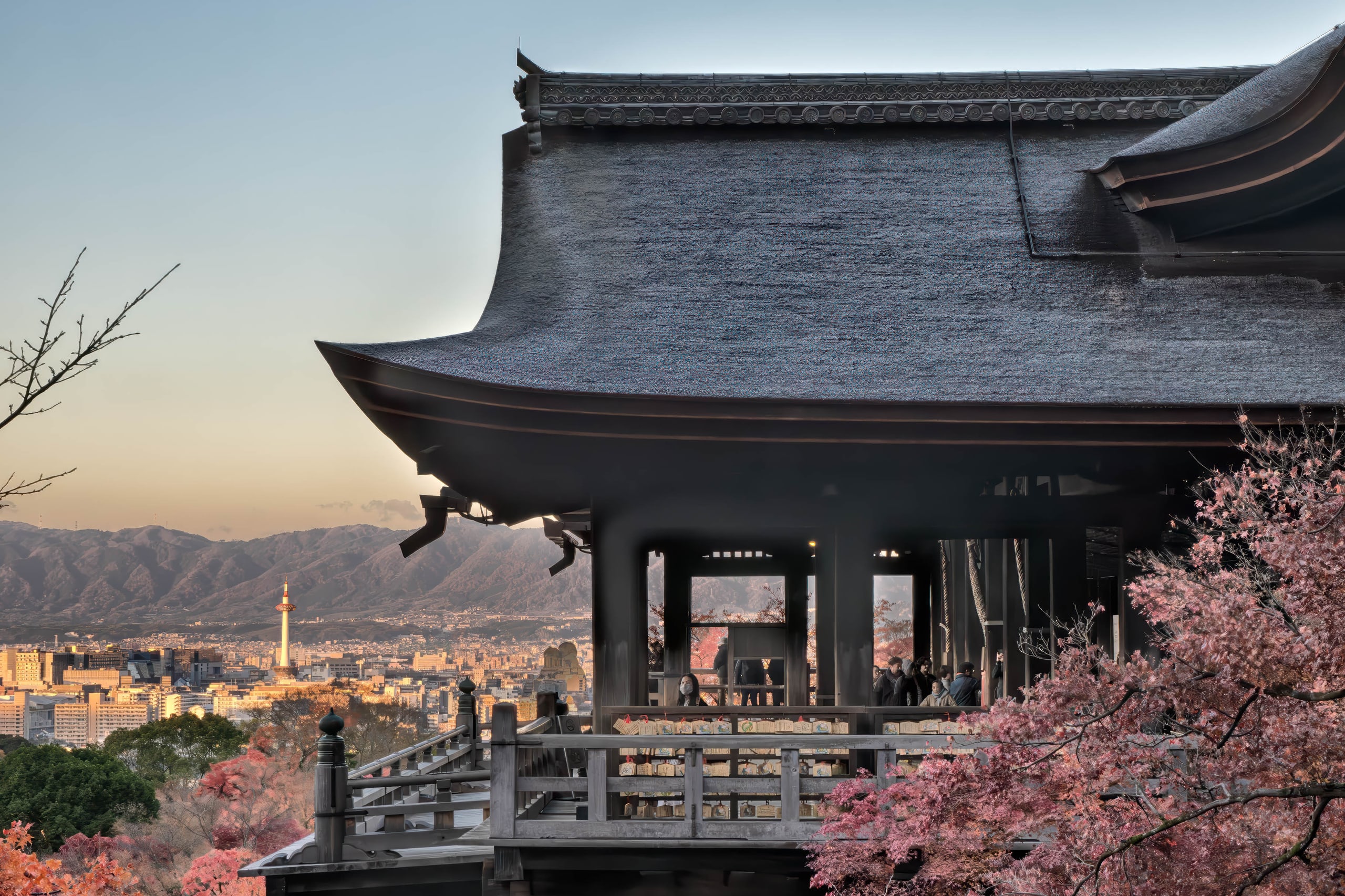
In the highlands of Daisetsuzan, autumn begins while most of Japan still feels like summer. The first colour appears low across the volcanic ground: alpine plants reddening under sharp light, grasses turning the colour of straw, rowan leaves red against dark rock, and the air dry enough to make every ridge look nearer. Far below, Sapporo is still green and Kyoto is still warm. The Japanese autumn has begun, in mid-September, and it will take until early December to reach the temple gardens of the old capital.
Japan's autumn colour moves in the opposite direction from cherry blossom. Spring climbs from south to north as warmth returns; autumn descends from north to south as the cold arrives. The colour begins in Hokkaidō's mountains in September, spreads through Tōhoku and the northern highlands in October, moves through the Japan Alps and the central mountain valleys from October into November, and reaches Tokyo, Kyoto, Nara, western Honshū, Shikoku and Kyūshū in late November and early December.
Autumn is also slower than spring. A cherry tree can pass from first bloom to falling petals in little more than a week, while a single hillside of maples turns over three or four weeks, by species, height, slope and the cold of each night. A high pass can be bare while the temple garden below it is still green.
the reverse front
The colour front in reverse
Kōyō, the turning of the leaves, is watched in Japan almost as closely as the cherry blossom. The first forecasts appear in late summer and are revised as the temperatures fall, and they follow a whole forest instead of a single flower: maple, ginkgo, beech, rowan, birch, oak, larch, the lacquer tree, and the alpine plants of the first northern slopes.
The order is set by cold, and Hokkaidō feels it first. Daisetsuzan, the volcanic massif at the centre of the island, begins the national autumn in mid-September, its alpine slopes colouring long before Sapporo has changed. From there the colour comes down from mountain to forest to city park, and by the time the lower towns of Hokkaidō are turning, in October, Tōhoku has begun its own.
Tōhoku carries the autumn through October across six prefectures, Aomori, Akita, Iwate, Yamagata, Miyagi and Fukushima: the Hakkōda plateau first, then the beech forests around Lake Towada and the Hachimantai highlands, then the river valleys and the onsen towns as the nights grow colder.
In October the colour also enters the mountains of central Honshū. Tateyama turns first, then the forty-eight hairpin bends of the Irohazaka road at Nikkō, then Kamikōchi, where the larches along the Azusa River go gold late in the month, and Karuizawa and the Kiso Valley into early November. At Hakuba the first snow on the peaks can lie above red slopes and a valley still green, three bands of season that the Japanese call sandan kōyō. Mountain ash turns red, and beech and oak deepen to bronze.
The cities come last. Kyoto begins to colour in mid-November and reaches its height in the last week of November and the first days of December, and Tokyo keeps a similar rhythm, its maples and ginkgo turning at the end of November. Nara, Osaka, Hiroshima, the Inland Sea, Shikoku and Kyūshū pass through a late autumn shaped by height, coast and the arrival of cold nights, and the mild south closes the season after the north has entered winter.
the chemistry
What makes the colour deepen
As the chlorophyll in a leaf breaks down in autumn, the yellow pigments that were there all summer appear. The reds are made fresh, as the leaf builds anthocyanin from the sugars left in it, and that calls for bright days and cold nights.
A clean drop in temperature brings the colour on. High ground loses its heat quickly after sunset, which is why the mountains lead the country, and cold air settles into the valleys after dark. Even within one city the season runs early and late by a week or more: on a shaded slope, beside water, against a warm stone wall.
Each species has its own timing. Ginkgo turns an even, clear gold, at its best in the avenues and temple approaches where the trees stand in rows. The Japanese maple, irohamomiji, gives the red most associated with autumn, though maples on the same slope turn at different times depending on sun and shelter. Beech turns whole slopes yellow, then ochre and brown. Larch brings a late gold to the high, cold country, and the lacquer tree, where it grows, turns scarlet ahead of the forest around it.
The forecasts distinguish the first colour from the peak. The peak is the moment when the branches still carry their full colour and the first leaves have begun to collect below, and in Japan the fallen leaves are part of it. Chirimomiji, fallen maple leaves, is a season word of its own: a garden path covered in red, a moss bank under a layer of leaves, a pond catching yellow ginkgo, a stone basin filled with colour after rain.
the calendar
Month by month across Japan
September belongs to the high north. Daisetsuzan begins the season, and the other highlands of Hokkaidō follow. At this stage the colour is confined to the heights, and the lowlands below are still green.
October is the month of the north and the mountains. The lower country of Hokkaidō colours, and Tōhoku reaches its height across the Hakkōda plateau and the beech forests of Aomori and Akita. The northern Alps and the upper reaches of Nikkō follow, and by the end of the month the colour is established across the high country while Kyoto and Tokyo are still green.
In November the colour comes down. The high places lose their leaves, the middle heights strengthen, and the valleys, the old post roads and the mountain towns take on their deepest colour. By the second half of the month Tokyo, Kyoto, Nara, Kanazawa, Hiroshima and much of western Honshū are turning, the ginkgo first and the maples after.
Late November into early December belongs to Kyoto. Western Japan and Kyūshū carry the season into December where low ground and a warm coast delay the change, though the mountain valleys of Kyūshū and the uplands of Shikoku turn ahead of their own coastal towns, and the Inland Sea, softened by the water around it, has a late and gentle autumn in which the low light matters as much as the leaves. The rule of thumb is short: north before south, mountain before plain, the exposed tree before the sheltered garden, and the ginkgo before the last of the temple maples.
the west
Western Japan, Shikoku and Kyūshū
The west keeps a long, late autumn of its own. On Miyajima, the island of the floating torii, the maples of Momijidani Park colour in the middle and second half of November, and the island's sweet, momiji manjū, is a small cake baked in the shape of a maple leaf. On Shōdoshima in the Inland Sea, the Kankakei gorge, counted among the three most beautiful gorges in Japan, turns in November above a sea that keeps the air mild.
Shikoku's mountains turn ahead of its coast. The Iya Valley, deep in Tokushima, colours from late October, its vine bridges hung across a river the colour of jade. In Kyūshū, the Yabakei valley in Ōita, with its famous view of eight scenes from a single spot at Hitome Hakkei, and the Kikuchi Gorge in Kumamoto turn in the first half of November, while the lowland gardens of Fukuoka and Kumamoto carry the season towards December.
Osaka and Nara belong to the same late rhythm as Kyoto. The ginkgo of Midōsuji, the boulevard that runs the length of central Osaka, turns gold at the end of November, and in Nara the deer walk under the colouring maples of Nara Park while the National Museum opens its annual exhibition of treasures from the Shōsōin, the eighth-century imperial repository.
the forecast
How to read the autumn leaf forecasts
Three companies publish the main autumn forecasts in Japan: the Japan Meteorological Corporation, the Japan Weather Association on its tenki.jp site, and Weathernews. Each maps the expected progress of the colour by region, in stages from first colour through peak to falling leaves, and revises the maps as the weather develops. They are most reliable for a region and least precise for a single garden path or one stand of trees beside water.
A forecast shows where the season is moving. The finer questions are a matter of knowing the place: whether an area has had its cold nights, and whether the place is high or low, shaded or open, inland or by the coast.
Average dates are best read as the centre of a range. Kyoto's height falls in the last week of November in some years and in the first days of December in others. Autumn is generous because it comes in layers: when a high valley has thinned, a garden lower down is still coming into colour, and a maple can stand green beside a ginkgo already gold. Elevation and species stretch the autumn of a single place over weeks, in a way the cherry blossom rarely does within one city.
Low sun in late autumn gives the colour more depth than a bright noon, and rain darkens trunks, stones and moss so that the leaves stand out against them.
the last capital
Kyoto at the end of the season
Kyoto comes near the end of the movement. By the time its maples colour, the north has turned and thinned and the first snow has reached the high country, and the city sets its leaves against the old frames of wall, water, gravel, moss, tile and timber.
Its timing comes from geography. Kyoto lies in a basin with low mountains on three sides, and the hills colour first: Takao and its temples in the north-west in mid-November, then the temple slopes of Higashiyama, then the gardens on the valley floor. By the last week of November the days are short, the light comes in at an angle, and red leaves stand against dark roofs and green moss.

Tokyo's late autumn is more urban, and it varies by district. The ginkgo avenue of Jingū Gaien turns gold at the end of November, and the maples of Rikugien and the other old daimyo gardens colour into early December. By then the north is in winter. In one broad season Daisetsuzan has seen its first red alpine plants, Tōhoku has coloured and cleared, the Alps have turned gold, and Kyoto's temple maples are still in colour.
the meaning
The meaning of the peak
In Japan the peak is a passage from fullness into fall. A maple at its deepest red, still in full leaf, is one kind of peak. The same tree two days later, half its colour on the moss and half above the path, is another, and a pavement covered in yellow ginkgo fans after a windy night belongs to the season as much as the avenue at its height.
Momijigari, the custom of going out to see the leaves, is built on that knowledge: the colour moves, and it has to be sought where it is. It begins in the cold high north in September and ends in the old cities and the mild south in December.
The best time to visit Japan, season by season →
Japan fall foliage tours, 2027 →
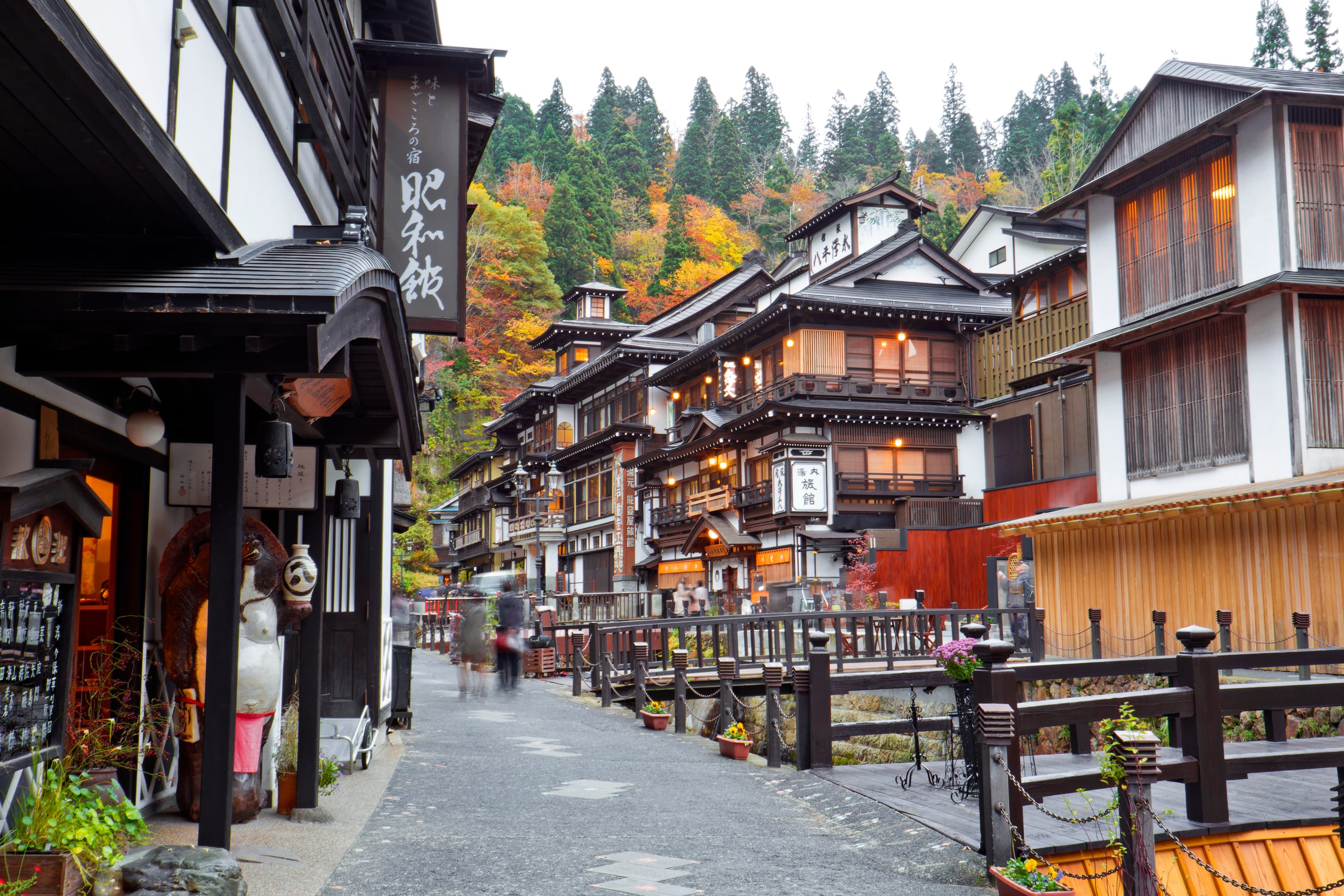
Following that descent is what Luxury Japan Travel's Autumn Leaves Tour of Northern Japan is built to do. It runs north to south, the order in which the colour moves, from the gorge at Jozankei above Sapporo, among the last of the northern colour, through the Oirase Gorge, the samurai town of Kakunodate and the beech forests of Nyūtō, to the gas-lit valley of Ginzan Onsen in Yamagata.
questions
Questions
When is the best time to see fall foliage in Japan?
It depends on where. The colour begins in Hokkaidō's mountains in mid-September, spreads through Tōhoku and the northern highlands in October, moves through the Japan Alps and the central valleys from October into November, and reaches Tokyo and Kyoto in late November and early December.