
The first morning is cooler at the wrist. A screen slides open onto a garden where the moss is still dark with dew, and one maple has turned red at the tips before the others have begun. Somewhere beyond the wall a bamboo broom moves over stone. Breakfast arrives, rice, grilled fish, miso, pickles and tea, and autumn is already in the room.
An autumn journey through Japan keeps to a rhythm the season sets. The mornings are cool and the light comes in low across the gardens; the middle of the day is for moving, through a city, along a river valley or up into the mountains; and as the light goes, everything turns back indoors, to the onsen, the tatami room and a long dinner at a ryokan.
Cherry blossom draws the eye up into the canopy. The maple draws it down as often as up: to a leaf on wet stone, a red branch doubled in a black pond, the smoke of a farmhouse fire hanging over a mountain town at dusk.
the day
The day under the maples
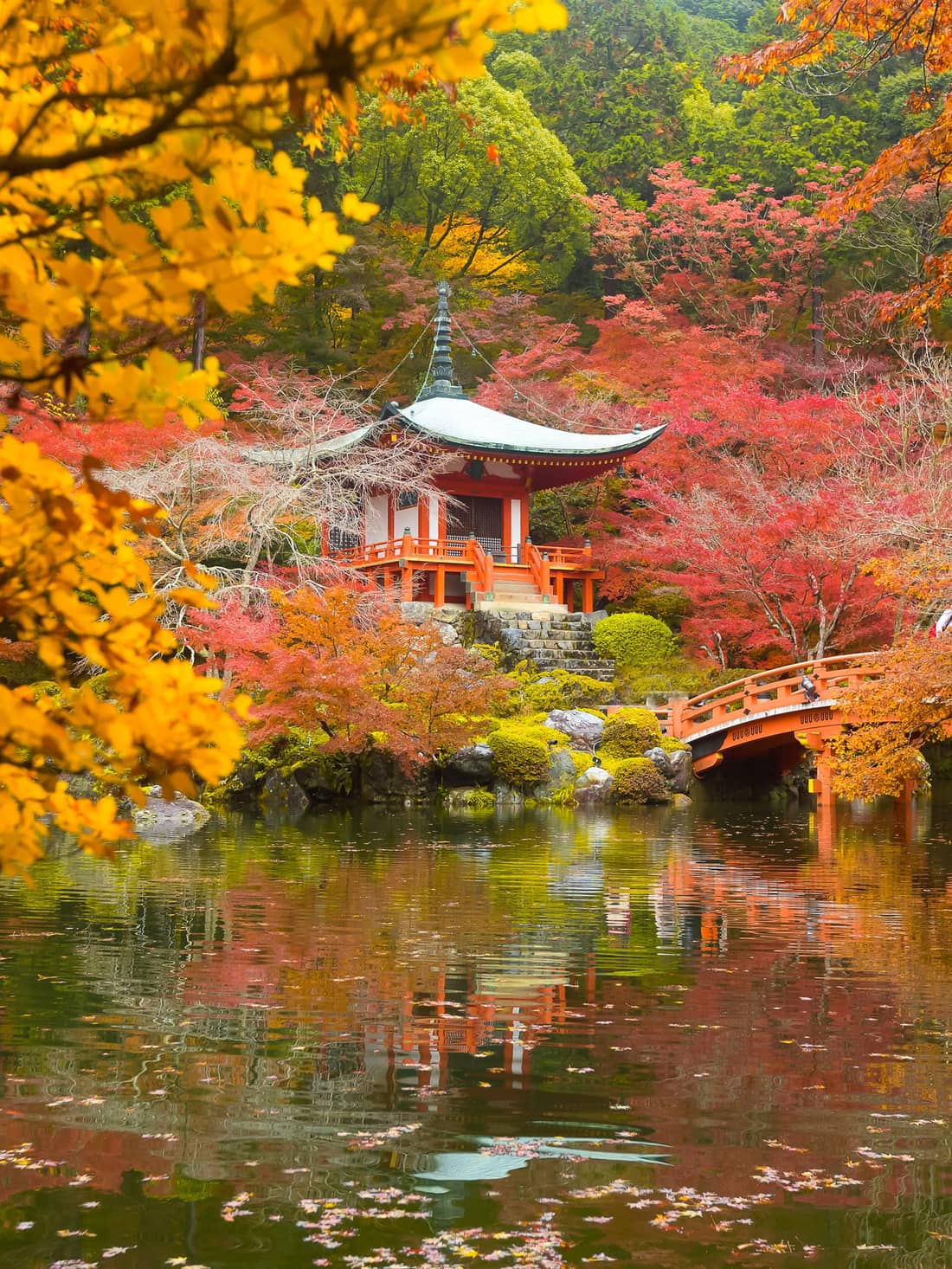
A cherry tree in full bloom overwhelms the eye all at once. A maple works by degrees: green at the inner branch, orange at the edge, red where the sun has struck hardest, and a single fallen leaf darkening on the stone below. The same tree reads differently from the far side of a pond and from directly beneath it, at ten in the morning and at four in the afternoon.
Morning gives the leaves their clarity. Side light cuts through the canopy and picks out each leaf, ponds and canals lie still enough to carry a reflection, the stone lanterns and garden walls keep the cold of the night, and the air smells of damp earth. Gardens and the old stone approaches to temples are at their sharpest in this light.
Afternoon belongs to movement: a road beneath larch, a walk from an old quarter down to open water, the sudden gold of a ginkgo avenue after a morning among red maples. Japan's autumn is seldom contained in a single scene, and a day that runs from a city garden to a hillside to an inn in the mountains sees the season at three heights.

From the window the leaves pass in bands: bamboo, then cedar, then a bare slope gone copper, then a farming town with persimmons peeled and hung to dry beneath the eaves, then a river bright with low sun. The hours between the cities are some of the best of the season, and nobody has to do anything but look.
the weather
Autumn weather in Japan, and what it does to the colour
Leaves on the ground carry the season as far as leaves on the branch, and every surface changes them. Moss makes a red leaf intimate. White gravel makes it graphic. Moving water breaks it into fragments, and a wet road turns fallen ginkgo into a thin sheet of reflected gold.
Rain darkens bark, deepens the green of moss, clears the dust from the air and brings the smell of leaf mould forward. In an old garden or a mountain town a wet morning makes the colour denser than sunshine does: the leaf loses its glow and gains weight.
Wind can strip a canopy in an afternoon. The morning after, the colour lies on the ground: banked against a stone lantern, floating in a water basin, spread over moss in the carpet the Japanese call chirimomiji, the scattered maple.
A good autumn itinerary reads the weather and moves with it. A river path the morning after rain, a long lunch when the wind gets up, an hour in the onsen in place of another viewpoint: the season is at its best for those who let it set the pace.
the inn
The ryokan in autumn
Autumn is the season the ryokan seems built for. The garden still has its colour, the rooms still take the afternoon sun, and the evenings are cold enough for the onsen to become the point of the day.
The best evenings at an inn begin before dinner, with a soak in the late afternoon that leaves the face cool and the body warm. Outside, the leaves darken as the light drops, and the garden seen from the corridor grows smaller and closer: a maple reflected in a black pond, steam lifting from a stone basin, one yellow leaf caught on the lip of a lantern.
Indoors, autumn is a matter of texture. Tatami under bare feet, a hanging scroll in the alcove, tea in a heavier cup than summer's, a jacket set aside after the day's cold air. The season comes to dinner lightly, in a lidded bowl that releases the scent of matsutake when it is opened, rice from the new harvest, a chestnut, and a small sweet shaped like a maple leaf to close the meal.
In the morning the garden is pale until the sun reaches it. Steam rises from the tea, a leaf has moved across the stepping stones overnight, and breakfast is the slow kind, rice, miso, grilled fish and pickles, that sets a traveller up for another day outdoors.
An hour in one garden is worth more than five famous names seen for ten minutes each, and the memory of an autumn trip bears that out. What stays is a leaf caught in the groove of a wooden threshold, the sound of a river below the road, a ginkgo fan pressed flat on the pavement after rain, the smell of cedar in an onsen corridor, a collar still cold from outside as the jacket comes off at the door.
the journey
An autumn tour of Japan built on this rhythm
The Autumn Leaves Tour of Northern Japan, from 2 to 13 November 2027, keeps exactly this alternation of days outdoors and evenings at the inn, following the colour south from the mountains above Sapporo to the valleys of Yamagata. Its days are spent in the fourteen-kilometre Oirase gorge, walked stretch by stretch with the car waiting at each, and on a private wooden boat down the Mogami River, through the canyon the poet Basho descended in 1689.
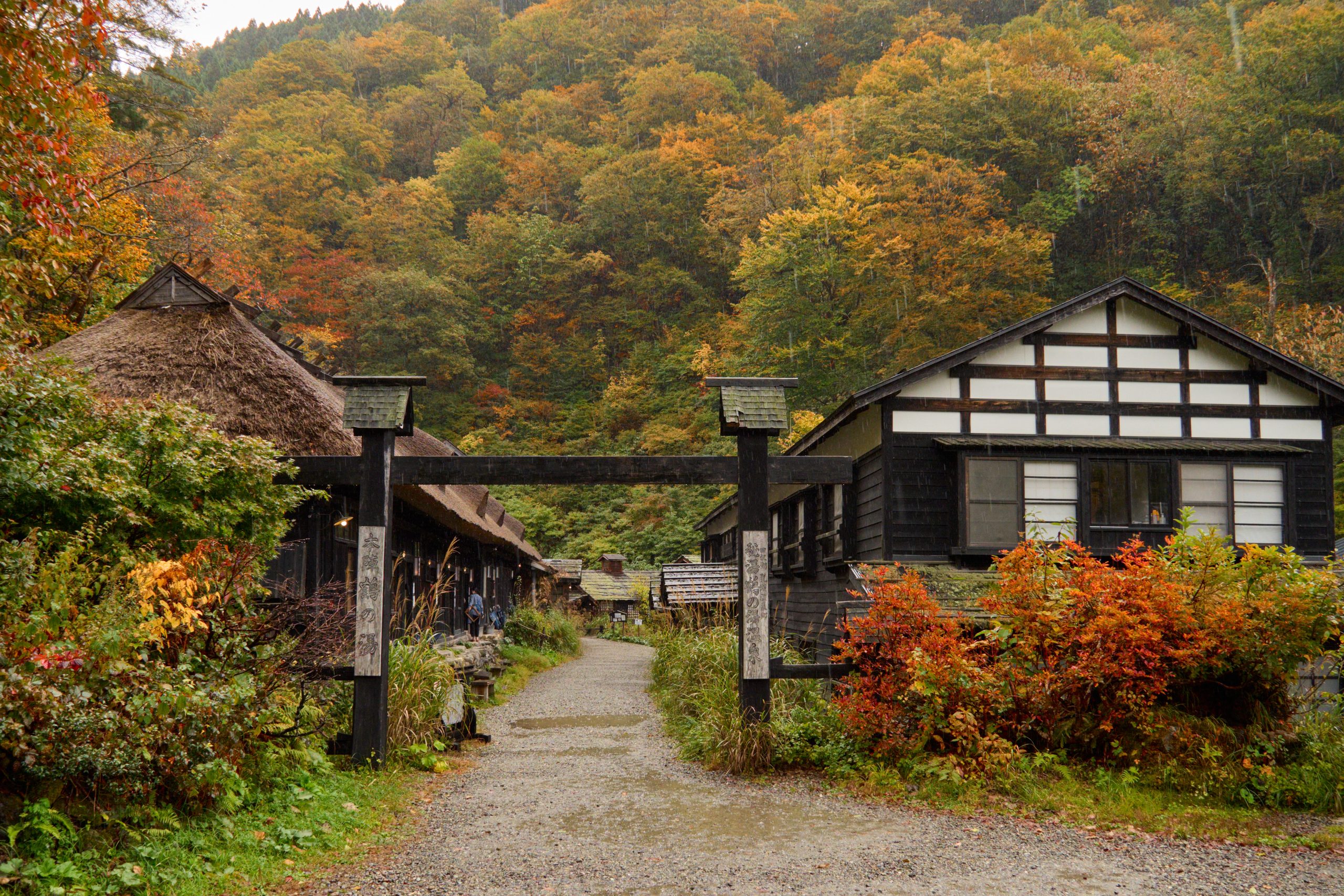
Its nights belong to onsen ryokan: two deep in the beech forest of Nyuto, where two streams and two waters meet, and two behind a preserved facade on the gas-lit street of Ginzan Onsen. The tour is limited to 8 guests, and its Tour Directors travel every mile of it beside them.