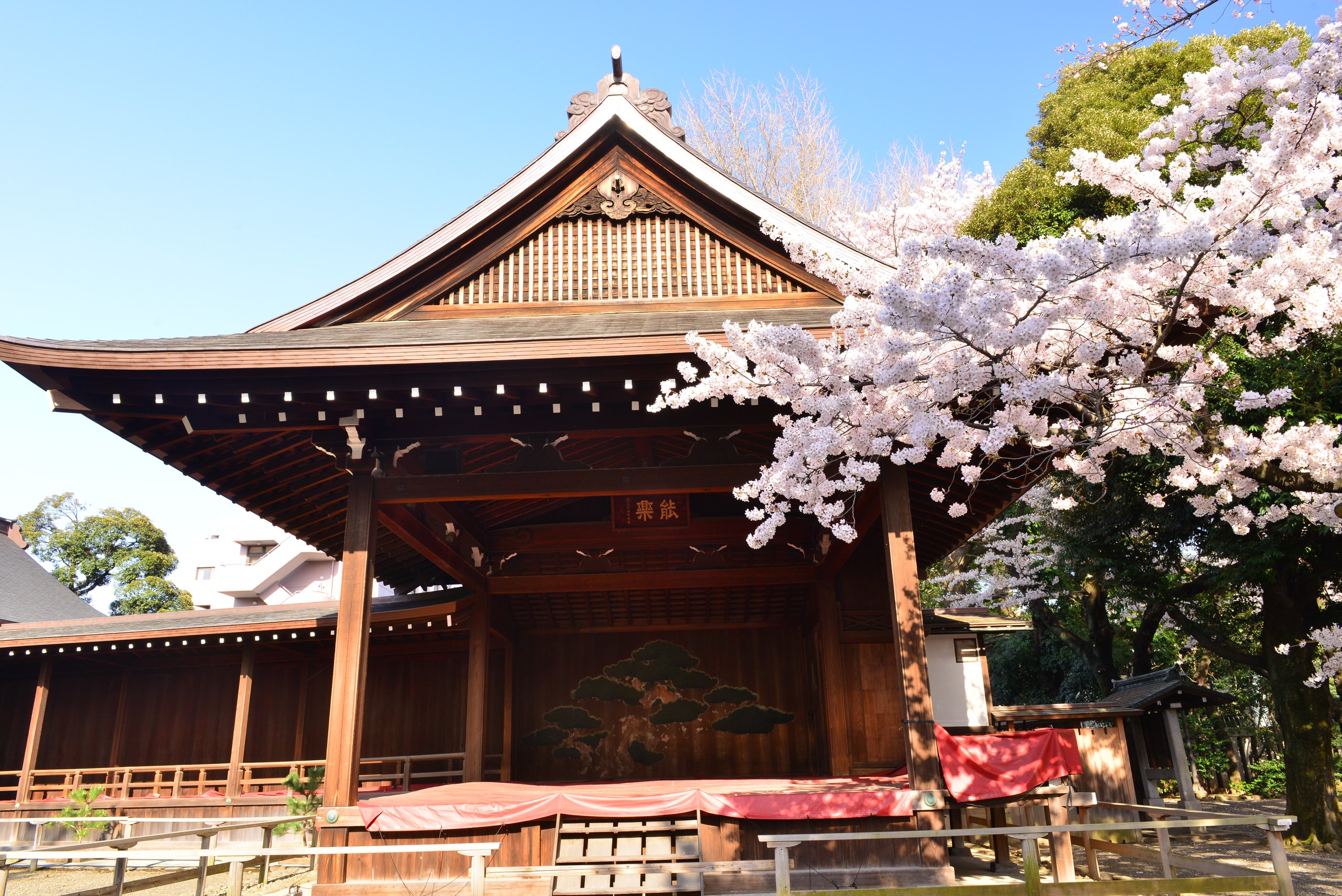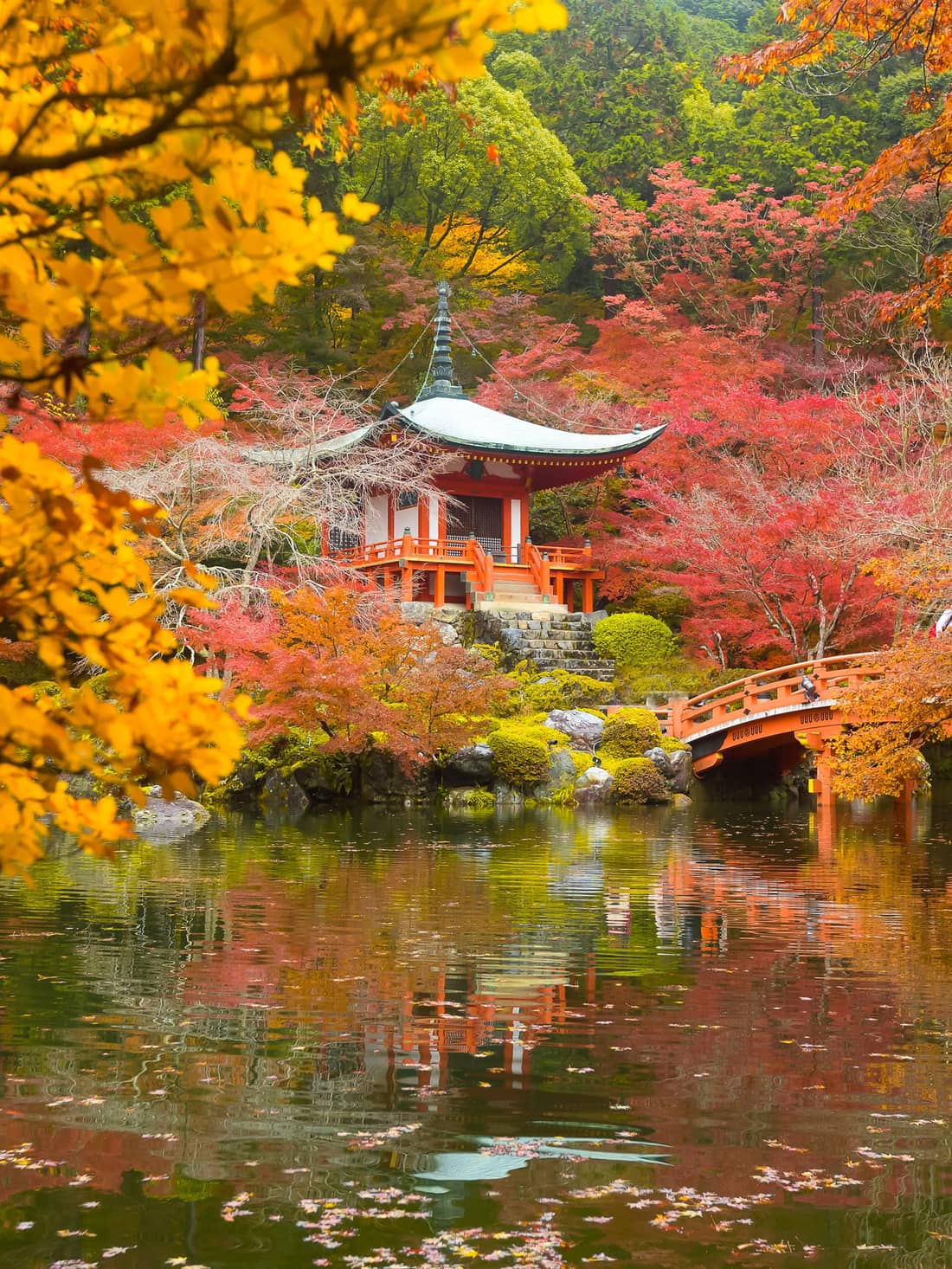

At dusk in Higashiyama, a ryokan garden changes before the room does. The moss darkens first, then the stepping stones, then the low branches at the edge of the pond, and a cherry tree that looked almost white at noon takes on the colour of a paper lantern. Inside, the tatami still holds the warmth of the afternoon sun.
In blossom season the choice of a Kyoto stay decides whether the flower is glimpsed from a car between temples or watched from a room as the light changes. Four kinds of stay answer it: the ryokan built around a garden, the machiya townhouse on an old street, the city hotel, and the room beside the river. Each suits a different guest, for reasons worth knowing before the bags are packed.
the garden inn
The ryokan with its own garden
A ryokan built around a garden keeps the season most completely. Its rooms are built of cedar and paper and look onto stone and water, with a single branch set in the alcove, so the blossom outside is one part of a whole room given to spring.
In the morning the dew is still on the moss, and the first fallen petals float on the still water of the basin.
In the evening a cherry tree that held no special place during the day becomes a pale shape against black pine. A small garden with one old tree in it can hold the eye longer than a courtyard planted for abundance, and Kyoto's garden makers have long framed the view in part: a branch beyond a screen, a stone path seen on the way back from the bath, a petal caught on the rim of a basin.
The kitchen follows the same month. Bamboo shoot, the spring's sakura-dai, the sea bream of the cherry season, and a sweet shaped like a folded petal arrive in turn through dinner, so the flower is tasted as well as seen. The sakura-mochi served with tea is the Kyoto kind, domyoji, coarse-ground glutinous rice tinted pink and wrapped in a salted cherry leaf, where Tokyo wraps a thin pancake instead. A bath before the meal eases legs that have followed the blossom across the city all day, and a fresh yukata laid out for the evening turns dinner into a small ceremony.
Blossom season rewards this kind of stay more than any other, because the morning and the evening in the garden belong to the guest. Higashiyama and the streets around Gion and the Shirakawa canal suit it best, with old stone and timber standing close enough to the water that a single branch over it fills the view.
the machiya
The machiya townhouse
Machiya are the old merchant townhouses of Kyoto, narrow at the street and deep behind it, built around a tsuboniwa, an interior courtyard sometimes no larger than a bath towel, which brings light and air to rooms with no other window. A stay in one in blossom season puts the guest on an ordinary lane, with a neighbour's bicycle propped against the wall next door.
The best of them do not need a cherry tree of their own. Moss, a stone basin, one maple trained low and the afternoon light falling into the courtyard carry the season well enough. The trade is in service: a machiya has no attendant arriving with tea and no dinner served course by course in the room. What it gives instead is a front door like the neighbours' and the feeling, at the end of the day, of coming home to a machiya of one's own in Kyoto.
the hotel
The city hotel
Kyoto's great hotels offer a third answer: space, a concierge, and rooms turned towards tiled roofs, a garden or a line of trees. A lounge with a long window onto a garden makes a pleasure of the half hour before dinner.
Their advantage shows in the busiest weeks of the year. Cars, luggage, restaurant tables and late returns from Maruyama Park, where the great weeping cherry is lit after dark, are all arranged by the hotel, and the guest manages none of it. Around Karasuma and Kawaramachi, a hotel puts the whole city within reach, and the best of them keep the room calm however busy the street outside.
the river's edge
The room beside the river
Arashiyama sits apart from the rest of Kyoto, at the foot of the western hills. The Hozu River runs through the district and becomes the Katsura below the Togetsukyo Bridge, and the hills behind the water are often cooler than the city below. A room there trades convenience for landscape: the bamboo groves within a walk, temple approaches climbing into the hills, and a riverbank that empties of day visitors by early evening, leaving the bridge and the water to those staying the night.
In the centre of the city the Kamo River offers a version of the same pleasure, with rooms set back above the water that watch the light change over it while the embankments below fill with people at dusk. Further north, beside the Botanical Garden, the Nakaragi path runs along the east bank of the Kamo under a long line of weeping cherries. Moving water carries fallen petals away down the current, so a windy afternoon becomes one of the best hours of the stay. A few riverside ryokan add an open-air bath of their own turned towards the hills.
In short, the choice is between four kinds of morning and four kinds of evening.
- The garden ryokan: dew on the moss in the morning, a branch against dark pine at dusk, and the season served at the table as well as seen from the room.
- The machiya: a townhouse of one's own on an ordinary street, with a tsuboniwa the width of a corridor and no staff in the evening.
- The hotel: space, a concierge, and a base that handles the arrangements of a full spring itinerary.
- The riverside room: moving water that carries the petals downstream, and hills that keep their own cooler light.
Rain changes the value of all four. A wet afternoon is a pleasure with a garden to watch from a dry room, a pot of tea and the stones darkening under the rain. Wind that sends a drift of petals across the water is, from the right room, among the most beautiful sights of a Japanese spring.
Length of stay matters as much as the kind of room. One night gives a glimpse. Several nights at a single address let a guest see the blossom of the city morning and evening, on the trees along the canals and as petals on the water.
Kyoto in cherry blossom season →
The Classic Cherry Blossom Tour of Japan gives Kyoto three nights in blossom, at a hotel in the preserved machiya streets of Higashiyama with the old lanes of Gion at its door. From there the days take in the cherry canopy of the Keage Incline and a hanami picnic in the park of the Kyoto Imperial Palace, and on the eighth evening a private teahouse room in Gion receives the group for an evening with geiko and maiko. A night at a ryokan over the willow canal at Kinosaki Onsen follows, with seven public bathhouses within a walk.
Japan cherry blossom tours for 2027, with three nights in Kyoto →