
The lid comes off the clay pot, and the scent reaches the table before anyone has seen the dish. Matsutake and rice rise together in the steam, with a resinous note of the pine forest the mushroom grew in. There is little else in the pot beyond dashi, a splash of soy and a little sake. Japanese autumn cooking is at its best when the cook does least, and matsutake gohan is the proof.
Each season in a Japanese kitchen has its own appetite. Spring cooks with bamboo shoots and mountain greens, summer with chilled noodles and eel, winter with hot pots and long-simmered broth. Autumn cooks with the harvest and the forest floor: mushrooms, chestnuts, new rice, persimmon, ginkgo nuts, sweet potato, lotus root and sanma, the silver saury of the cold Pacific, served in lacquer bowls that seem made for steam.
the forest
Matsutake and the scent of the forest
Matsutake is the most prized ingredient of the Japanese autumn, and what it is prized for is its aroma: pine resin, damp earth and a note of spice. Heavy handling destroys it. It is grilled over charcoal, steamed with rice, sliced into a clear broth, or brought to the table in the small clay teapot of dobin mushi, where the broth is poured into a cup and sipped before the mushroom is eaten.
Japanese cooking treats scent as a flavour in its own right, and matsutake shows why. A single slice in broth looks modest, yet the aroma fills the mouth before the texture registers. Butter, strong sauces and heavy seasoning smother it, which is why the classic preparations are so plain. In matsutake gohan, rice cooked with the mushroom, the steam does the work.
Matsutake grows only among the roots of living red pine, and no one has yet managed to farm it, so every one that reaches the table was found in a forest. Other mushrooms fill the season around it: maitake with its frilled edges, the nutty firmness of shimeji, nameko slippery in miso soup, and the darker weight of shiitake.
the harvest
Chestnut, new rice, and the harvest
Chestnut, kuri, gives the season its weight. It goes into rice, into simmered dishes and above all into confectionery, with a floury sweetness and a faint dryness that suit cooler weather. Kuri gohan, chestnut rice, is one of the comforts of the Japanese autumn: polished grains, yellow chestnut and a little salt, served at a family table and in a kaiseki rice course alike.

In wagashi, the confectioner's sweets, chestnut becomes paste, glaze or a whole candied centre. Kuri kinton, chestnut mashed with a little sugar and twisted in a cloth back into the shape of a chestnut, is most closely associated with the town of Nakatsugawa in Gifu.
New rice, shinmai, is the centre of the harvest. The first rice of the year is moister, glossier and sweeter than rice that has been stored, and shops label it shinmai so that buyers can find it. A bowl of new rice with pickles, miso soup and grilled fish is a complete autumn meal.
Persimmon brings the colour of the season indoors. Fresh kaki is crisp and clean when firm and melting when fully ripe, and hoshigaki, persimmons peeled and hung under the eaves to dry, concentrate their sugar for the winter. Ginkgo nuts, ginnan, are small, green-gold and faintly bitter, grilled on skewers or tucked into chawanmushi, and they are served a few at a time. The roots and field crops give the season its substance: sweet potato, taro, lotus root, burdock, pumpkin and mountain yam. In the cities the sweet potato sellers return with the cold, roasting their potatoes slowly on hot stones.
the cooler appetite
Fish, smoke, and the appetite of cooler air
Sanma, the Pacific saury, is the fish of the Japanese autumn, and its name is written with the characters for autumn, sword and fish. It is grilled whole with salt over charcoal and served with grated daikon and a squeeze of citrus. The skin blisters, the fat drips and smokes, and those who know the fish eat the bitter gut as well, as part of its character.
Autumn is also the season of the green citrus. Sudachi from Tokushima and kabosu from Oita are halved and squeezed over grilled sanma and matsutake, and yuzu, still green early in the season and yellow by winter, scents the clear soups with a single curl of peel.
Mackerel, saba, grows richer as the water cools. In Hokkaido and the north the autumn salmon return to the rivers, and their roe is marinated in soy as ikura. Bonito comes south again as modori-gatsuo, the returning bonito, far richer than the lean first bonito of spring.
Heat returns to the table in autumn, though without the weight of winter. Clay pots come back into use, lidded bowls keep their steam until the lid is lifted, and the charcoal is lit again. Chawanmushi, the savoury steamed egg custard, comes into its own, carrying ginkgo, mushroom, shrimp or chicken. The broths stay clearer than winter's stews, and the grilled fish carries smoke without heaviness.
Sake changes with the season too. Hiyaoroshi, sake pasteurised once in spring and matured through the summer before its autumn release, comes out rounder and softer, and it is poured with grilled fish, mushrooms and chestnut.
the kaiseki argument
Kaiseki in autumn
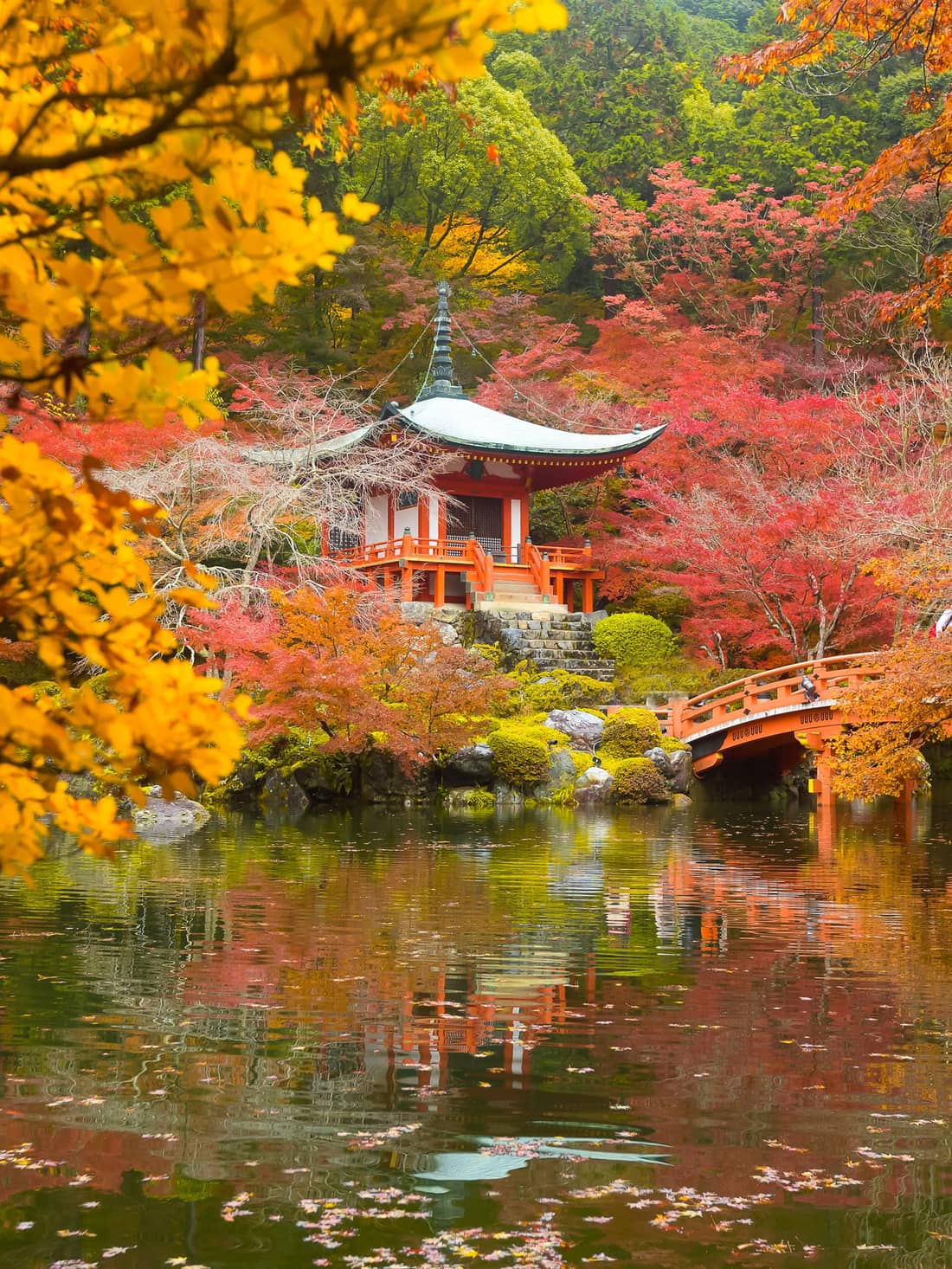
Kaiseki is where the autumn table is most deliberate. The ingredients change with the season, and so do the vessels, the plating and the temperature of each course. A maple leaf beside a dish is the most obvious sign of autumn, and it means little unless the cooking beneath it is seasonal too.

An autumn kaiseki follows a set order. A small opening taste sets out bitterness, sweetness or fragrance in miniature. A clear soup carries mushroom and fish with a sliver of yuzu peel. A grilled course brings smoke, a simmered dish brings warmth, and the rice course carries chestnut, mushroom or the new rice itself, before a sweet of persimmon, chestnut or bean. The vessels change with the food: dark lacquer, heavier ceramics returning after the glass of summer, a plate painted with autumn grasses or glazed the colour of fallen leaves.
The hassun shows a kitchen's season most clearly. It takes its name from its square cedar tray, eight sun across, and on it small tastes from the mountains and the sea are set out together: a piece of fish, a chestnut, ginkgo, a wedge of persimmon, a shell. The moon reaches the table as well. Tsukimi, the autumn moon viewing, brings round shapes, pale colours, pampas grass and egg yolk into the menus of September and October.
The northern version of this table, the mountain larder and the cold sea, is the one Luxury Japan Travel's Autumn Leaves Tour of Northern Japan sits down to. Its evenings run from Hakodate's seafood beside the Tsugaru Strait to nine kaiseki dinners at the ryokan of the route. In the gas-lit valley of Ginzan Onsen the kaiseki carries Obanazawa soba and Yonezawa beef, with Yamagata sake poured beside it.