
The season shows itself at dinner first as a bamboo shoot, cut clean and pale, carrying the sweetness of the ground before heat has had the chance to harden it. Then comes a sea bream tinted faintly pink, its flesh firm from a winter spent in cold water. A small sweet follows, coloured like a petal and wrapped in a single salted leaf. The cherry trees along the street outside may still be in bud, but at the table the season has already arrived.
A cherry blossom journey through Japan is lived as much at the table and in the evening onsen as beneath the trees. The blossom gives the fortnight its occasion, and the kitchens, the rivers and the ryokan give it substance: a canal of drifting petals in the late afternoon, then an inn at dusk with the scent of cypress and steam still caught in its corridor.
the table
What spring puts on the table
Japanese spring is read in ingredients as precisely as in blossom. Takenoko, bamboo shoot, breaks the surface of the ground once the soil has warmed but the year is still young. The best of it grows in the mulched groves west of Kyoto around Nagaokakyo, banked deep in soil through winter so the shoots emerge pale enough to be called shirako, white child. It is simmered with rice bran to draw out its bitterness, grilled until the cut edges catch, or set beside kinome, the sharp young leaves of the sanshō tree. A spring kaiseki in Kyoto rarely lets it appear only once.

Sakura dai, cherry blossom sea bream, carries weight beyond its flavour: the fish takes on a faint pink shine each spring as it gathers along the Inland Sea coast to spawn, reaching restaurant tables in the same season as graduations, new positions and weddings. Its pale flesh suits sashimi, a clear broth or a bed of rice. The name plays on a pun: tai sits close enough to medetai, meaning auspicious, that the fish has stood for good fortune at Japanese tables for generations, and a whole sea bream, head and tail intact, still marks the celebrations of the season.
Further north, spring arrives from the water rather than the ground. Hotaru ika, firefly squid, surfaces along the Sea of Japan coast from late March to early May, most visibly in Toyama Bay, rising from depths of two hundred metres or more to spawn close to shore. Small, dark and faintly sweet, the squid carry photophores along the body, the blue glow that gives them their name, and dressed simply, in a vinegar miso, they bring the cold water season to the table just as the land begins to warm.
Other spring notes gather around these two: nanohana, rapeseed shoots with a mild bitterness that wakes the palate after winter; fuki no tō, the bitter bud of the butterbur plant, folded into miso or dipped into tempura batter; and hamaguri clams, in season from February into April, served in a clear soup whose real subject is the shell, since each hamaguri fits only its own matching half, the same dish served at the Hinamatsuri table in March and, later, at weddings.
Sweets translate the blossom more literally than any of this.
Sakuramochi wraps sweet rice in a salted cherry leaf, and the leaf earns its place: salting draws out coumarin, the compound behind its faintly almond scent, and the scent is half the taste. Tokyo's chōmeiji style, said to date to a Mukojima temple in the early eighteenth century, bakes a thin, crepe-like wrapper around the filling; Kansai's dōmyōji, named for a different temple in Osaka, uses a coarser, chewier rice for a grainier bite. Hanami dango threads the season onto a single skewer: pink for the bud, white for the flower at its height, green for the leaf that follows. In a kaiseki meal, spring can turn on a single dish: a bamboo motif in a lacquer bowl, a petal-shaped garnish, a broth clarified until it carries the season's light.
the road between
Moving between cities in blossom season
Between the cities, the season is seen from the window. From a first-class seat on the shinkansen the country unrolls in spring colour: yellow rapeseed along the embankments, dark cedar, tiled roofs, a single cherry alone on a hillside, then a whole riverside gone white. One city can stand in full bloom while the next, a few hundred kilometres north or a few hundred metres higher, still keeps its buds closed against the cold.
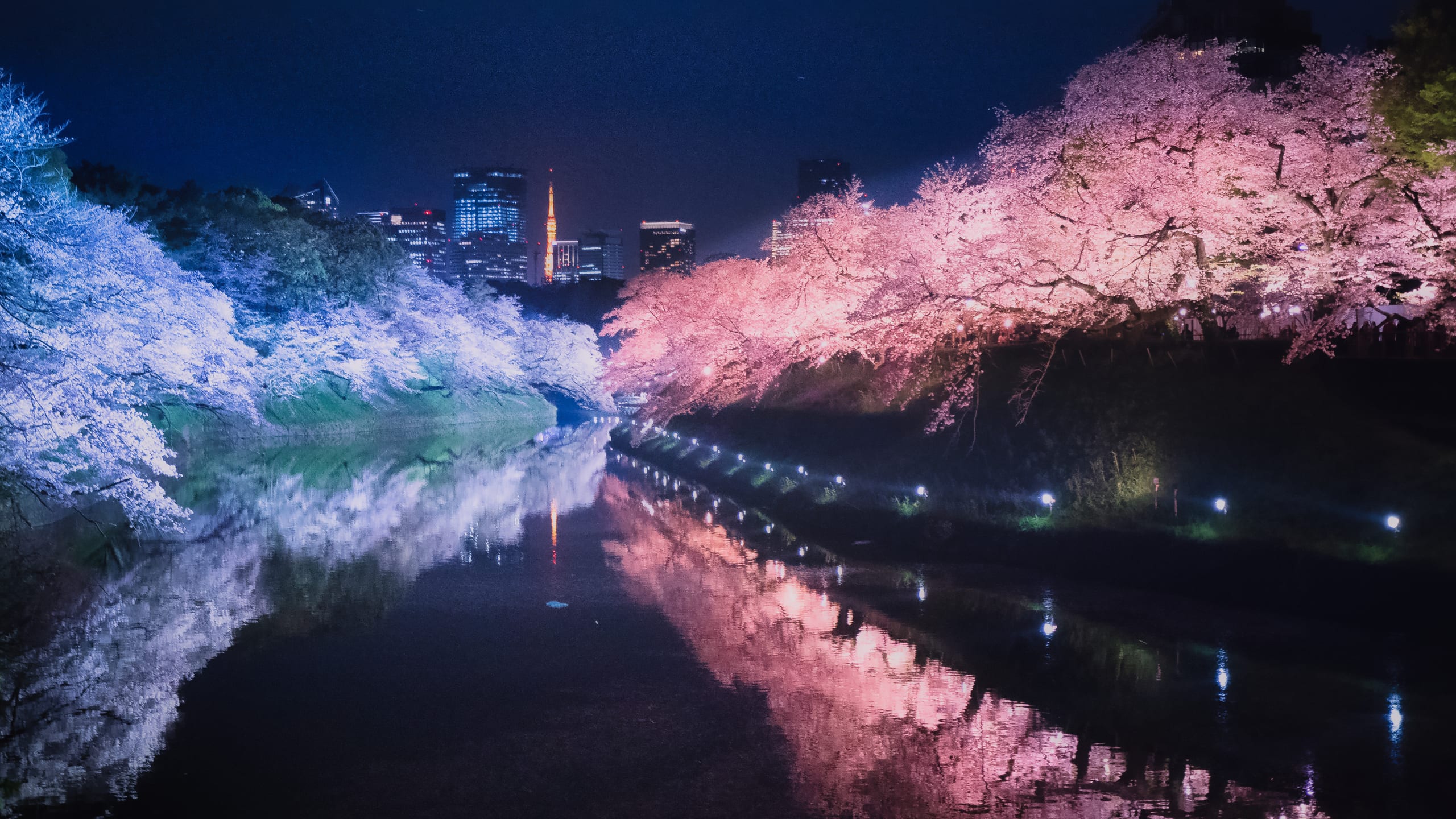
Water follows the blossom almost everywhere. The cherry was planted beside it across the country, along Kyoto's Shirakawa canal and the Kamo River, along Tokyo's Meguro River and the moats of the Imperial Palace, and every branch over it is doubled in the surface. Once the trees begin to let go, the petals gather where the current slows into a drift the Japanese call hanaikada, the flower raft, and the season lives on in the water for days after the branches have thinned.
The hours worth keeping are the gentler ones: a lunch long enough for the light to change, a walk along a canal in Higashiyama in the late afternoon, a taxi climbing towards an inn as petals drift across the windscreen.
the inn after dark
Why the ryokan owns the evening
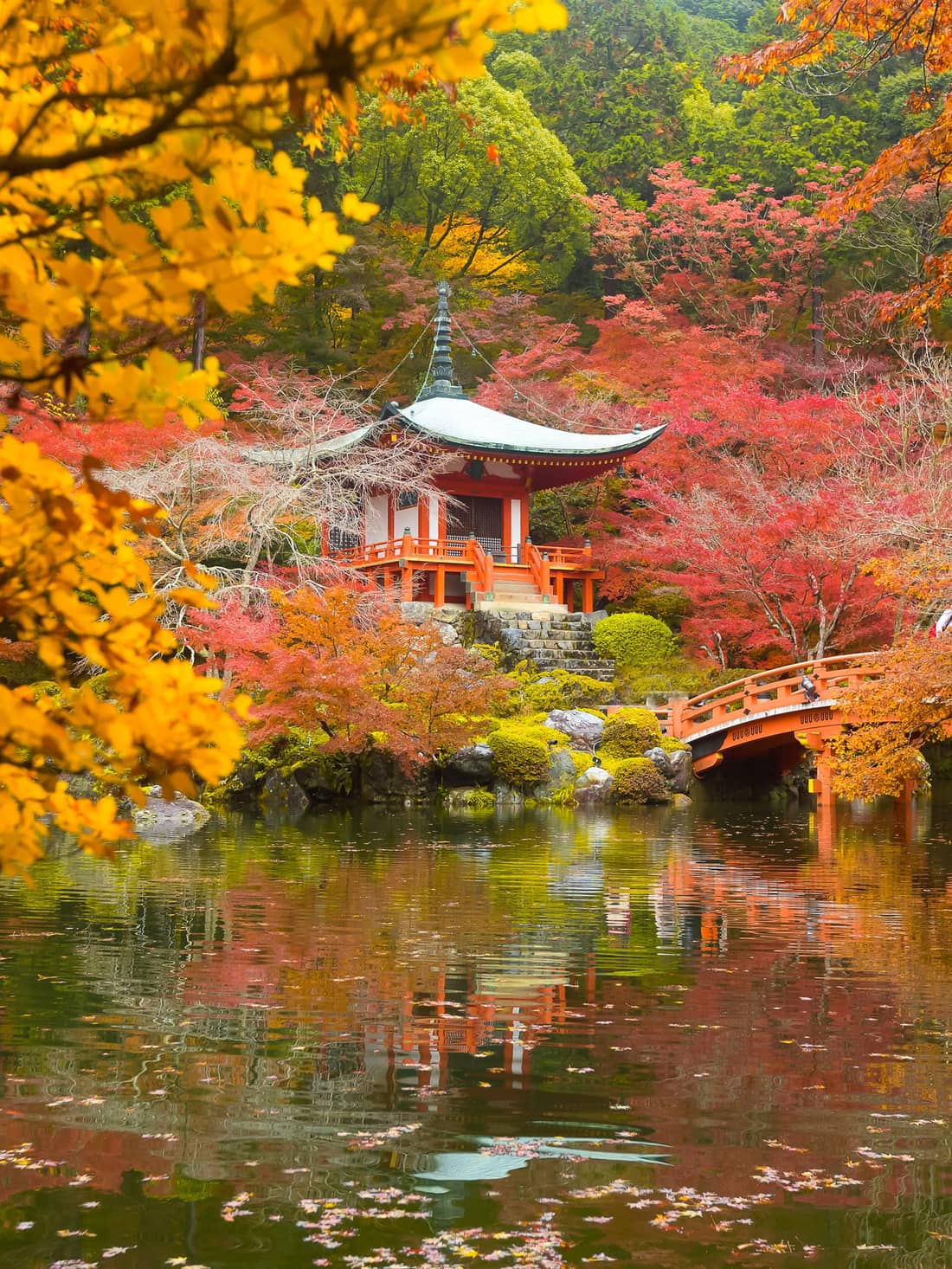
By evening, blossom season belongs to the ryokan. Shoes come off at the step, the luggage disappears, and the world narrows to tatami and the sound of water somewhere close by. The season moves indoors with the guest: a single branch set in the tokonoma, a lacquer bowl painted with young bamboo, a sweet shaped like a petal with the tea that greets each arrival.
A garden seen from the room after dark keeps a calendar of its own. Lantern light shows less than daylight and so draws the eye further in: a branch that looked pale at noon turns almost silver by nine, the pond goes black, and a single fallen petal on wet stone becomes the whole composition.
The onsen sharpens the contrast the day has been building. The air outside still carries the cold of early April; inside, the heat of the spring rises beneath a cedar roof while the night garden keeps its outline beyond the glass. After a day on foot beneath the trees, it is the deepest relaxation the season offers.
Dinner follows the onsen and brings the season back to the table: spring greens, a clear soup, sea bream, then rice cooked with bamboo shoot or the year's first peas, and a lidded bowl that releases the scent of a single kinome leaf the moment it is opened. Breakfast is slow and plain in the most satisfying sense, rice, miso soup, grilled fish, pickles and green tea, with the garden beyond the screen still wet with dew.
the journey
A cherry blossom tour of Japan built on this rhythm
The Classic Cherry Blossom Tour of Japan, from 30 March to 10 April 2027, is built on exactly this alternation of table, water and inn. Twice it sits down for hanami in the old manner, beneath the canopy of Yoyogi Park in Tokyo and in the park of the Kyoto Imperial Palace, with bentos from Michelin-starred kitchens and cold sake poured on rugs at the water's edge. It gives two nights to Mount Fuji, at a ryokan in a Japanese garden at Fujiyoshida, each room with its own open-air bath with Fuji in view, and one to Kinosaki, where guests move between the town's seven public onsen in yukata and geta as the evening comes on.
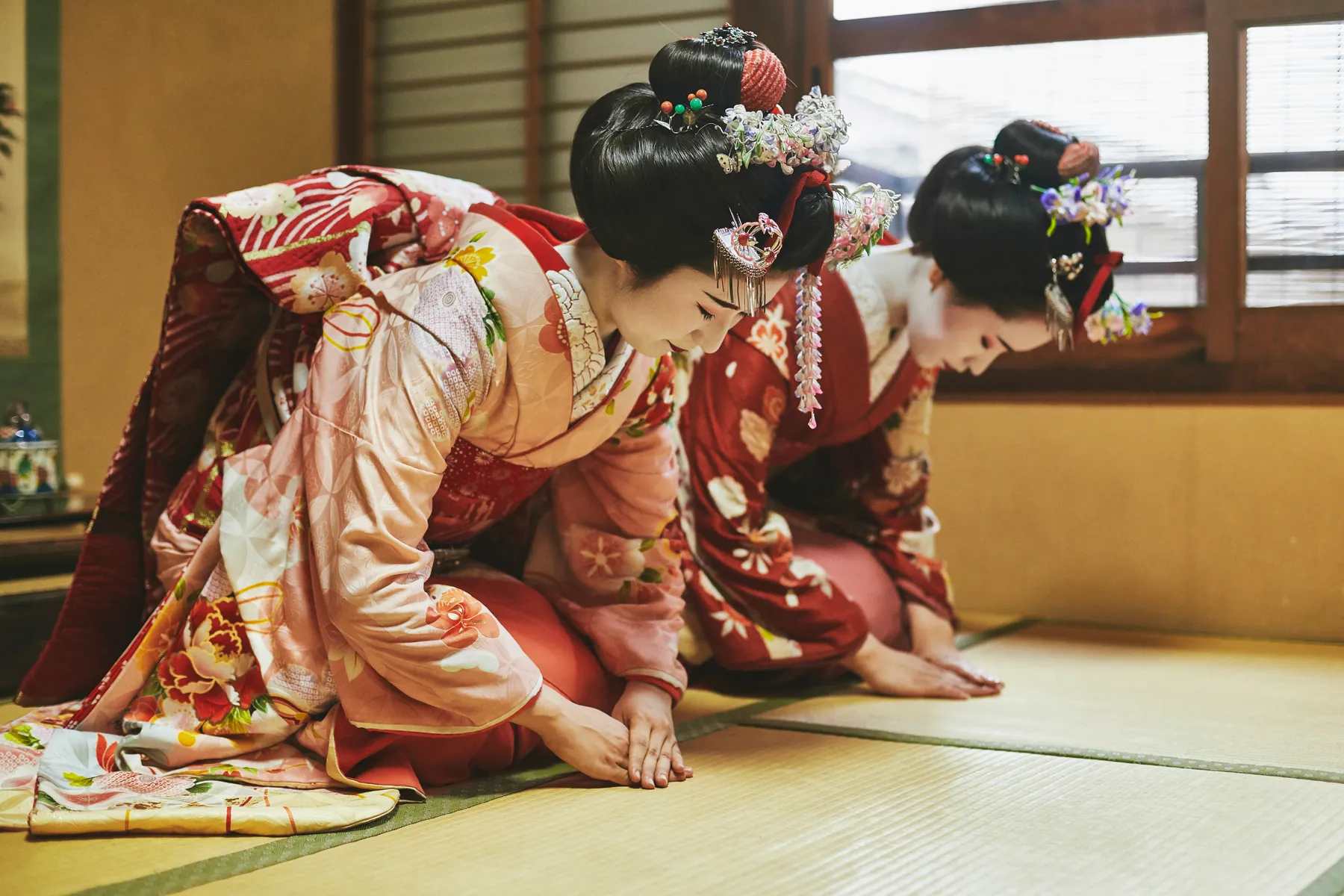
In Gion, one evening belongs to the geiko and maiko of a private teahouse room, and the spring kaiseki of the journey follows the spring kitchen described here, from bamboo shoot to sakura dai. The tour is limited to 8 guests, and its Tour Directors travel every mile of it beside them, so the season is the only thing left to attend to.