

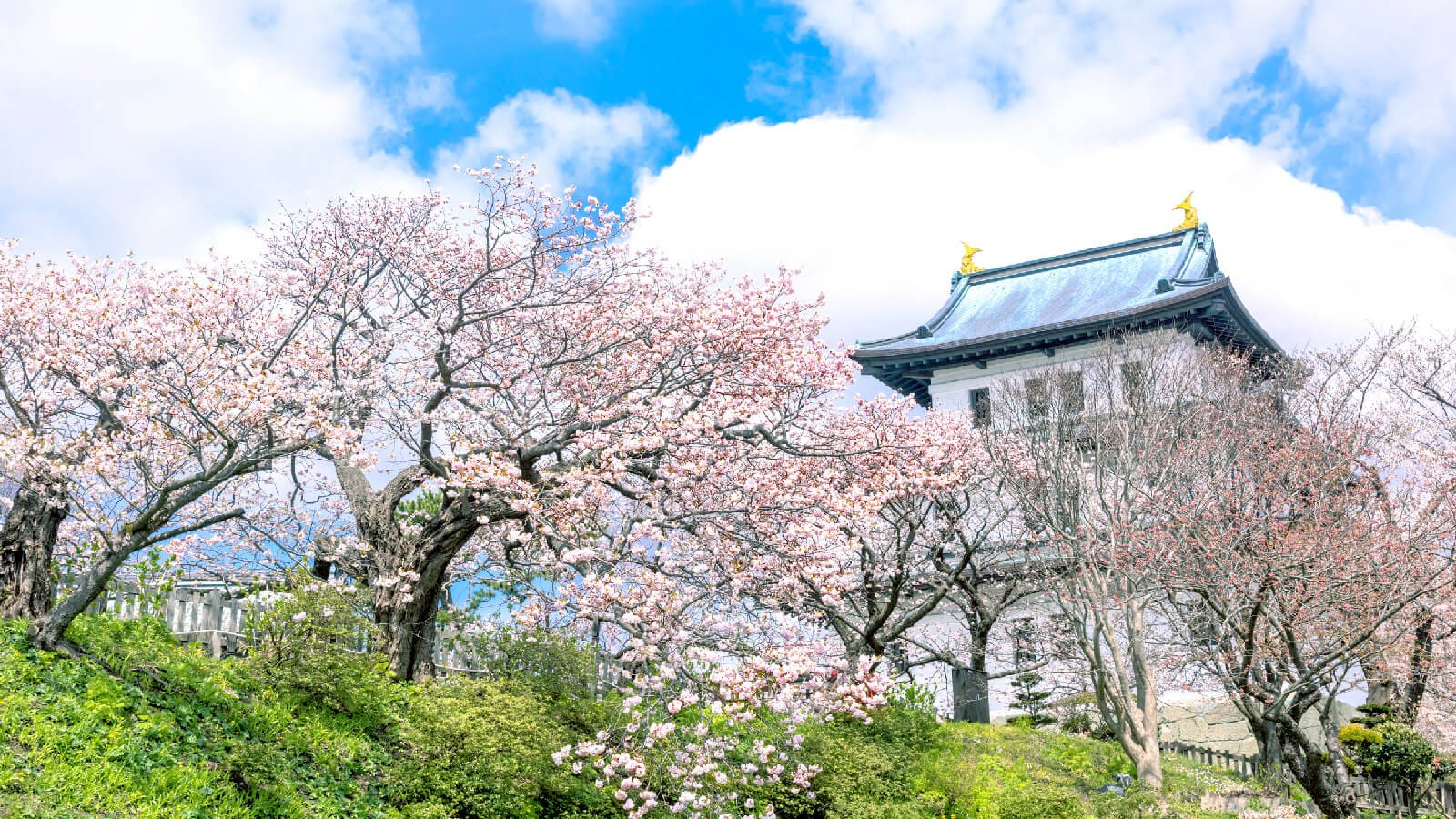
The best whisky distillery to visit in Japan is the one whose landscape a traveller most wants to stand in, because in Japan the place is in the glass. Suntory's Hakushu makes its whisky inside a forest at the foot of the Southern Alps. Kirin distils at Gotemba with Mount Fuji standing directly in front of the distillery. Mars Shinshu works at 798 metres in the Central Alps, Nikka's Miyagikyo between two rivers in the hills west of Sendai, and Kanosuke, in Kagoshima, pours its whisky above the East China Sea. Every one of them receives visitors. So do the two famous names, Yamazaki and Yoichi, and a journey that reaches past them finds Japanese whisky at its most varied, and the country around it at its most beautiful.
Luxury Japan Travel plans whisky the way it plans a garden or a ryokan: by place and by season, never as a stop squeezed between two sights. The visit itself lasts an hour or two. What surrounds it is what a guest carries home: the road up through the larches, the onsen that evening, the quiet bar in the city a night later where the same whisky is poured again and tastes of the morning it was made.
the label
What makes a whisky Japanese
Since 1 April 2021 the words have had a definition. The Japan Spirits and Liqueurs Makers Association set it that February: malted grain, water drawn in Japan, mashing, fermentation and distillation at a distillery in Japan, at least three years of ageing in Japan, and bottling in Japan. The makers had until the end of March 2024 to bring every label into line.
The rule protects something a visit makes plain in a single morning. Japanese whisky is the water, the weather and the wood of one particular valley, and no two of these valleys are alike.
the forest
Hakushu, the whisky distillery in the forest
Hakushu stands in Hokuto, in Yamanashi, at the foot of the Minami Alps, the Southern Alps, and from its first day Suntory has called it a mountain forest distillery. The phrase is exact: the trees come right up to the buildings, and a bird sanctuary lies within the grounds.
The water is the reason it is here. Rain and snow that fall on the Southern Alps spend some twenty years filtering down through the granite before the distillery draws them, and they arrive soft, carrying just enough mineral to hold a flavour. Inside the still house the washbacks are made of wood and the stills come in a range of shapes and sizes, so that one distillery makes many different spirits, which the blenders then marry into the fresh, light whisky that carries the Hakushu name.
Step out between the buildings and the forest closes back over the path: birdsong, the smell of wet leaves, the light coming down green through the canopy. At Hakushu the walk from the still house to the tasting room stays with a guest as long as anything poured at the end of it. Visits are by reservation with Suntory, and of all the distilleries within reach of Tokyo, this is the one Luxury Japan Travel would choose for a guest who loves landscape as much as whisky.
the mountain
Fuji Gotemba, beneath the mountain
Kirin began distilling at Gotemba in 1973, at the foot of Mount Fuji, and the mountain fills the view from the distillery. It gives more than a backdrop. The water is Fuji's own, drawn from the mountain's springs, and the climate is the one a distiller hopes for: an average of about thirteen degrees across the year, and fog that comes often.
The standard tour takes about eighty minutes and ends with a tasting. Two longer tours go further, one into the making of malt whisky and one into grain whisky, each closing with a tasting of its own. On a journey that spends its nights beneath Fuji, a morning at Gotemba belongs to the mountain as much as the lakes do.
the alps
Mars Shinshu, high in the Central Alps
Hombo Shuzo's Mars Shinshu distillery stands at 798 metres, at the foot of Kisokomagatake in the Central Alps of Nagano. The Mars name first went on a whisky in 1949. At that height the air is clean and cold, and the mountain stands over the roofs in every season.
It is the most open of the distilleries here. A walk through the production areas costs nothing and needs no booking, and in the visitor building a bar pours some twenty to thirty of the distillery's whiskies by the glass. The stills rest from about July to late August while the equipment is serviced, so Luxury Japan Travel brings guests between late August and June, when the stills are running.
the north
Yoichi and Miyagikyo, Nikka's two distilleries
Masataka Taketsuru learned whisky in Scotland, and when he built his own distillery in 1934 he chose Yoichi, on Hokkaido's west coast at the base of the Shakotan Peninsula, for its likeness to what he had left behind: mountains on three sides, the Sea of Japan on the fourth, a cold climate, crisp air, sea breeze and river fog. Yoichi still fires its straight-headed pot stills directly with coal, the method of Longmorn, the Scottish distillery where Taketsuru studied, and the fire beneath them burns at more than a thousand degrees. Nikka's guided tours there are free, by reservation and given in Japanese, and they end with a tasting.
Two of Luxury Japan Travel's published journeys include a whisky tasting at Yoichi: The Cherry Blossom Tour of Hokkaido, in late spring, and The Summer Tour of Hokkaido, in the long days of June and July.
Thirty-five years later Taketsuru built again, this time in a forested valley west of Sendai, between the Hirose and Nikkawa rivers. He settled on the site after tasting whisky made with the Nikkawa's water, among the softest of any Japanese distillery. Miyagikyo is Yoichi's opposite. Its pot stills are heated by steam rather than coal, their necks bulge and their arms rise; beside them stand Coffey stills, the old continuous design, making grain whisky. The two together are the whole of Nikka, and a traveller who has stood in both understands Nikka completely.
the south
Kanosuke, above the East China Sea
At the other end of the country, in Hioki in Kagoshima, Kanosuke's guests arrive, in the distillery's own words, warmed by the southern winds and the sunlight. The tasting room is called the Mellow Bar, and its windows look out over the East China Sea to a horizon with nothing on it.
Kanosuke saves its best morning for the traveller who wants to make something. Its tours run to an hour, to a hundred minutes through the production area and the warehouse, and, on one morning a month, to two hours at the blending table, where a guest composes a whisky of their own and leaves with a 500 ml bottle of it. Places open one to three months ahead, and there are mornings in English.
the beginning
Yamazaki, where Japanese whisky began
Suntory founded Yamazaki in 1923, at the foot of Mount Tennozan just southwest of Kyoto, and it remains, in Suntory's words, Japan's oldest malt whisky distillery. Its tours are paid, and a share of the places is given by lottery, about two months before the month of the visit. How the lottery runs, and how a Kyoto stay is built around it, has a piece of its own.
the choice
Which whisky distillery to visit in Japan
Luxury Japan Travel's view is plain. For a journey with Kyoto at its centre, Yamazaki, for the history in its walls, with the lottery calendar in hand from the first conversation. From Tokyo, Hakushu, without hesitation, for the forest and the water. For the traveller who has tasted widely and wants to make rather than taste, Kanosuke and its blending table. In Hokkaido, Yoichi, for the coal fire and the sea; and for anyone who wants Nikka whole, Yoichi and Miyagikyo on the same journey, north to south, as Taketsuru built them.
The one mistake is to try for too many. Two distilleries on a journey of two weeks is generous; three, in three different landscapes, is a whisky journey in its own right. The evenings matter as much as the mornings, and the bar where the whisky is poured again, and the table where it meets the food, belong to the journey, not to the distillery.
A whisky tour of Japan: the route, the bar and the table →
The Custom Tour of Japan is where Luxury Japan Travel puts these mornings, around the dates a guest chooses and the distilleries a guest most wants to see, with a private car waiting outside whenever the distillery allows one, so that no one ever weighs a second glass against the road home. It is the country's whisky, taken in its own landscapes, at the pace of the casks.
questions
Questions
Which Japanese whisky distilleries can you visit?
Suntory's Yamazaki, near Kyoto, and Hakushu, in the forest of the Southern Alps; Nikka's Yoichi, on the coast of Hokkaido, and Miyagikyo, west of Sendai; Kirin's Fuji Gotemba, at the foot of Mount Fuji; Mars Shinshu, in the Central Alps of Nagano; and Kanosuke, in Kagoshima. Each receives visitors, most by booking.
What is the best whisky distillery to visit in Japan?
Hakushu, for a traveller who wants whisky and landscape together: the distillery stands inside a forest at the foot of the Southern Alps. Yamazaki is the oldest, but a share of its tour places is given by lottery.
Is there a whisky distillery near Tokyo that you can visit?
Two of the distilleries that receive visitors lie west of Tokyo: Hakushu, in the forest of the Southern Alps in Yamanashi, and Fuji Gotemba, on the slopes of Mount Fuji in Shizuoka.
Do you need to book a Japanese whisky distillery tour?
At most distilleries, yes. Yamazaki gives a share of its places by lottery about two months ahead, Yoichi's and Hakushu's tours are by reservation, and Kanosuke opens its tours one to three months ahead. Mars Shinshu needs no booking.
What does Japanese whisky mean on a label?
Under the standard set by the Japan Spirits and Liqueurs Makers Association in 2021, Japanese whisky is made from malted grain and water drawn in Japan, mashed, fermented and distilled at a Japanese distillery, aged at least three years in Japan and bottled in Japan.